A light-colored garage floor can make an old garage feel clean again. It can also make homeowners nervous about one practical question: does polyaspartic yellow after a few Arizona summers? It can, under the wrong conditions or with the wrong product. But a properly selected, professionally installed polyaspartic garage floor system is designed to resist the sun-driven yellowing that gives many older coatings a tired, amber look.
The short answer is that chemistry, sunlight, and installation details all matter. “Polyaspartic” on an estimate is not enough information by itself. Homeowners should know what is in the coating system, where it will be used, and whether the contractor is preparing the concrete correctly before any material goes down.
Does Polyaspartic Yellow? The Real Answer
Some coatings yellow because ultraviolet light changes the material at the surface. This is most noticeable on white, light gray, beige, or clear-coated floors. A yellow cast may show up near the garage door first, where afternoon sun hits the slab, while the back of the garage still looks fine.
Quality polyaspartic topcoats are typically formulated for UV stability. In a garage, that means the coating should hold its color far better than an interior-grade epoxy exposed to direct sunlight. This is one reason polyaspartic is a strong fit for garages in Chandler, Gilbert, Queen Creek, and the rest of the East Valley, where open garage doors and intense sunlight are part of normal life.
That does not mean every floor will look exactly the same forever. Dirt buildup, tire residue, water minerals, harsh cleaning products, and normal aging can affect appearance. But true yellowing from UV exposure should not be treated as inevitable just because you live in Arizona.
Why Some Garage Coatings Turn Amber
There is a difference between a coating that is discolored and one that is actually failing. Both are frustrating, but they have different causes.
Epoxy is often the material homeowners have seen yellow in the past. Many epoxies perform well in protected indoor settings, but standard epoxy can amber when exposed to UV light. A garage with a west-facing opening can be plenty bright enough to reveal that weakness. A clear epoxy topcoat over decorative flakes may look great at first, then gradually take on a warmer, yellow tone near the door.
Some lower-cost coating systems use materials that are not intended to be the final UV-exposed layer. Other systems may advertise polyaspartic but use a different base coat, then reserve the polyaspartic for the top. That is not automatically wrong, but it is worth asking about. The system should be explained clearly, not hidden behind a vague product label and a bargain price.
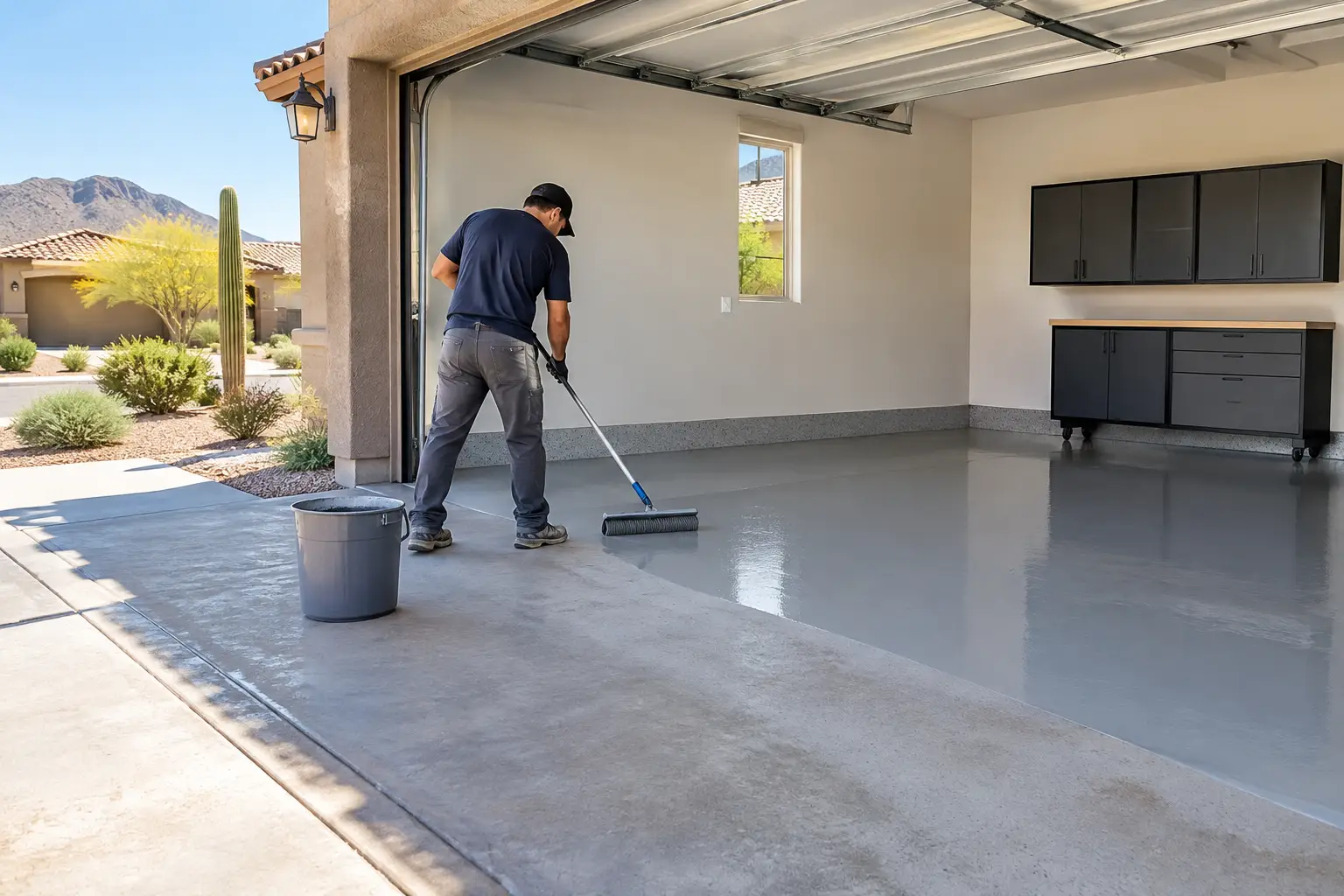
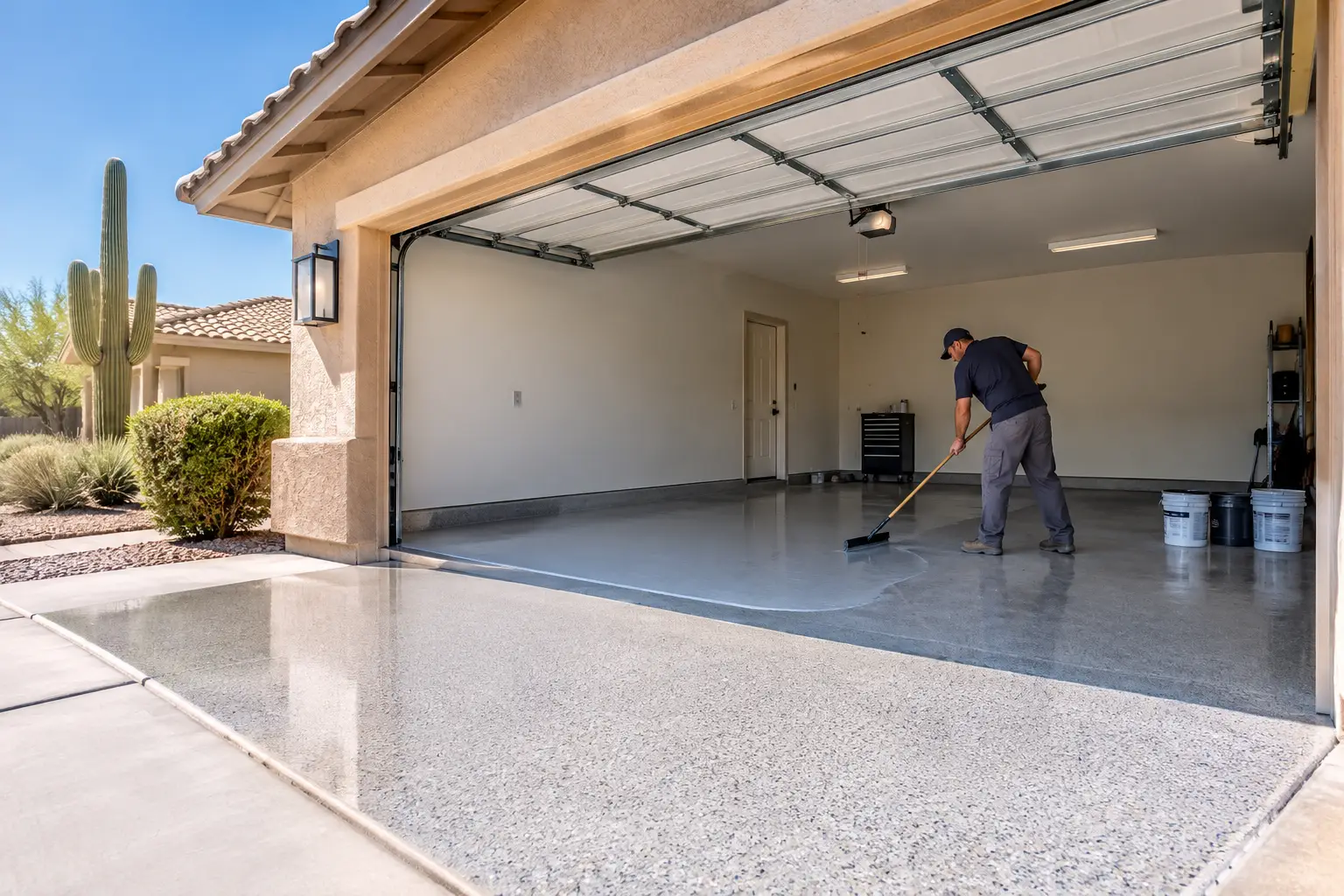
At TRM Garage Floors, the installed garage floor system is 100% polyaspartic from the base coat through the protective topcoat. That approach is chosen for adhesion, cure time, daily durability, and UV resistance in Arizona garages. No shortcuts, no skipped steps, and no mystery layer under a nice-looking sample board.
The Topcoat Does Much of the Sun Protection
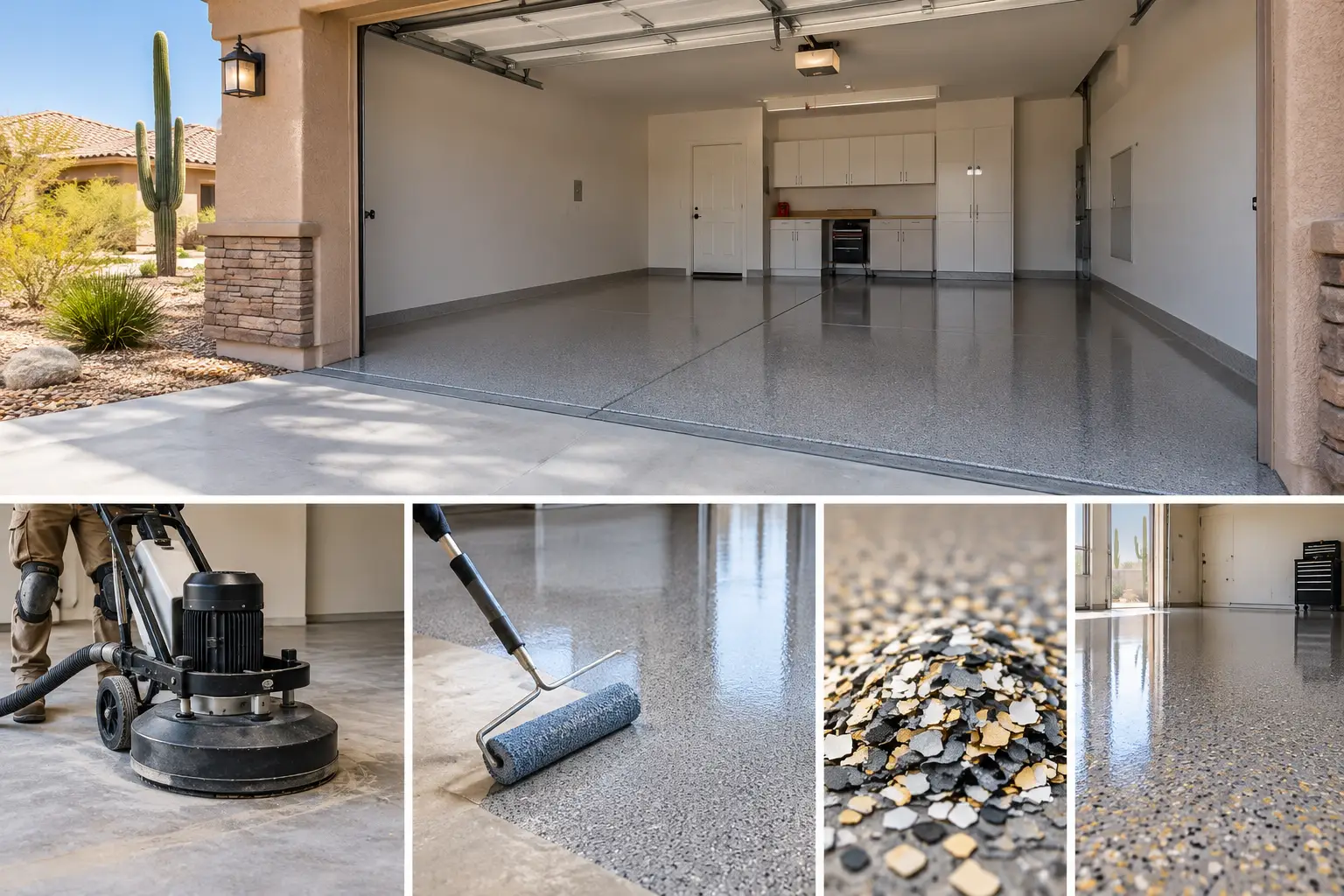
In a full-flake garage floor, the protective clear topcoat is the layer that takes the daily abuse. It sees hot tires, dropped tools, lawn equipment, oil drips, sunlight, and cleaning. It also plays a major role in keeping the floor’s color looking consistent.
A quality UV-stable polyaspartic topcoat helps protect both the coating beneath it and the flake blend itself. This matters most with lighter blends or floors that receive direct sun. Darker flake colors can hide mild discoloration better, but hiding a problem is not the same thing as preventing one.
The right sheen matters as well. A glossy finish can make a garage look sharp, but it can also show dust, scratches, and residue more readily. A more balanced finish may be a better fit for a busy three-car garage, especially if the homeowner wants a clean look without constantly chasing every footprint. This is a good conversation to have during an on-site estimate, not after the floor is installed.
Yellowing Is Not Always a Coating Problem
Before assuming a floor has yellowed, look at the pattern. If discoloration appears only where tires park, it may be rubber transfer or plasticizer residue rather than UV damage. If the floor looks dull or blotchy across the entire garage, it may simply need a proper cleaning. Arizona dust has a talent for getting into everything, including a garage that was spotless last week.
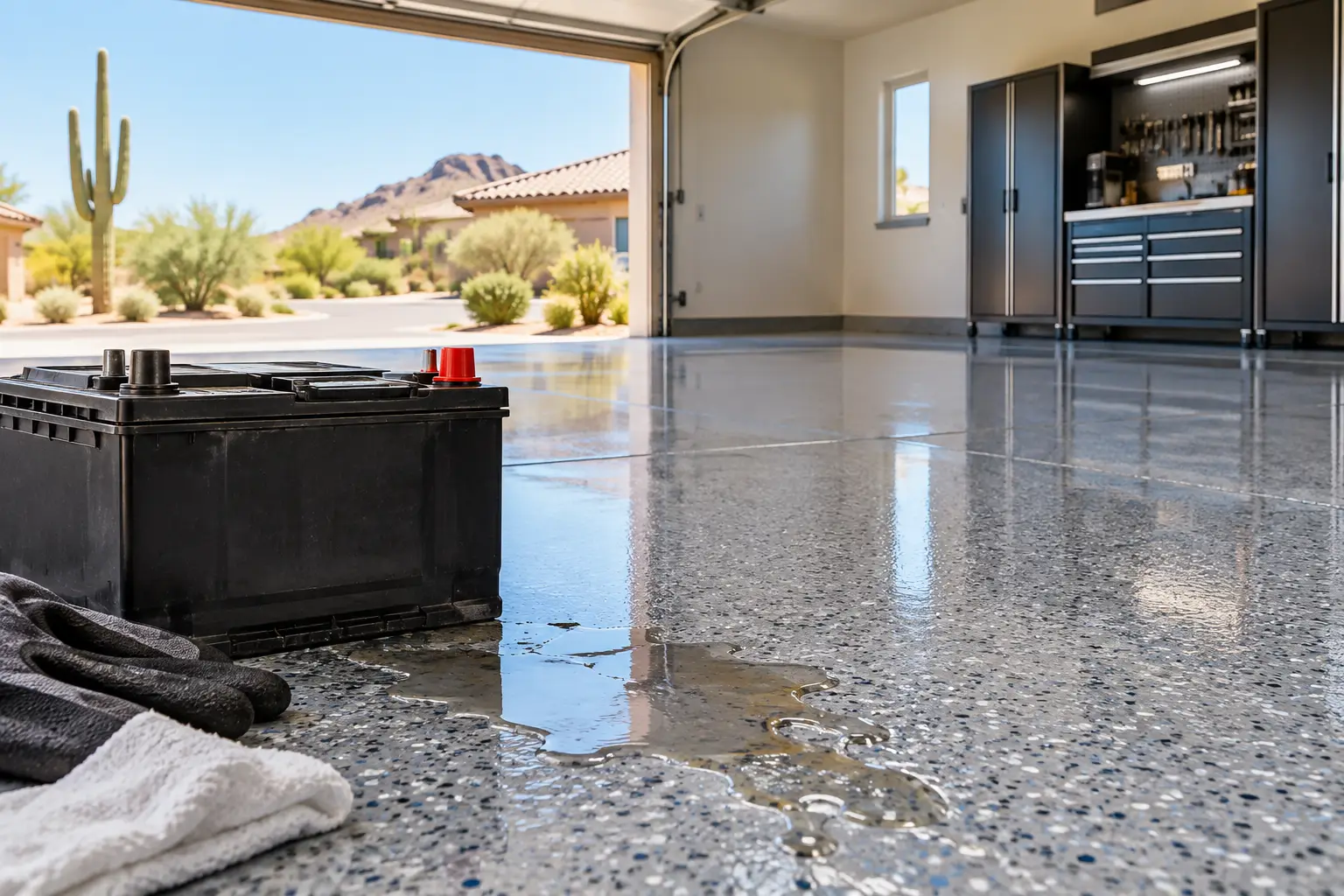
Hard-water spots can also change the appearance of a clear topcoat, particularly if vehicles drip after washing or the garage is used for frequent rinsing. Some degreasers and strong cleaners can leave a film when they are not rinsed thoroughly. A contractor should be able to help identify whether you are looking at surface contamination, normal wear, or a material issue.
If a coating is yellowing only in the sunlight path, the cause is more likely UV exposure. If it is peeling, bubbling, or lifting from the concrete, that is a separate concern and often points to poor surface preparation, moisture conditions, or a coating system that was not matched to the slab.
Preparation Still Determines Whether the Floor Holds
A UV-stable topcoat cannot make up for bad prep. The concrete needs to be mechanically ground with professional diamond-grinding equipment so the coating can bond to a clean, properly profiled surface. Simply acid washing or lightly sanding a slab is not the same thing.
Preparation also includes addressing cracks, surface damage, and weak concrete before coating begins. Small cracks may still show some movement over time because concrete moves. Anyone promising that every crack will vanish permanently is selling more confidence than concrete can support. But proper repairs and preparation give the finished floor a far better chance of holding up under normal garage use.
For homeowners replacing a peeling old coating, prep is even more important. The failed material has to be removed and the concrete evaluated before a new system is installed. Coating over a coating that is already letting go is like putting new paint over a wet wall. It may look fine briefly. Then it becomes somebody else’s problem, usually sooner than expected.
What to Ask Before You Choose a Garage Floor Contractor
You do not need a chemistry degree to compare proposals. You do need direct answers. Ask whether the final topcoat is UV stable and what material is being used in the base coat, color coat, and topcoat. Ask how the concrete will be prepared, whether cracks and damaged areas are included, and whether the proposal calls for a full flake broadcast or a partial spread.
It is also reasonable to ask who will be on the job and who is responsible if an issue comes up. A clear proposal should explain the system, the preparation steps, the finish, and any slip-resistant option. If the estimate is much lower than others, find out what has been removed from the process. Sometimes it is a smaller crew or simpler schedule. Sometimes it is the diamond grinding, material quality, or prep work. Floors are not great at keeping secrets for long.
Keeping a Polyaspartic Garage Floor Looking Its Best
A coated garage floor does not need much maintenance. Sweep or blow out loose grit regularly, especially near the garage door. Clean spills when they happen, and use a mild cleaner with water for routine washing. Avoid abrasive powders, strong solvents, or harsh products that leave residue unless the manufacturer specifically recommends them.
Use floor mats under vehicles only if they are breathable and kept clean beneath them. A mat that traps moisture and dirt can create its own mess. If you notice an unusual stain or change in color, take a photo before aggressively scrubbing it. That makes it easier to determine what caused it and how to address it without damaging the finish.
A well-installed polyaspartic garage floor should give you a bright, cleanable surface that stands up to real Arizona garage life, not just a good-looking floor for the day it is installed. If you are comparing coatings or looking at a floor that has started to discolor, an on-site evaluation can give you a straight answer before a small concern turns into an expensive redo.
TRM Garage Floors installs 100% polyaspartic coating systems for garages, patios, and commercial spaces across the East Valley. Free estimates, done in one day.