A peeling garage floor usually starts small: a lifted edge near the overhead door, a blister under a parked vehicle, or flakes sticking to a tire. When you need to fix peeling epoxy garage floor damage, the goal is not to cover the loose area and hope for the best. The goal is to find out why the coating released from the concrete in the first place.
In Gilbert and across the East Valley, heat, hot tires, moisture, poor preparation, and sun exposure can turn a basic epoxy job into a recurring problem. A proper repair can restore the look of the floor. A rushed patch often creates a new weak spot beside the old one.
Why epoxy garage floors peel
Epoxy does not usually peel because of one bad day. It peels because the bond between the coating and concrete was compromised before, during, or after installation. The visible peeling is simply the evidence.
The most common cause is inadequate surface preparation. Concrete is hard, but it is also porous. It can hold oil, tire residue, curing compounds, sealers, dust, and moisture below the surface. If the installer only pressure washes or acid etches the slab, the coating may not have enough texture or clean concrete to grab onto. Mechanical diamond grinding opens the concrete properly and removes weak material at the surface.
Arizona conditions add another layer. A garage slab can get extremely hot, especially near the driveway-facing door. Hot tires can stress a lower-grade coating, causing it to soften, lift, or pull away from the concrete. Direct sunlight can also fade or break down systems that are not designed for UV exposure. Moisture vapor moving up through the slab can create bubbles, blisters, and delamination even when the top of the floor looks dry.
A coating may also fail because it was applied too thin, mixed incorrectly, installed outside its temperature window, or put over a previous coating that was already losing adhesion. The right fix depends on which of these conditions is present.
Start by checking how far the failure goes
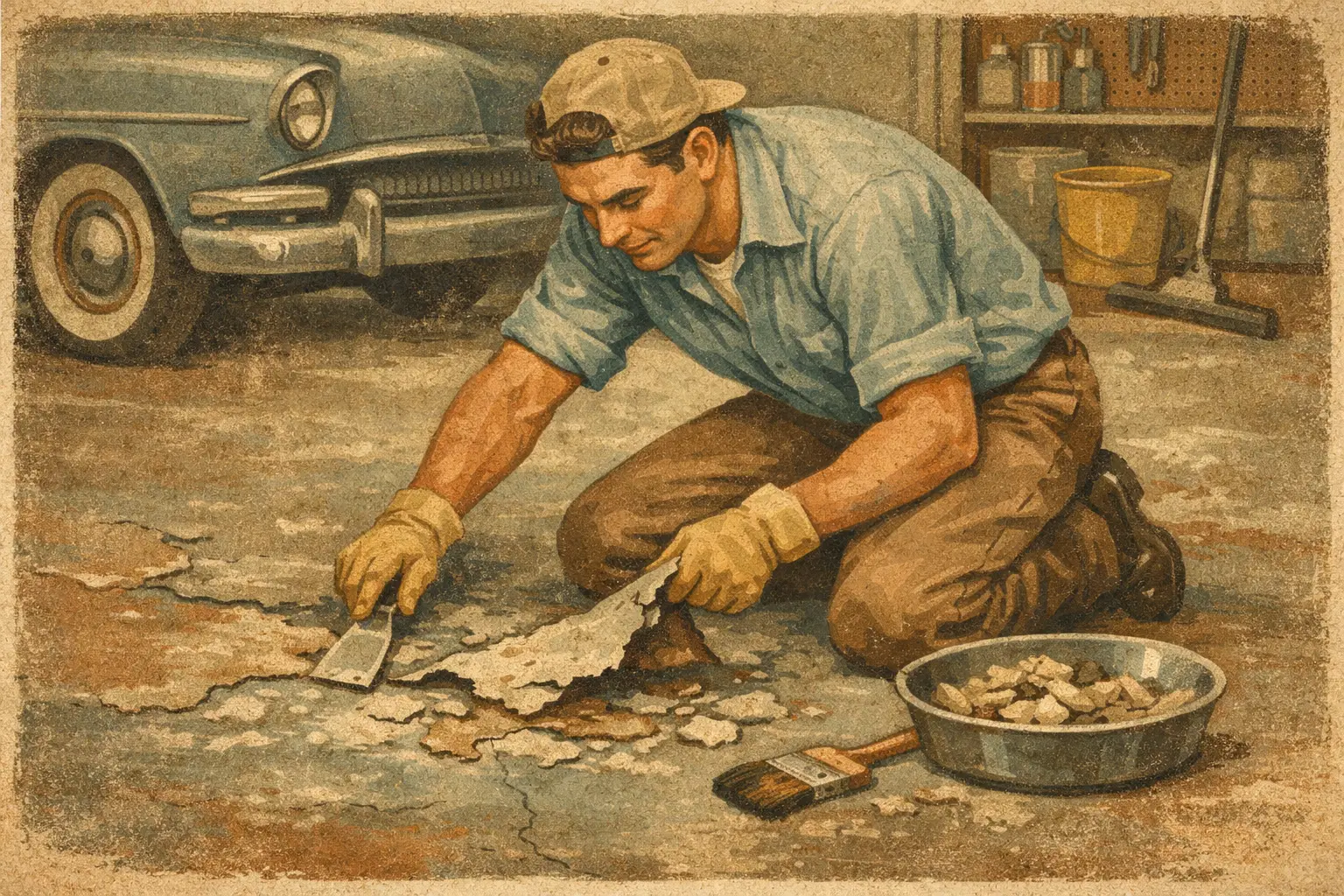
Before choosing a repair, inspect the floor honestly. Press around the peeling area with a scraper or putty knife. If only a few small chips are loose and the surrounding coating is firmly bonded, a localized repair may be possible. If flakes continue to release as you scrape, the problem is larger than it first appears.
Look closely at the underside of a peeled piece. If you see bare, dusty concrete on the back of the coating, it likely never bonded well to the slab. If concrete is attached to the coating, the slab surface itself may be weak or deteriorating. If the coating comes up in broad sheets, poor prep, moisture, or a failing prior layer is often involved.
Also pay attention to where the peeling occurs. Failure near the garage door can point to sun and hot-tire stress. Peeling around cracks can mean the crack moved or was not properly repaired. Random blisters across the floor may indicate moisture vapor. Oil-stained parking areas usually need deeper cleaning and removal of contaminated concrete before recoating.
Can you patch a peeling epoxy floor?
Sometimes. A small repair makes sense when the existing coating is still sound across most of the garage and the failure is isolated to a clearly defined area. For example, a dropped tool may chip an otherwise well-bonded floor, or one section may have been contaminated before the original application.
A patch is less likely to last when peeling is widespread, when there are multiple blistered areas, or when the floor was coated over poor preparation. Applying more epoxy over loose epoxy does not solve adhesion. It only adds another layer that can fail.
Color and texture matching are another trade-off. Solid-color coatings are easier to blend than decorative flake floors, but even a well-done patch may remain visible. On a flake system, matching the chip size, color blend, broadcast rate, and clear topcoat takes experience. For a garage floor with widespread failure, full removal and a new coating system usually deliver a cleaner, more durable result.
How to fix a peeling epoxy garage floor the right way
Remove every loose edge
Do not stop at the visibly peeled spot. Scrape and grind back the coating until you reach material that is firmly attached. If an edge can be lifted with a scraper, it is not a stable base for a repair. The repaired area may become larger than expected, but this is where shortcuts create repeat failures.
For extensive peeling, professional diamond grinding is the practical answer. Grinding removes failing epoxy, profiles the concrete, and exposes a clean surface for the new system. It also helps address tire residue, thin old coatings, and weak concrete at the surface.
Clean and repair the concrete
Once the failed coating is removed, the slab needs more than a sweep. Oil and grease must be treated, cracks need to be routed and filled as appropriate, and spalled or pitted areas need repair. A coating will follow the shape of the concrete beneath it. It will not make a damaged slab disappear.
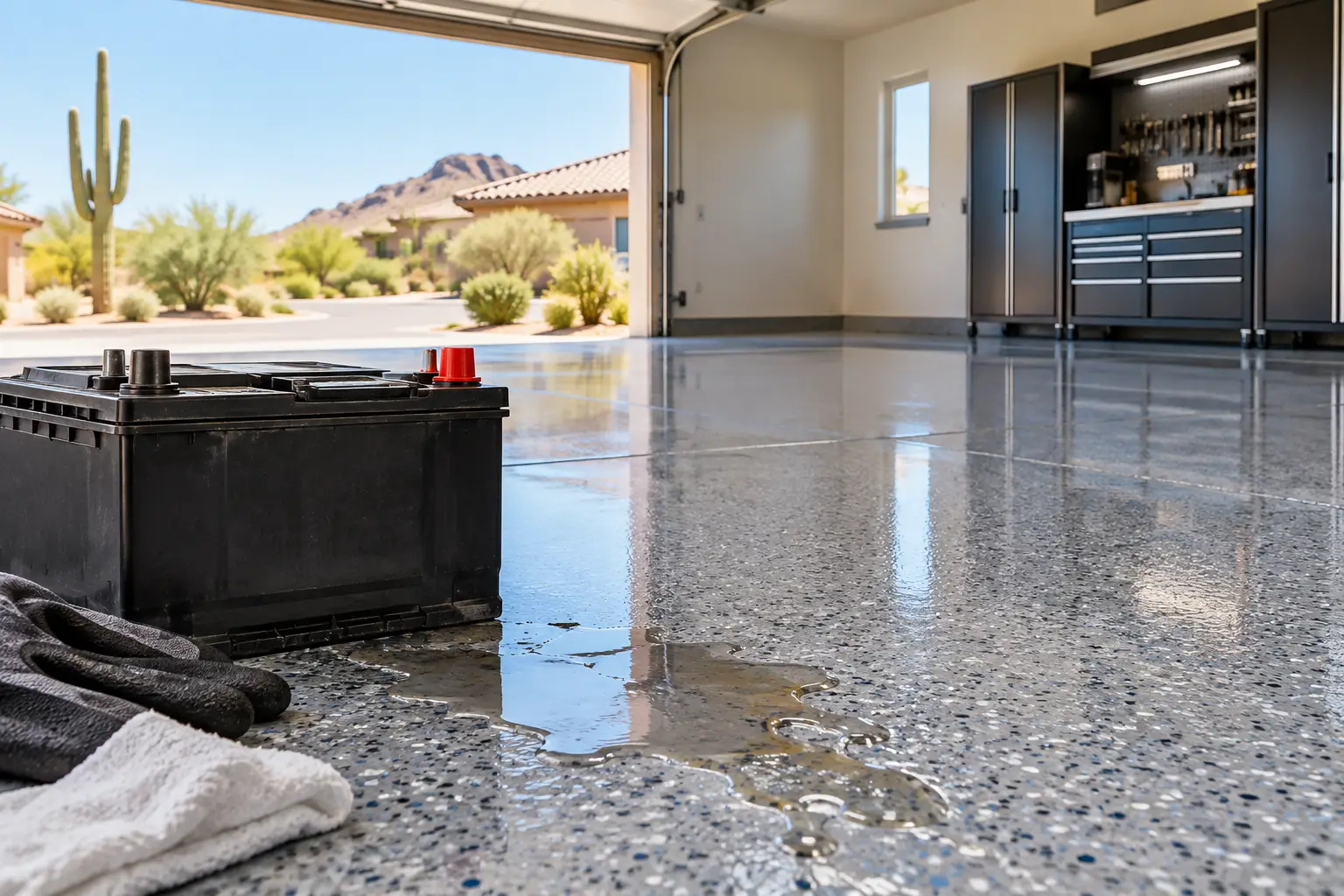
Moisture should be evaluated before applying a new coating. A slab can appear completely dry while moisture vapor is still moving upward through it. If moisture is a concern, the coating system and preparation plan need to account for it. This is especially important in older garages, homes with drainage issues, and slabs that have had prior coating failures.
Build a system, not a cover-up
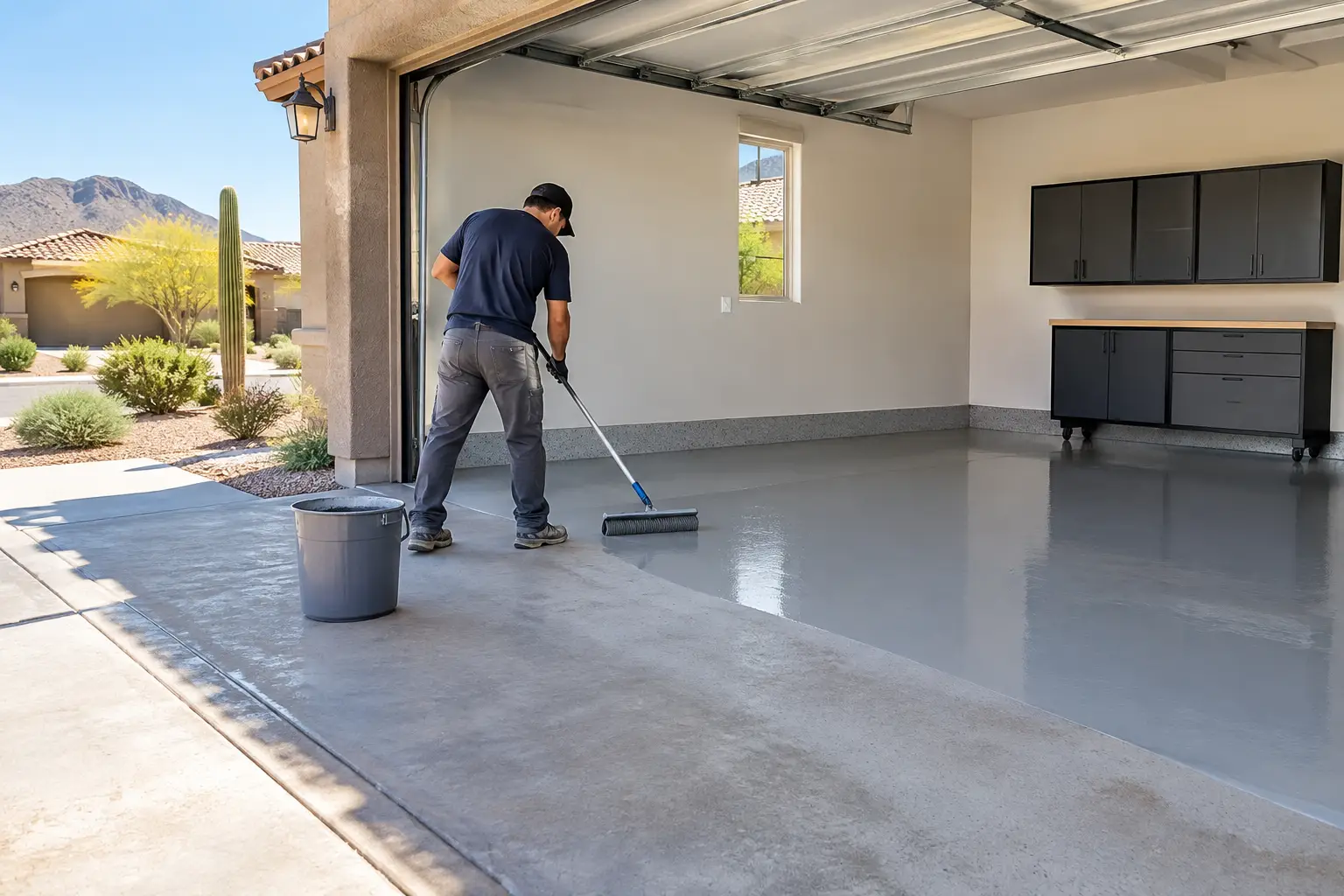
For a small, isolated repair, the prepared concrete can receive a compatible base coat, matching flakes if used, and a protective topcoat. The repair needs to overlap onto firmly bonded existing material, with the transition blended carefully.
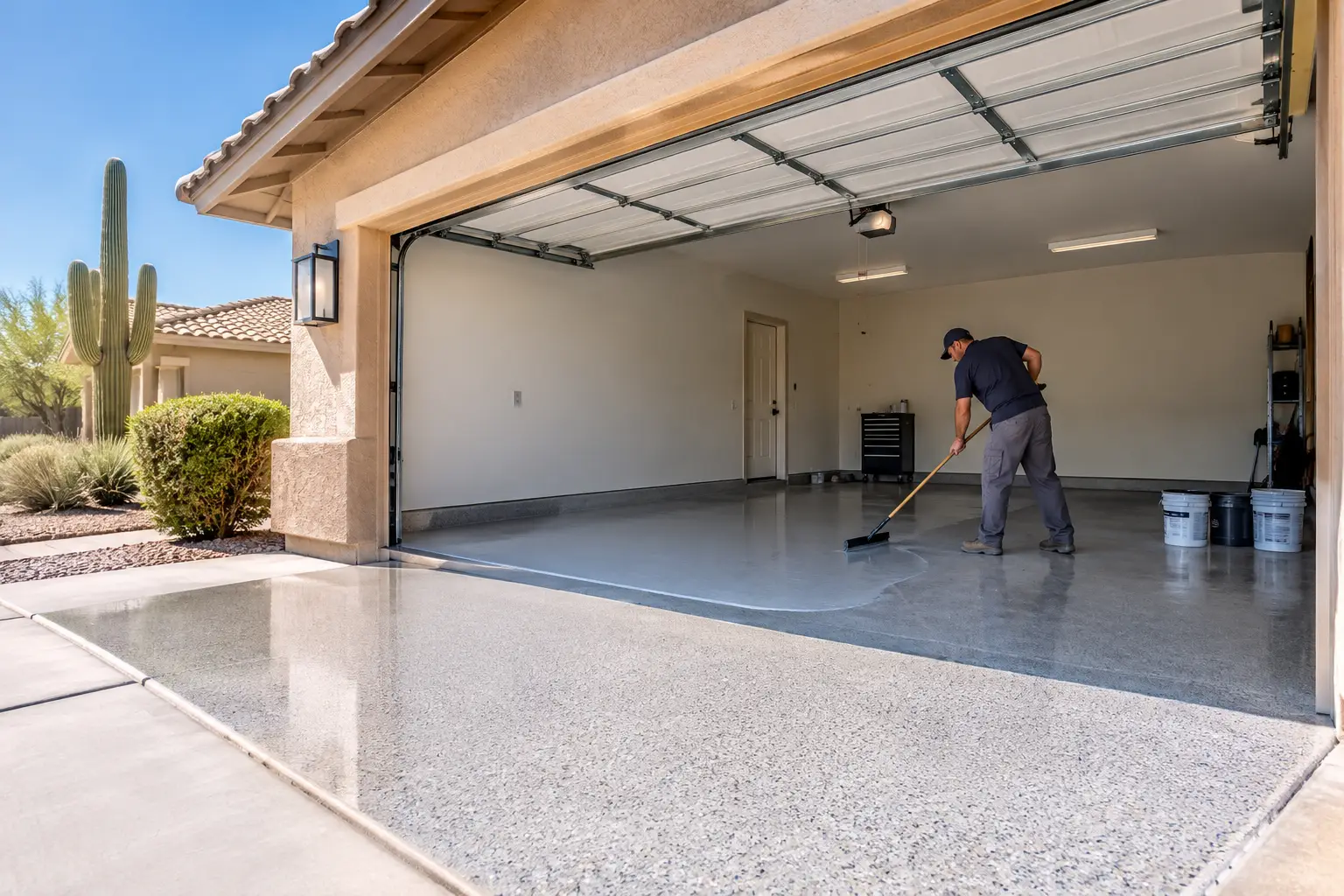
For a full garage redo, removing the failed epoxy and installing a complete coating system is generally the better long-term decision. In Arizona, many homeowners choose a polyaspartic system because it is designed for fast cure times, strong adhesion, hot-tire resistance, and better UV stability than basic epoxy. That does not mean every polyaspartic installation is automatically good. Preparation still determines whether the floor holds.
A professionally installed flake system typically includes a properly prepared concrete profile, a base coat, a full broadcast of decorative vinyl flakes, removal of excess flakes, and a clear protective topcoat. The flake layer adds texture and visual depth while helping disguise minor dust and everyday marks. The topcoat supports easier cleaning and long-term wear resistance.
Let the floor cure before using it
Do not rush this part. Cure time depends on the materials used, slab temperature, humidity, and the specific system. A fast-curing polyaspartic floor can often be ready for vehicle traffic the following morning, while many epoxy products need considerably longer. The installer should provide clear instructions for foot traffic, vehicle traffic, mats, shelving, and cleaning.
Avoid dragging heavy cabinets, metal jack stands, or sharp-edged equipment across a fresh floor. Once the coating has fully cured, use rubber-backed mats with care and clean up battery acid, oil, paint, and harsh chemicals promptly. A quality floor is tough, but basic care keeps it looking better for longer.
When a full replacement is the smarter investment
If more than a small portion of the coating is peeling, a spot repair can become a cycle of chasing failures. The upfront price of a full removal and recoat is higher, but it addresses the actual cause rather than hiding it.
This is especially true when a garage has hot-tire pickup, broad discoloration, widespread bubbling, or several failed repairs. Homeowners who plan to organize the garage, add storage, park expensive vehicles, or improve resale appeal usually benefit more from starting with a sound surface than continuing to patch a weak one.
The right contractor should inspect the slab in person, explain what failed, identify any cracks or moisture concerns, and describe the preparation process before discussing color choices. No shortcuts, no skipped steps. A coating is only as reliable as the concrete profile beneath it.
For East Valley homeowners, TRM Garage Floors approaches failed epoxy as a concrete-preparation problem first and a coating problem second. That discipline matters when summer heat, sun, and daily vehicle traffic are part of the equation.
A peeling floor does not mean your garage is beyond repair. It means the next step should be based on the condition of the concrete, not the temptation of the quickest patch. Get the failed material fully evaluated, choose a system suited to Arizona, and give the new floor a surface it can truly hold onto.
TRM Garage Floors installs 100% polyaspartic coating systems for garages, patios, and commercial spaces across the East Valley. Free estimates, done in one day.