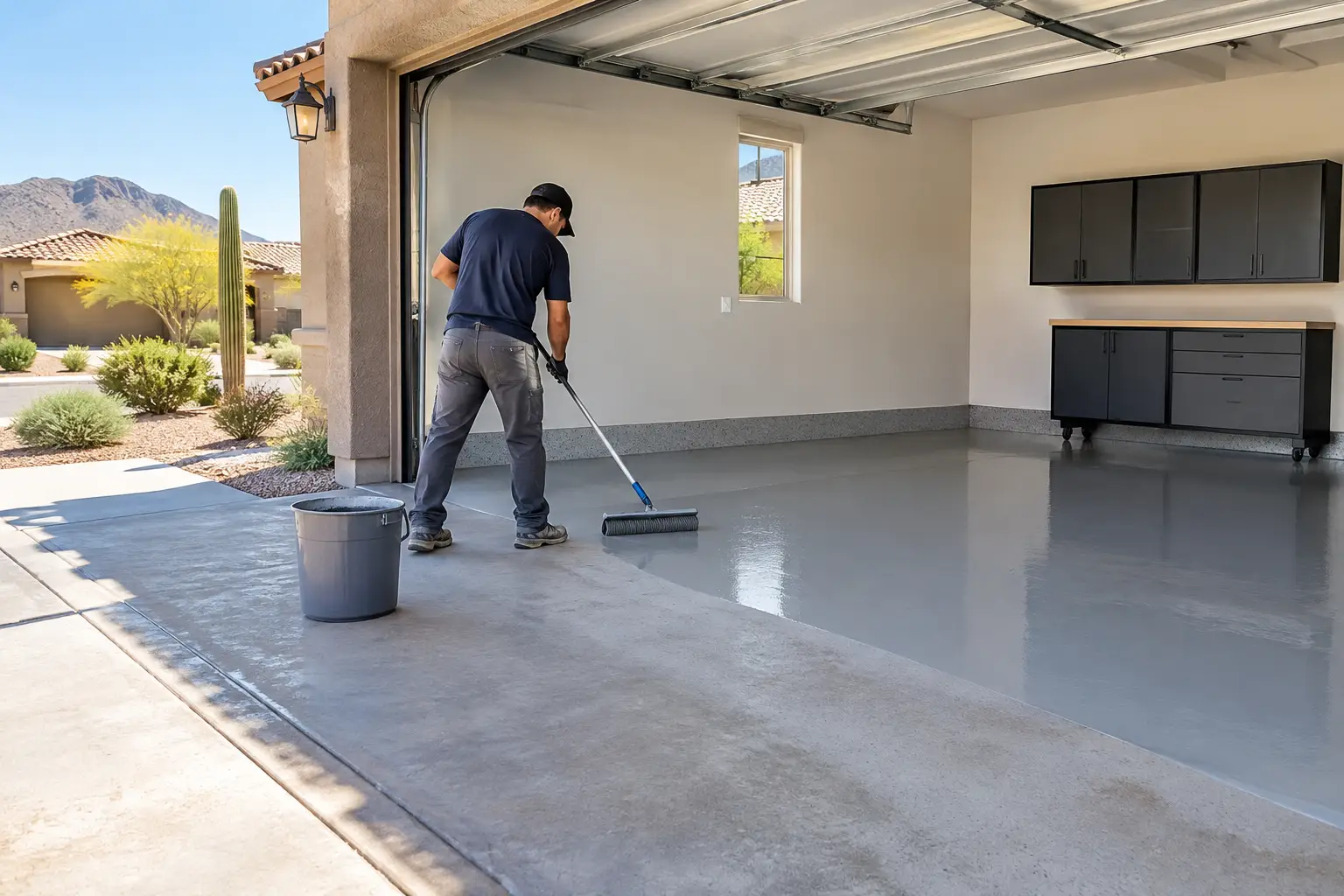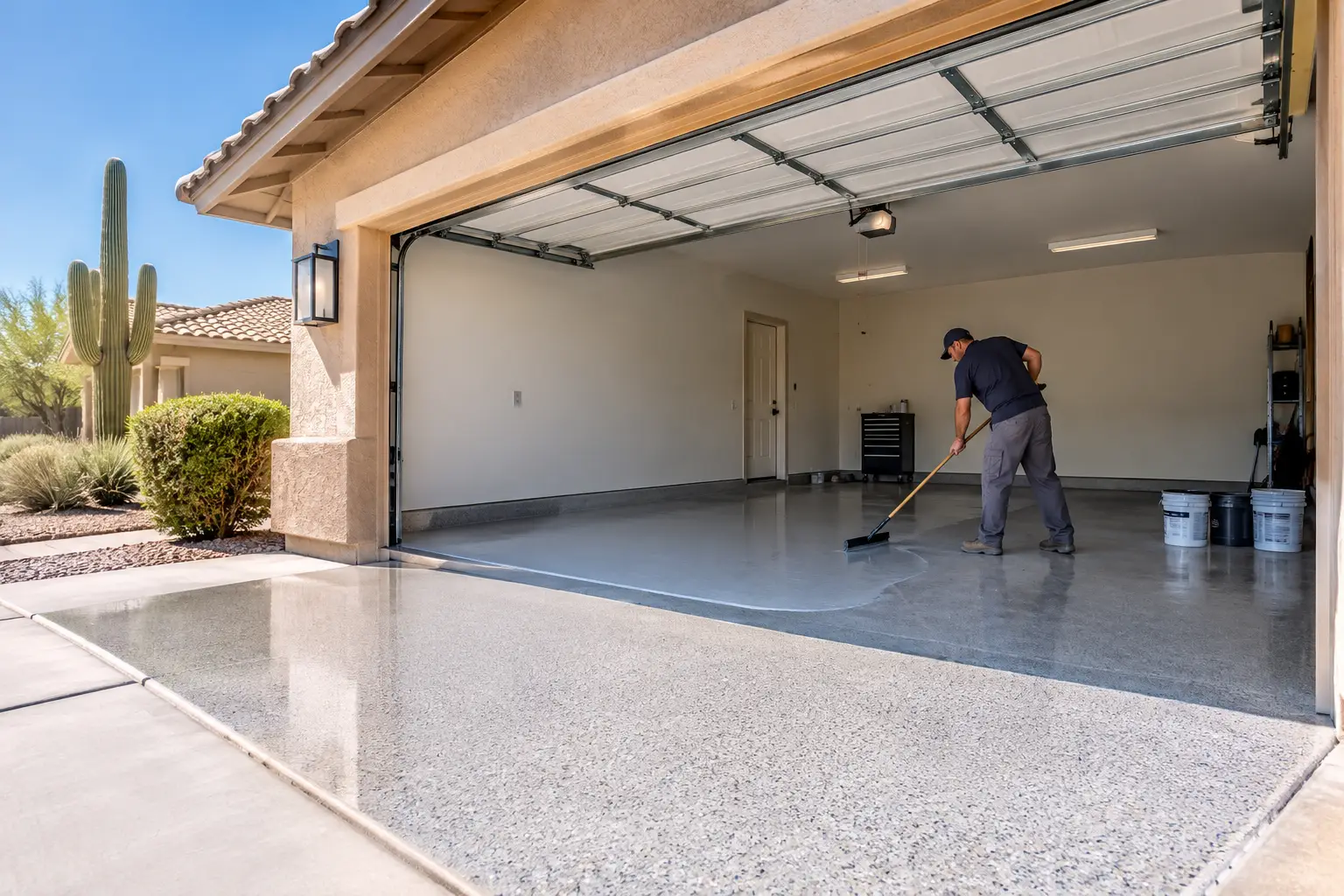
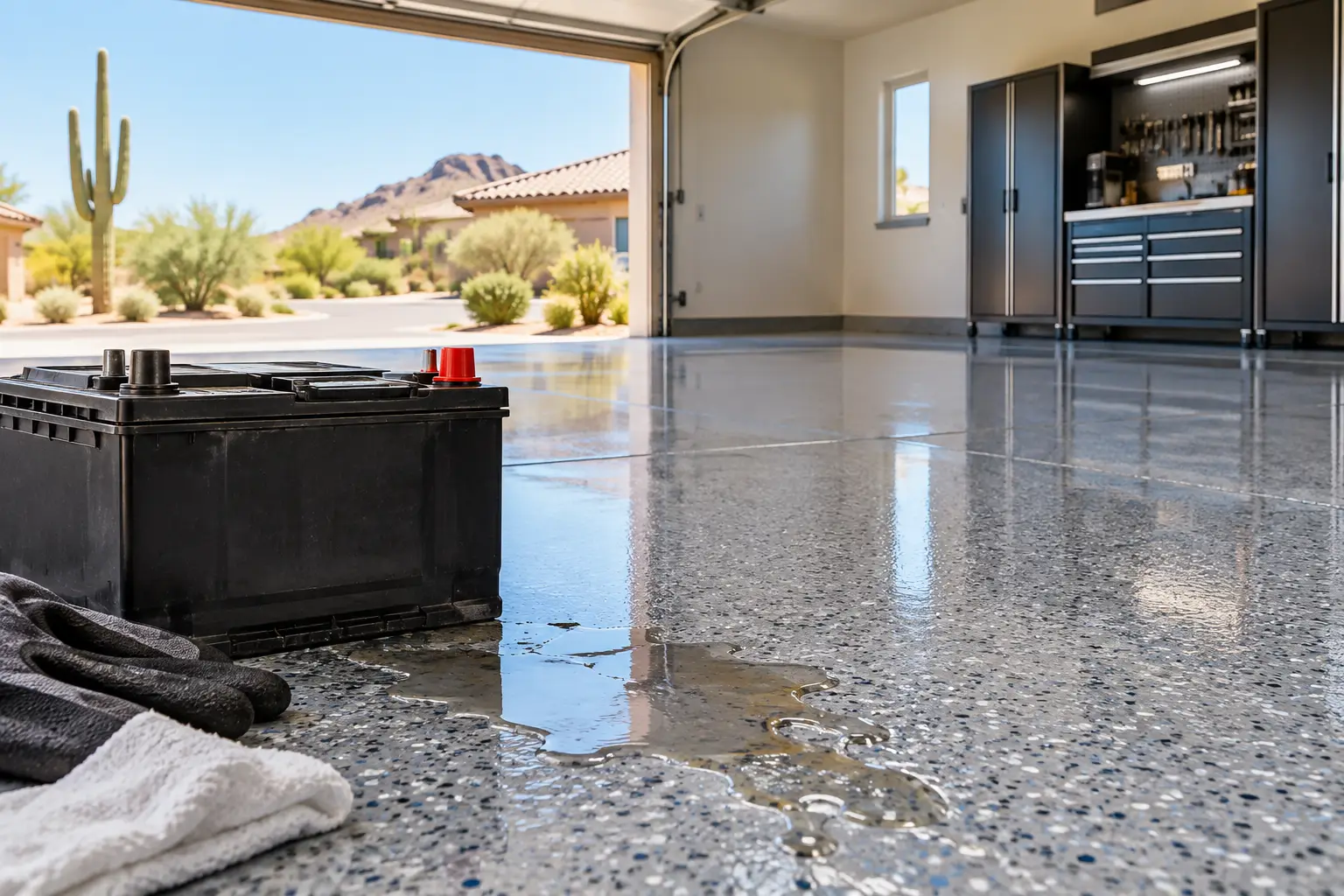
A leaking car battery can leave a homeowner staring at a dark, crusty spot on the garage floor and asking one fair question: does polyaspartic resist battery acid? A professionally installed polyaspartic garage floor offers much better protection than bare concrete, but “resistant” does not mean a battery leak should sit there for days while everyone hopes for the best.
The practical answer is yes: a quality polyaspartic system is designed to resist many common garage chemicals, including brief exposure to battery acid. It creates a nonporous protective layer over the concrete, so the spill is far less likely to soak in, stain deeply, or start breaking down the slab. Clean it up promptly, though. That is the difference between a minor garage chore and a preventable coating repair.
Does Polyaspartic Resist Battery Acid Better Than Concrete?
Bare concrete is porous. When sulfuric acid from a lead-acid battery reaches it, the liquid can absorb into the surface instead of staying on top. That can leave discoloration, surface damage, and a spot that is hard to fully clean. In an older garage, especially one with years of automotive stains, the damage may be more noticeable than homeowners expect.
A properly installed polyaspartic coating changes that equation. The coating sits between the spill and the concrete, creating a continuous protective surface that is much easier to wipe and rinse. Instead of acid immediately entering the slab, it remains on the coating long enough to be cleaned safely.
That protection matters in East Valley garages, where heat can be tough on vehicles and batteries. A battery near the end of its life may leak around the terminals or vent corrosive material. Golf carts, backup power equipment, classic cars, and stored vehicles can create the same concern. Nobody plans for a battery leak, which is exactly why a finished garage floor should be ready for one.
What “Resistant” Actually Means
Chemical resistance is not the same as chemical proof. A quality polyaspartic coating can handle routine automotive exposure well, but its performance still depends on the type of chemical, how concentrated it is, how long it remains on the floor, and whether the coating was installed correctly.
A small battery-acid drip found and cleaned that day is very different from a large leak that sits under a vehicle for weeks. Extended exposure can dull the finish, discolor the flake surface, or eventually affect the topcoat. The coating may still protect the concrete underneath, but no homeowner wants to test the limits of any floor system that way.
Think of it like a good windshield. It handles normal road debris well, but you still would not leave a rock sitting on the glass and call it maintenance. Polyaspartic holds up well in real garages, but prompt cleanup is still part of owning a garage floor that looks good for the long haul.
How to Handle a Battery Acid Spill on a Coated Garage Floor
Start by protecting yourself. Battery acid is corrosive, so keep children and pets away and use appropriate gloves and eye protection. If the battery is actively leaking or damaged, address the battery problem first rather than focusing only on the floor.
For a small spill, use a battery-acid neutralizer or another appropriate neutralizing material, following its instructions. Once the reaction has stopped, collect the residue safely and clean the area with water and a mild cleaner. Avoid aggressive wire brushing, harsh scraping, or strong solvents. Those methods can create more cosmetic damage than the spill itself.
After the area is clean and dry, inspect it in good light. If the coating still has an even sheen and no soft, cloudy, or discolored area, it likely came through the incident just fine. If you notice a change in finish, take a photo and have a coating professional assess it. Small issues are usually easier to address before they become bigger ones.
The main rule is simple: do not let acid sit. A floor coating gives you time to react. It is not permission to ignore a leak.
Why Installation Quality Matters as Much as the Material
Homeowners comparing garage floor coatings often focus on the product name, and that makes sense. But chemical resistance depends on the full system, not just the word “polyaspartic” on a proposal.
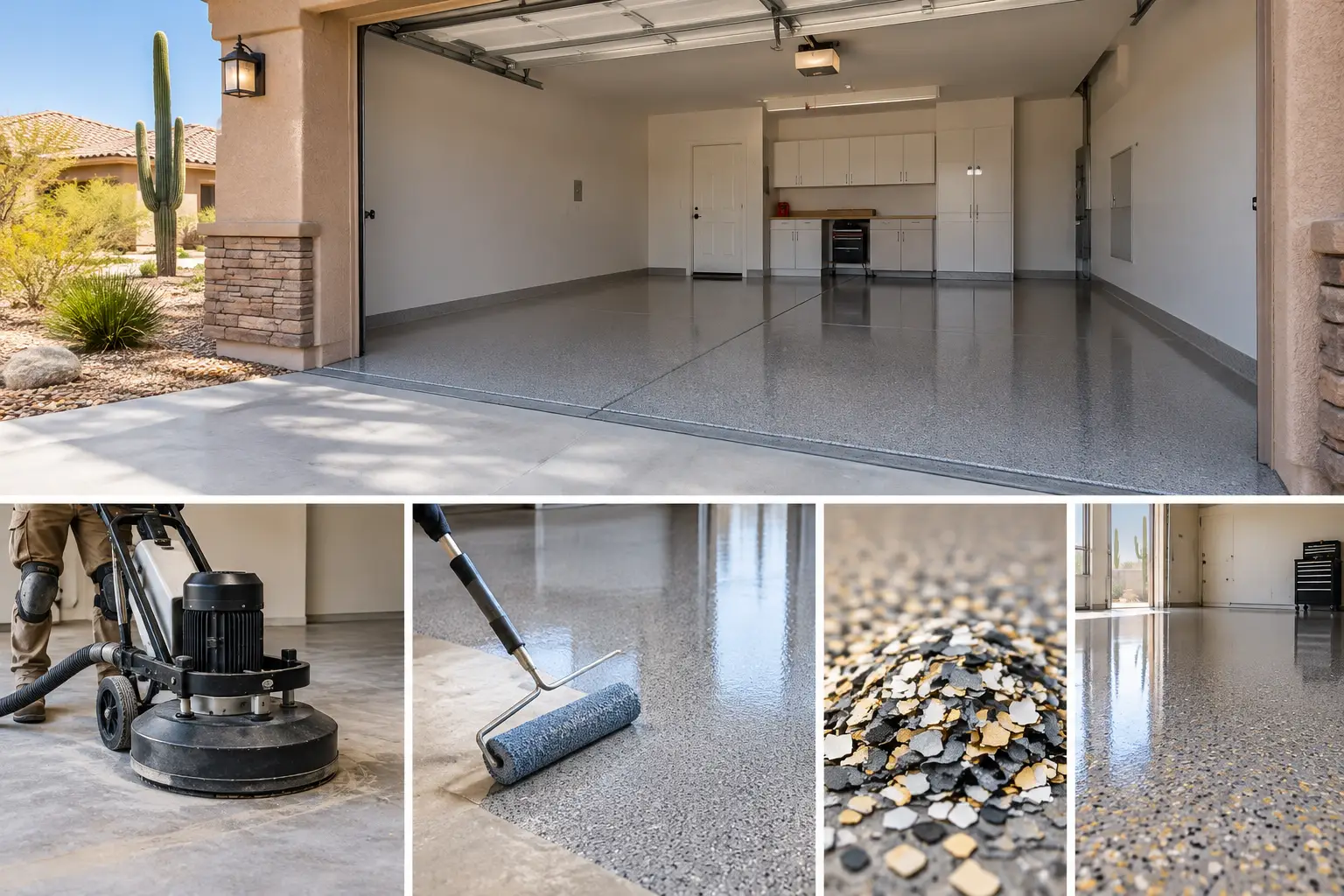
A coating needs solid adhesion to protect concrete over time. That starts with mechanical preparation using professional diamond-grinding equipment. Grinding opens the concrete surface and removes weak material, old residues, and surface contaminants that can interfere with bonding. Skipping that step, or using acid etching as a shortcut, can leave a coating more vulnerable to peeling or failure later.
Cracks and damaged areas also need attention before the base coat goes down. Then the coating system must be applied at the proper coverage rate and allowed to cure correctly. A full flake broadcast and protective topcoat can provide a finished surface that is durable, easy to clean, and more forgiving of everyday garage abuse.
This is why two estimates that both say “polyaspartic garage floor” may not describe the same job. One contractor may be offering a complete polyaspartic system from base coat through topcoat, while another may use a lower-cost base layer or limit prep work. The cheaper proposal may look attractive until the floor is asked to handle hot tires, dropped tools, oil, cleaners, and the occasional battery leak.
Polyaspartic, Epoxy, and Battery Acid Exposure
Epoxy has a long history in garage floors and can provide useful chemical resistance when it is properly installed. The difference for Arizona homeowners is that a quality polyaspartic system also brings practical advantages for residential garages, including faster return to use and better UV stability.
That UV resistance matters when sunlight reaches the garage opening or when the door stays open during the day. Some epoxy systems can amber or yellow with UV exposure. Polyaspartic is generally a better fit for homeowners who want a bright, clean-looking garage floor without turning the installation into a multi-day disruption.
Still, material selection should not become a scoreboard. A well-prepared, professionally installed coating system is more useful than a high-end product applied over poorly prepared concrete. The garage floor does not care what the brochure promised if the coating was never given a proper surface to bond to.
Questions to Ask Before Choosing a Garage Floor Contractor
If battery acid, automotive fluids, and easy maintenance are part of your decision, ask direct questions during your estimate. A good contractor should be able to explain what material is used in the base coat and topcoat, how the concrete will be prepared, how cracks are handled, and what the system is designed to resist.
Ask whether the proposal includes diamond grinding or only a light cleaning and etching process. Ask whether the flakes are fully broadcast or lightly scattered. Ask what happens if the concrete has old stains, prior paint, moisture concerns, or damaged sections. Clear answers are a good sign. Vague answers tend to become vague results.
It is also reasonable to ask who will be on site and who is responsible if something needs attention after the job. At TRM Garage Floors, direct owner involvement and transparent proposals are part of the process because homeowners should know what is being installed in their garage, not just what color flakes they picked.
A Coated Floor Makes the Next Spill Less Stressful
A polyaspartic garage floor will not prevent a battery from leaking. It will, however, make the cleanup far less stressful by keeping a brief spill from immediately becoming part of the concrete. That is a real benefit for homeowners who use their garage for vehicles, storage, projects, or simply want it to stay clean.
If your current garage floor has old acid marks, flaking paint, or stains that never quite come out, the condition of the concrete should be evaluated before choosing a coating system. The right preparation and a complete polyaspartic system can give you a floor that is ready for normal life in a working Arizona garage, including the occasional surprise parked in the corner.
TRM Garage Floors installs 100% polyaspartic coating systems for garages, patios, and commercial spaces across the East Valley. Free estimates, done in one day.