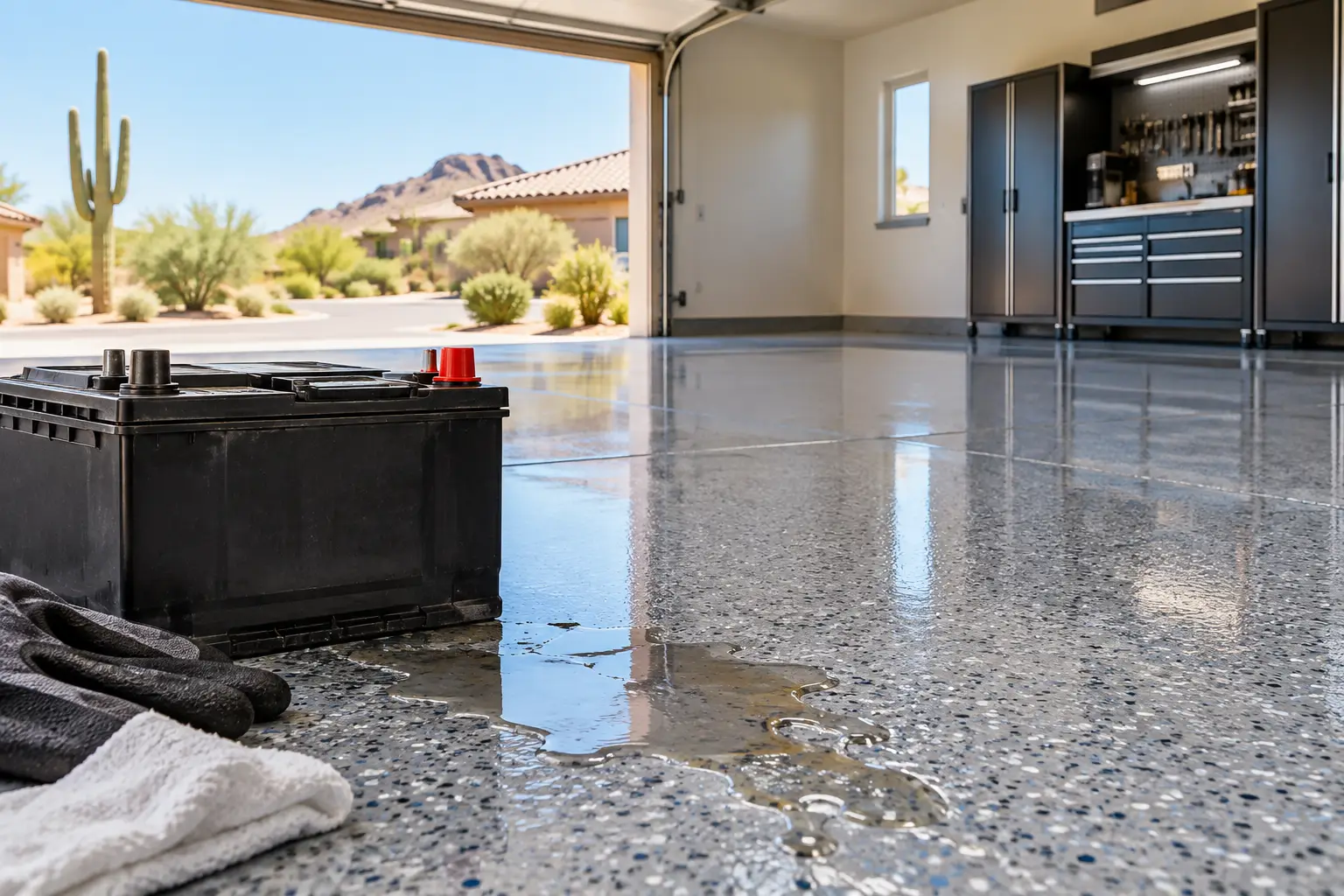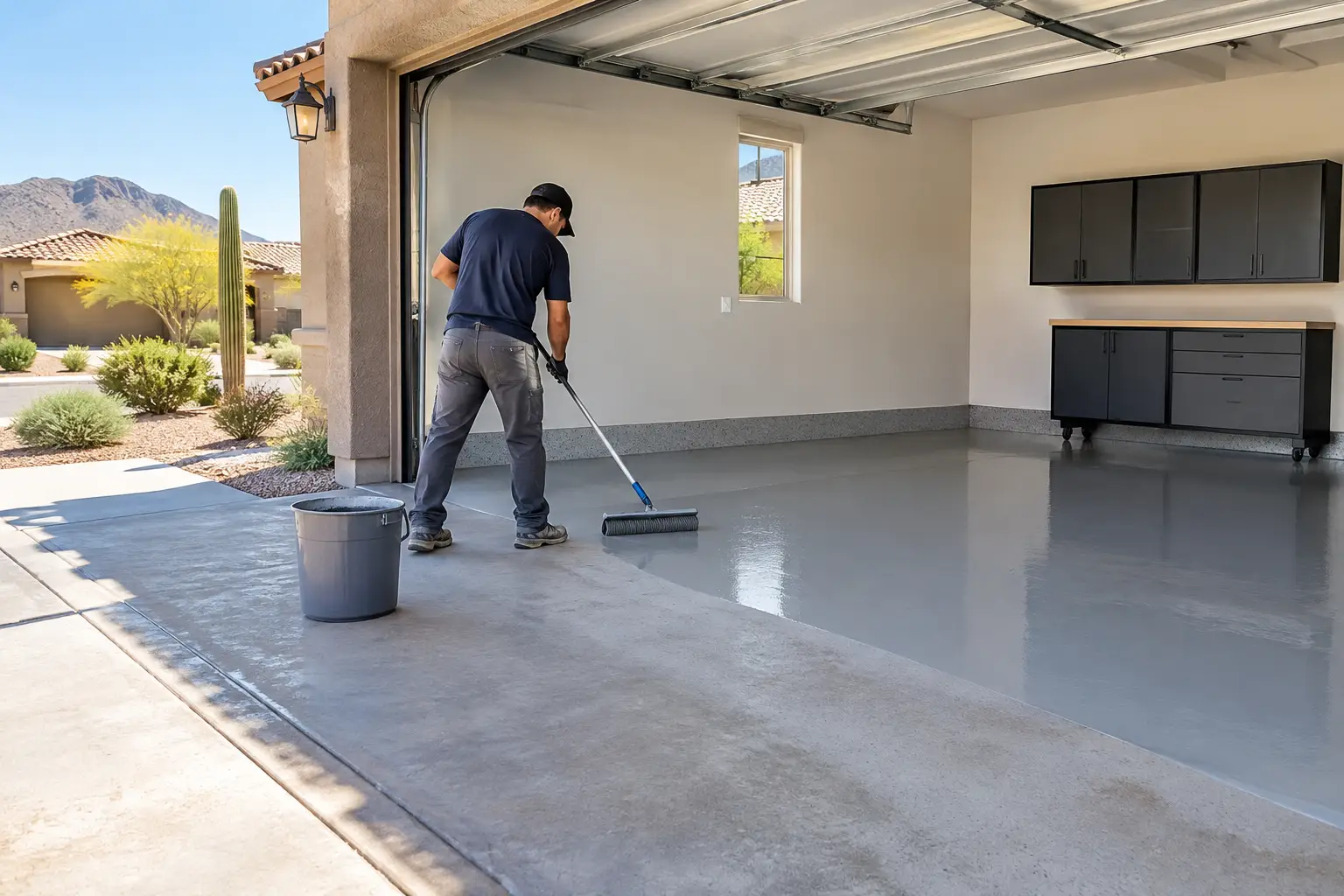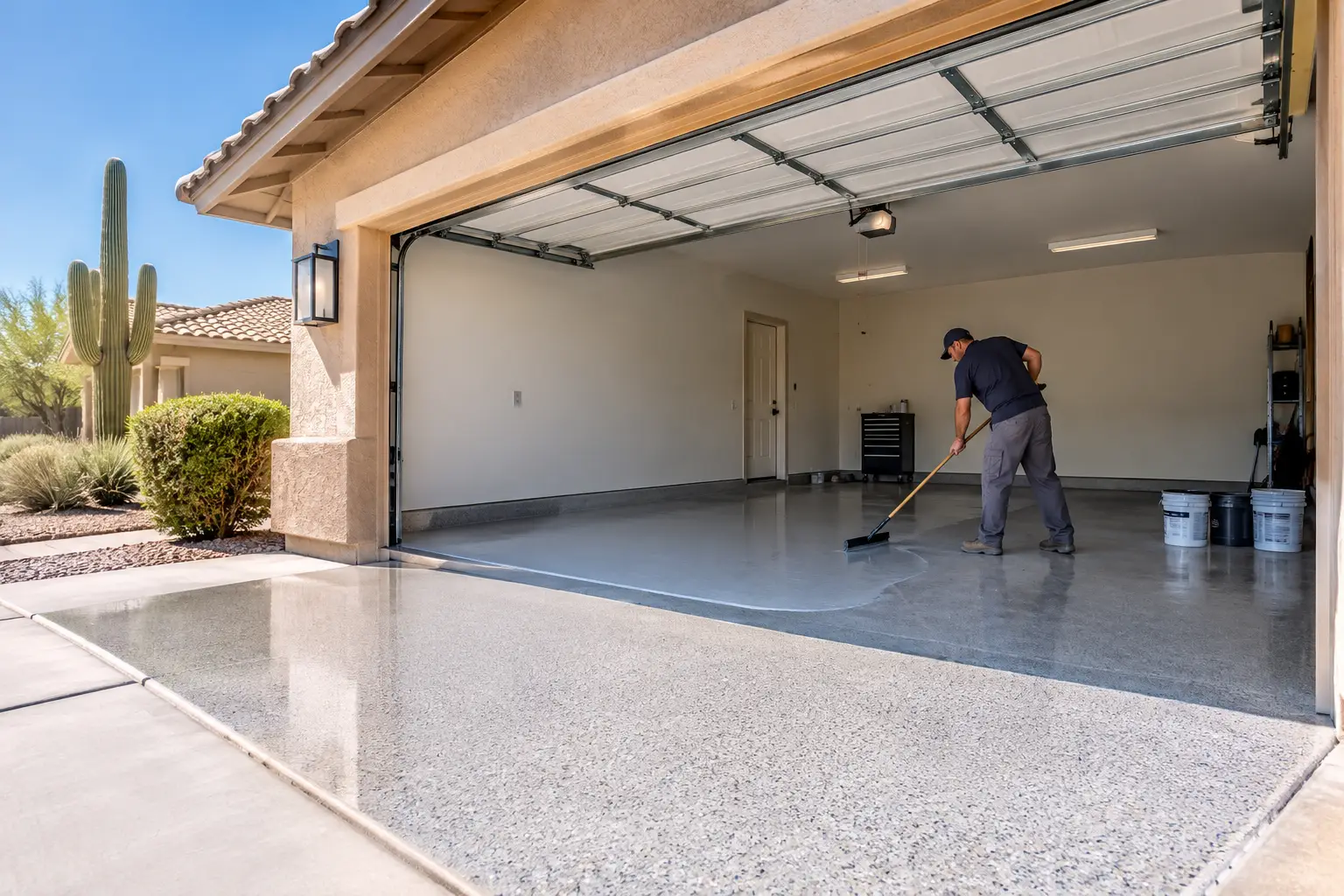
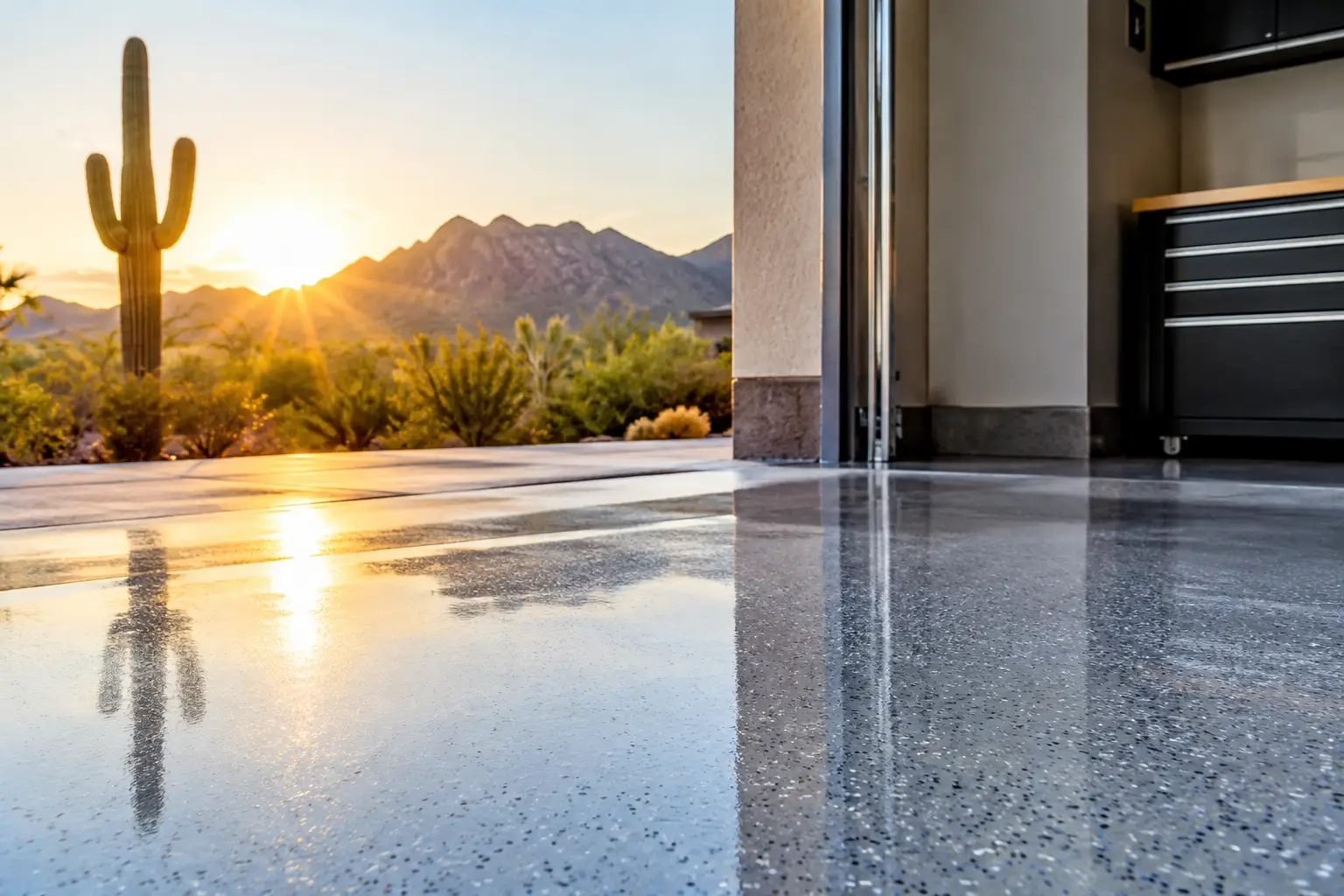
A garage floor can look fine until Arizona summer exposes every weak point. Tire marks bond to the surface, stains settle into porous concrete, dust follows you into the house, and a once-clean slab starts looking worn down. Epoxy flooring is often the first solution homeowners hear about, but it is worth asking whether a basic epoxy system is the right fit for East Valley conditions.
The honest answer is that it depends on the product, the preparation, and where the floor is located. Not every epoxy coating is the same, and not every concrete slab needs the same solution. For garages, patios, pool decks, workshops, warehouses, and showrooms in Gilbert and surrounding communities, heat, UV exposure, and daily traffic change the conversation.
Why Epoxy Flooring Can Struggle in Arizona
Epoxy has been used as a concrete coating for decades. It can provide a hard, attractive finish and may be a reasonable option for certain indoor spaces with controlled temperatures and limited sunlight. The problem comes when a lower-grade epoxy system is expected to handle a hot Arizona garage or an exposed outdoor surface year after year.
Heat is a major factor. Concrete expands and contracts, especially on slabs that receive direct sun or intense afternoon heat. A coating needs enough flexibility to move with the concrete without losing its bond. Basic epoxy can become more brittle over time, which raises the risk of cracking, peeling, or separation at weak spots.
UV exposure is another concern. Many epoxy products can amber, fade, or chalk when exposed to sunlight. That may not matter much inside a dark storage room, but it matters on a patio, covered outdoor living space, or garage floor that gets regular sun. A coating that looks great at installation should still look good after several Arizona summers.
Then there is hot-tire pickup. After a drive across hot pavement, your tires carry heat and road residue into the garage. On a poorly prepared floor or a coating not built for the conditions, that heat can soften the bond and pull coating away from the slab. It is one of the most frustrating failures because it often starts in the exact place a homeowner wants the floor to look its best.
Epoxy Flooring vs. Polyaspartic Coatings
When people say they want epoxy flooring, they often mean they want a clean, durable, finished concrete floor. The coating chemistry matters because it determines how well the floor handles the conditions it will actually face.
A professional polyaspartic system is not simply paint with flakes broadcast into it. It is a high-performance coating system designed to bond to properly prepared concrete, cure quickly, resist staining, and stand up better to UV and temperature changes. For an Arizona garage, that combination makes practical sense.
Polyaspartic coatings generally cure much faster than traditional epoxy systems. That means a professionally installed garage floor can often be completed in one day, with vehicle traffic restored the following morning. For homeowners, that is less time moving tools, bikes, storage bins, and vehicles out of the garage. For commercial properties, fast curing can reduce downtime in a shop, warehouse, retail space, or service bay.
The faster cure is not a substitute for workmanship. In fact, it makes disciplined installation even more important. The crew needs to prepare the concrete correctly, repair problem areas, apply each coat at the proper rate, and allow the system to cure as intended. No shortcuts and no skipped steps are what separate a floor that holds from one that starts failing at the edges.
The Floor Is Only as Good as the Preparation
Most coating failures are not caused by color flakes or a single bad day of weather. They start below the coating. Concrete can be dusty, weak, oil-soaked, smooth, cracked, or contaminated with old sealers. If those issues are covered rather than addressed, even a premium coating may not perform as it should.
Professional mechanical preparation opens the concrete surface so the base coat can penetrate and bond. This is very different from simply rolling a coating over a cleaned garage floor or relying on an acid-etch kit. Cleaning is necessary, but cleaning alone does not create the right surface profile for long-term adhesion.
Cracks also need a realistic approach. A coating contractor can repair many cracks, pits, spalls, and damaged joints before applying the system. That improves the appearance and protects weak areas from collecting dirt and moisture. But concrete naturally moves, and active structural cracks may continue to move. A trustworthy contractor will explain what can be repaired cosmetically and where future movement remains possible instead of promising that every crack will disappear forever.
Moisture deserves the same attention. Arizona may be dry, but slabs can still have moisture-related issues due to irrigation, drainage, past flooding, or vapor moving through the concrete. A proper evaluation helps determine whether the slab is a good candidate for coating and whether additional moisture mitigation is needed.
Where a Polyaspartic System Makes the Most Sense
Garages are the obvious starting point. A coated garage floor is easier to sweep, easier to mop, and far less likely to hold onto oil drips, fertilizer spills, muddy shoe prints, and everyday grime. It also gives the space a finished look that makes organizing tools, storage, and vehicles feel more worthwhile.
Outdoor concrete requires more careful product selection. Patios, pool decks, walkways, and covered outdoor spaces need UV stability and an appropriate traction profile. A surface that is too smooth can become uncomfortable or slippery when wet, particularly around pools. A quality coating system can include texture for better footing without turning the surface into something rough and difficult to clean.
Commercial floors have their own demands. A warehouse aisle, auto shop, showroom, or retail back room may see rolling loads, foot traffic, carts, dropped tools, chemicals, and regular cleaning. The right system depends on how the space is used. A decorative flake finish may suit a showroom, while a more specific build or texture may make sense for an active work area. The goal is not to install the same floor everywhere. The goal is to match the coating system to the traffic and conditions.
What a Professional Installation Should Look Like
A good installation begins with an on-site look at the concrete, not a guess based on a photo. The contractor should identify stains, cracks, drainage concerns, existing coatings, sun exposure, and how the space will be used. That is how you avoid choosing a finish that looks good in a sample but does not fit the actual slab.
From there, the work should follow a clear process: protect adjacent areas, mechanically prepare the concrete, repair damaged sections, apply the base coat, broadcast the decorative flakes when selected, scrape and clean the floor, then apply the protective topcoat. The final walkthrough matters. It gives the homeowner or facility manager a chance to inspect the result, ask questions about care, and understand when the floor is ready for normal use.
Be cautious with unusually low quotes that do not explain preparation or coating type. The initial number may look attractive, but a coating that peels within a few seasons is not a bargain. Ask what chemistry is being installed, how the concrete will be prepared, whether crack repair is included, what the cure timeline is, and how the installer handles concerns after the job is complete.
Keeping a Coated Floor Looking Its Best
One reason homeowners choose a coated floor is that maintenance is straightforward. Regular sweeping keeps abrasive dirt from building up. For deeper cleaning, use a soft broom, microfiber mop, or gentle floor cleaner with water. Wipe up oil, chemicals, and spills promptly, even on a stain-resistant coating.
Avoid dragging sharp metal items across the surface, and use protective pads under very heavy equipment when appropriate. In garages, a simple entry mat can reduce the amount of grit tracked in from the driveway. These are small habits, but they help preserve the finish in a space that sees real daily use.
For Arizona property owners, the best floor is not the one with the most aggressive sales pitch. It is the one built for the slab, the sun, the traffic, and the schedule you actually have. That is why TRM Garage Floors focuses on properly prepared, 100% polyaspartic coating systems that are made to hold up where Arizona concrete has to work hard.
TRM Garage Floors installs 100% polyaspartic coating systems for garages, patios, and commercial spaces across the East Valley. Free estimates, done in one day.