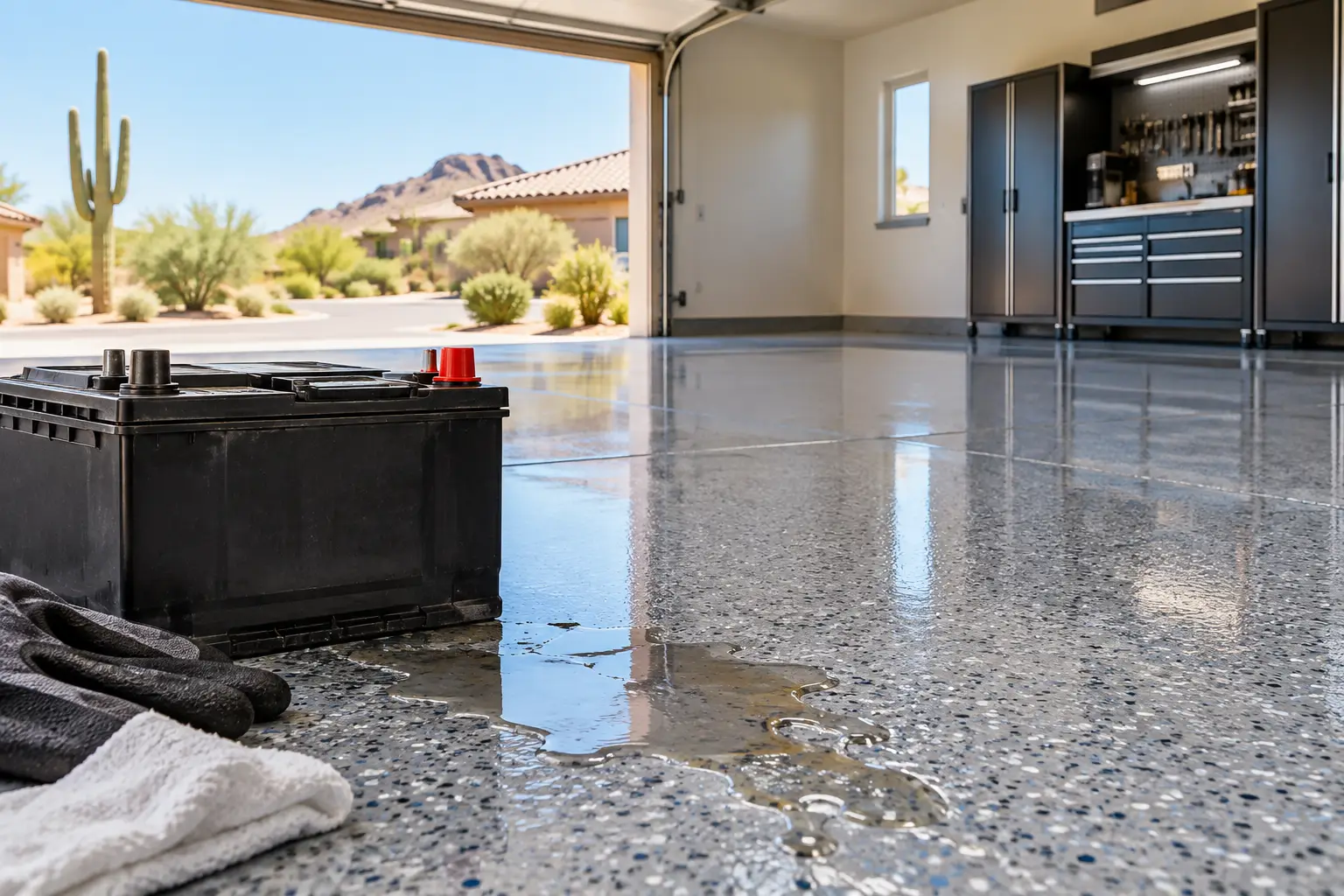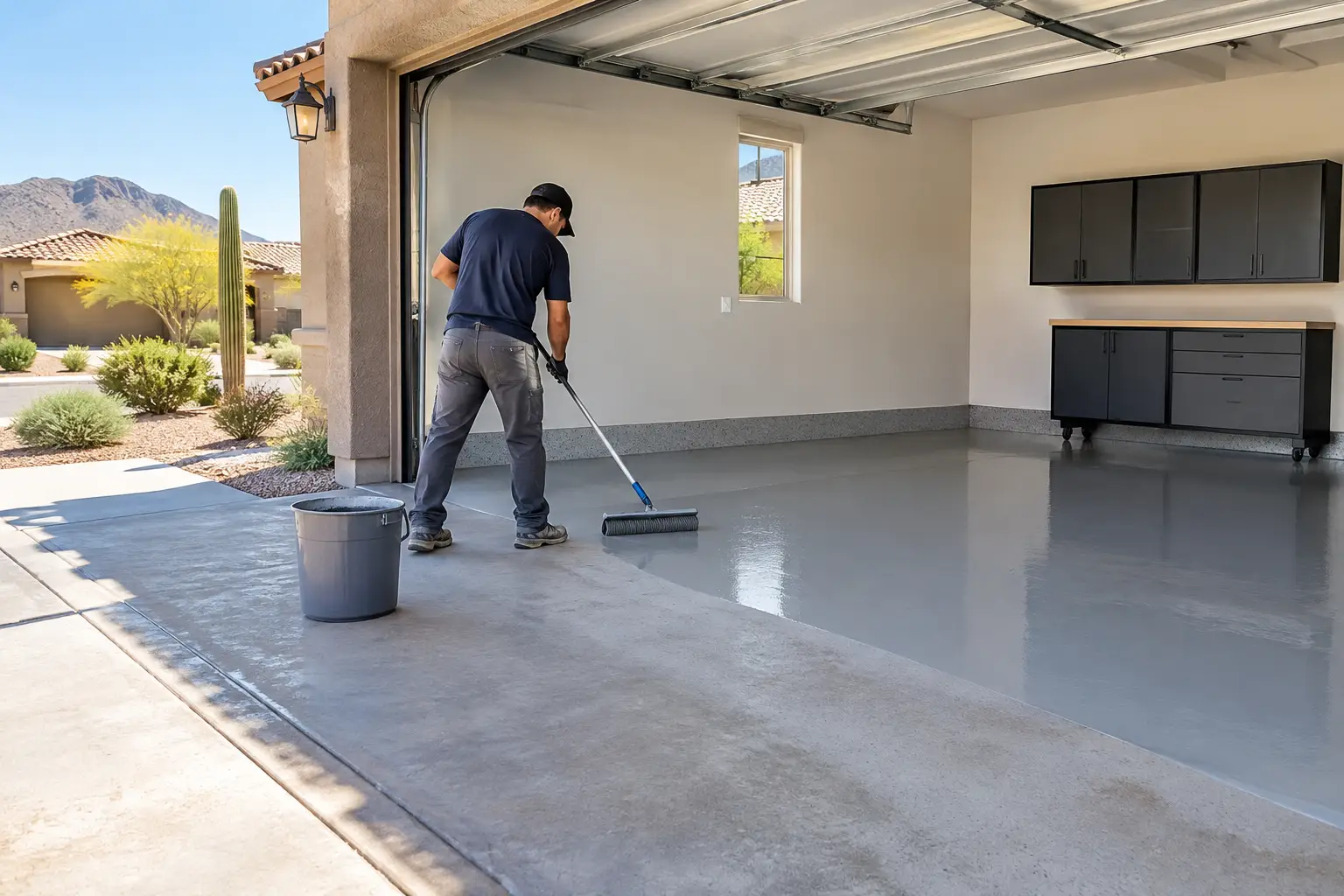
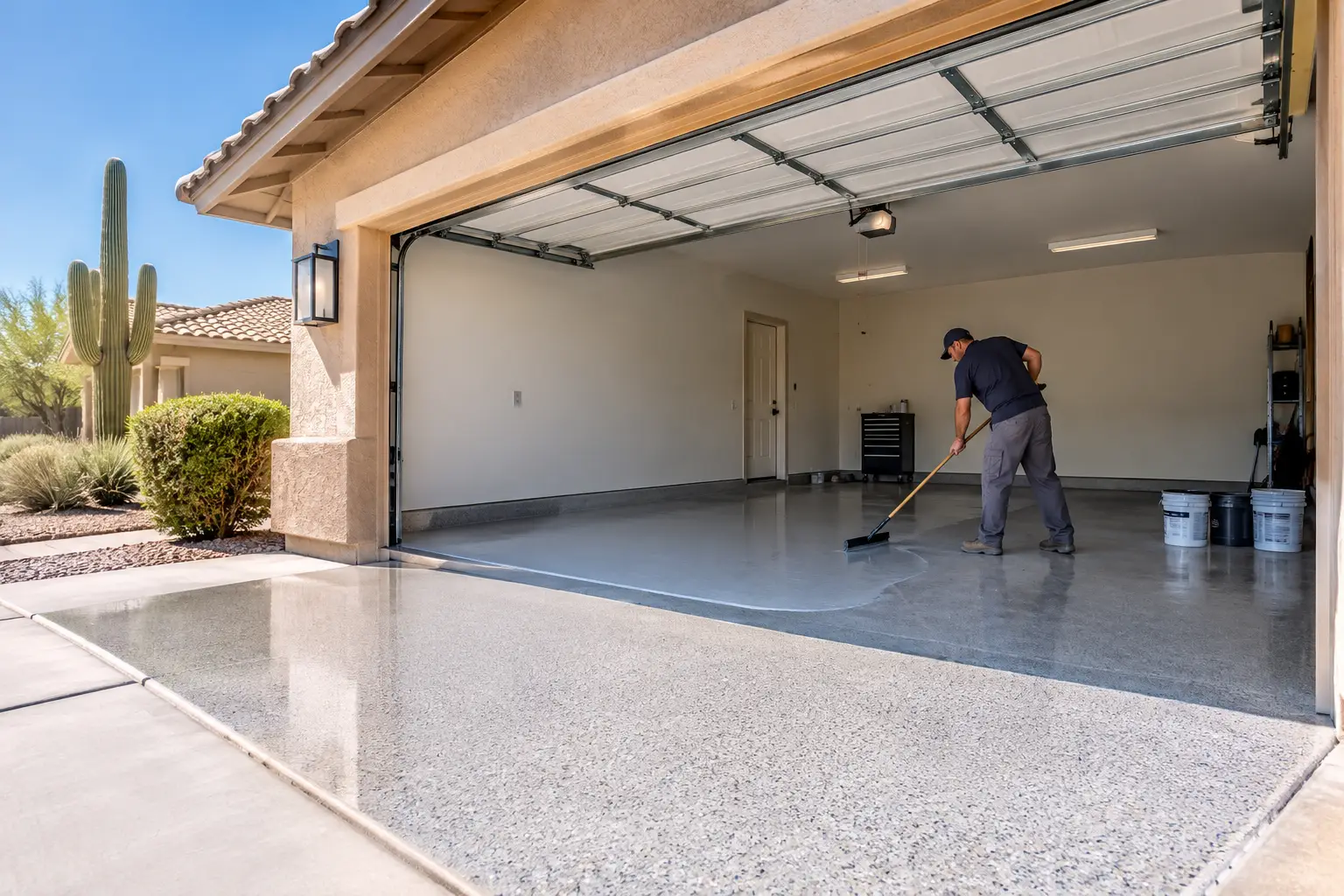
A garage floor in Sun Lakes has a tougher job than it may appear. It deals with summer heat, vehicle traffic, occasional monsoon moisture, golf gear, storage cabinets, and the fine dust that somehow finds its way into everything. When homeowners search for an epoxy garage floor Sun Lakes, they usually want one simple result: a clean, finished floor that does not peel, stain easily, or turn into another home-maintenance project.
The term “epoxy floor” is often used for any decorative garage coating. But the material under that name can vary widely, and so can the installation quality. The right answer for one garage is not always the right answer for another. Concrete condition, preparation, coating system, color choice, and installer accountability all affect whether the floor holds up.
What Sun Lakes garages need from a floor coating
Sun Lakes homeowners are not coating a warehouse floor. They are improving a garage that may house daily vehicles, a golf cart, tools, seasonal decorations, bicycles, and an organized storage system. Appearance matters, but the coating also needs to handle real use without requiring special treatment.
Arizona heat is part of that equation. Hot tires, especially after a vehicle has been parked outside, place stress on a coating. UV exposure can also matter in garages with open doors, windows, or direct afternoon light. A coating system should be selected for the environment, not just because it looked good in a small sample board.
At TRM Garage Floors, the installed system is 100% polyaspartic from the base coat through the protective topcoat. Polyaspartic coatings are a strong fit for residential garages because they cure quickly, resist common automotive stains, and are designed to hold up well in Arizona conditions. That does not mean every polyaspartic product is identical. The preparation and the full system matter just as much as the label on the can.
Epoxy, polyurea, and polyaspartic: the practical difference
Homeowners comparing quotes will often see epoxy, polyurea, and polyaspartic mentioned together. These materials are not automatically good or bad based on the name alone. A properly installed system is more than a marketing term. Still, there are practical differences worth understanding before signing an estimate.
Traditional epoxy has been used on garage floors for years. It can provide an attractive finish and good adhesion when installed correctly. The trade-off is that many epoxy systems cure more slowly and may be less suited to heavy UV exposure over time. Some lower-cost systems also use epoxy as a base coat with a different topcoat, which may be perfectly acceptable in certain applications but is not the same as a complete polyaspartic system.
Polyurea and polyaspartic coatings generally cure faster than epoxy. That can allow a professional crew to complete a residential garage in one day and return it to service quickly. Polyaspartic also offers strong UV stability, which is useful in Arizona. The key is not to assume that “one-day floor” automatically means quality. Fast cure times leave less room for poor prep, rushed repairs, or skipped details. A bad coating can fail quickly no matter how fast it was installed.
The part of the job you should care about most: preparation
Most coating failures begin before the coating is applied. If a floor peels, it is tempting to blame the topcoat. Sometimes that is true. More often, the coating was installed over concrete that was not properly prepared, repaired, or tested for issues that affect adhesion.
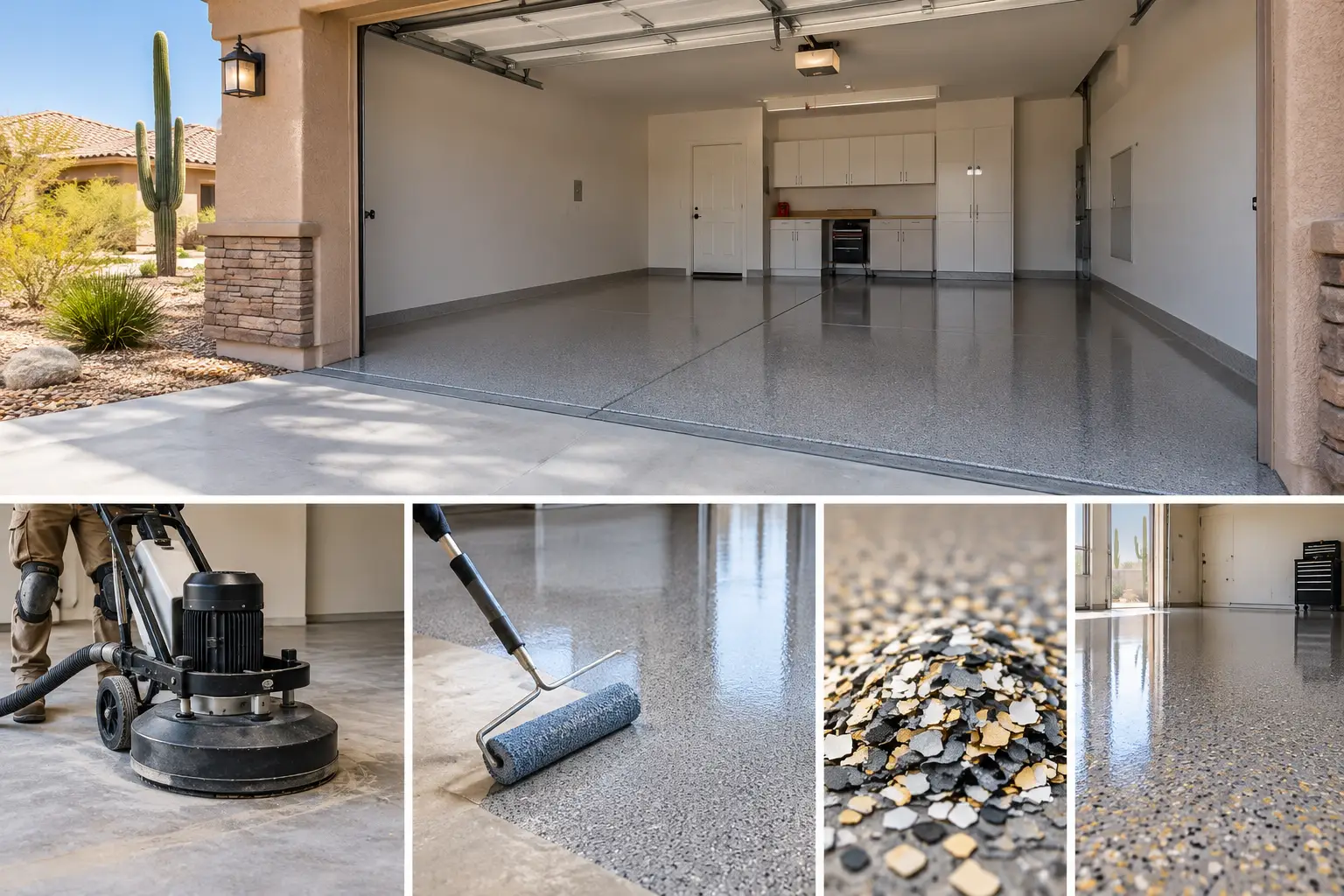
Professional diamond grinding opens the concrete surface and removes weak material, old residue, and contaminants that can interfere with bonding. It is not the same as lightly sanding the floor or washing it with an acid solution. Diamond grinding requires commercial equipment with proper dust collection, and it gives the installer a clear view of cracks, spalls, old paint, and surface repairs that need attention.
Cracks deserve an honest conversation. A coating can improve the appearance of many common concrete cracks, but it cannot stop a slab from moving. Hairline cracks and small surface imperfections can often be repaired as part of the installation. Wider cracks, active movement, moisture concerns, or significant settling may require a different approach. Any contractor who promises that every crack will disappear forever is selling a little more confidence than concrete can support.
A quality garage-floor installation generally follows a clear sequence:
- Inspect the slab, identify repairs, and discuss the finish and slip-resistance options.
- Move or protect items as agreed, then diamond-grind the concrete for proper adhesion.
- Repair suitable cracks, chips, and spalled areas.
- Apply the base coat, broadcast the decorative flakes to full refusal, and remove excess flakes after curing.
- Scrape and vacuum the surface, then apply the protective polyaspartic topcoat.
Full flake broadcast matters because it creates the finished look homeowners expect and adds texture to the system. It is different from sprinkling a light amount of flakes over a painted-looking floor. The final topcoat locks the surface together, helps with stain resistance, and determines much of the floor’s final sheen and cleanability.
What a Sun Lakes garage floor estimate should explain
A trustworthy estimate should make it easy to understand what is included. You should not need to decode vague phrases such as “premium coating package” or “prep as needed.” Ask what material will be used for the base coat and topcoat, how the concrete will be prepared, and how cracks or damaged areas will be handled.
The estimate should also identify the square footage, flake color, number of coats, and expected return-to-use time. If the garage has stem walls, steps, transitions, cabinets, floor drains, or unusual layout changes, those details should be discussed upfront. A two-car garage with clean, sound concrete is not the same project as a three-car garage with old paint, significant repairs, and built-in storage along every wall.
Price varies for good reasons. Floor size is only one factor. Concrete condition, removal of failed coatings, repair work, access, coating system, and design selections all affect the scope. The lowest quote may leave out grinding, repairs, full flake coverage, or a quality topcoat. That does not make every lower-priced contractor unreliable, but it does mean the proposals need to be compared line by line. Apples-to-apples is not exciting, but it prevents expensive surprises.
Choosing color and texture for daily living
Most Sun Lakes homeowners choose a neutral flake blend that works with the garage walls, cabinets, and exterior of the home. Gray-based blends remain popular because they hide dust and tire marks well. Tan and brown blends can complement warmer home finishes. Very light colors can look sharp, but they may show dirt sooner. Very dark floors can show dust and footprints more readily. There is no universal best color, only the best balance for how you use the garage.
Texture should be part of the conversation too. Decorative flakes add texture, and slip-resistant options can provide additional grip where needed. More texture can be helpful for wet shoes, golf carts, or households concerned about traction. The trade-off is that a heavily textured floor can take slightly more effort to clean than a smoother finish. For most garages, a balanced texture provides good footing without making routine sweeping difficult.
How to keep a coated garage floor looking good
A professionally coated floor is low-maintenance, not no-maintenance. Sweep dust and grit before it gets ground under tires. Wipe up oil, chemicals, fertilizer, and other spills rather than letting them sit for days. For routine cleaning, a soft broom, mop, or gentle floor cleaner is usually enough. Avoid harsh acids and aggressive abrasives that can dull the finish.
Use pads under very heavy metal legs or sharp storage components, especially when moving them. If you weld, cut metal, or do projects that involve hot materials, protect the coating in that work area. A garage coating is durable, but it is not a force field. Frank the Frog would put it another way: do not test your new floor with a torch just because it looks tough.
A better way to compare garage floor contractors
Before choosing a contractor for an epoxy garage floor in Sun Lakes, ask direct questions. Who will be involved in the job? Is the concrete diamond-ground? What exact coating materials are being installed? Are repairs included or priced separately? Is the flake broadcast full coverage? What is the expected cure time before parking vehicles? And what does the warranty actually cover?
The answers should be clear, not slippery. Direct owner involvement, professional equipment, a detailed proposal, and a system designed for Arizona garages are more valuable than a flashy sales pitch. A floor coating is one of those projects where doing it right the first time costs less than paying someone later to grind off a failure.
If your garage is ready for an upgrade, start with an on-site look at the concrete. The best coating choice is the one built around your floor, how you use it, and the conditions it faces every day.
TRM Garage Floors installs 100% polyaspartic coating systems for garages, patios, and commercial spaces across the East Valley. Free estimates, done in one day.