
A garage floor can look clean and still be a poor candidate for coating. Dust, old sealers, tire residue, weak concrete at the surface, and nearly invisible contaminants can all interfere with adhesion. That is why diamond grinding concrete preparation is not a cosmetic step. It is the work that determines whether a new floor coating holds tight or starts peeling under Arizona heat, hot tires, and daily use.
For homeowners in Gilbert and across the East Valley, preparation matters even more than the color or flake blend chosen at the end. A quality polyaspartic system needs sound, open concrete to bond correctly. No shortcuts, no skipped steps.
What Diamond Grinding Does to Concrete
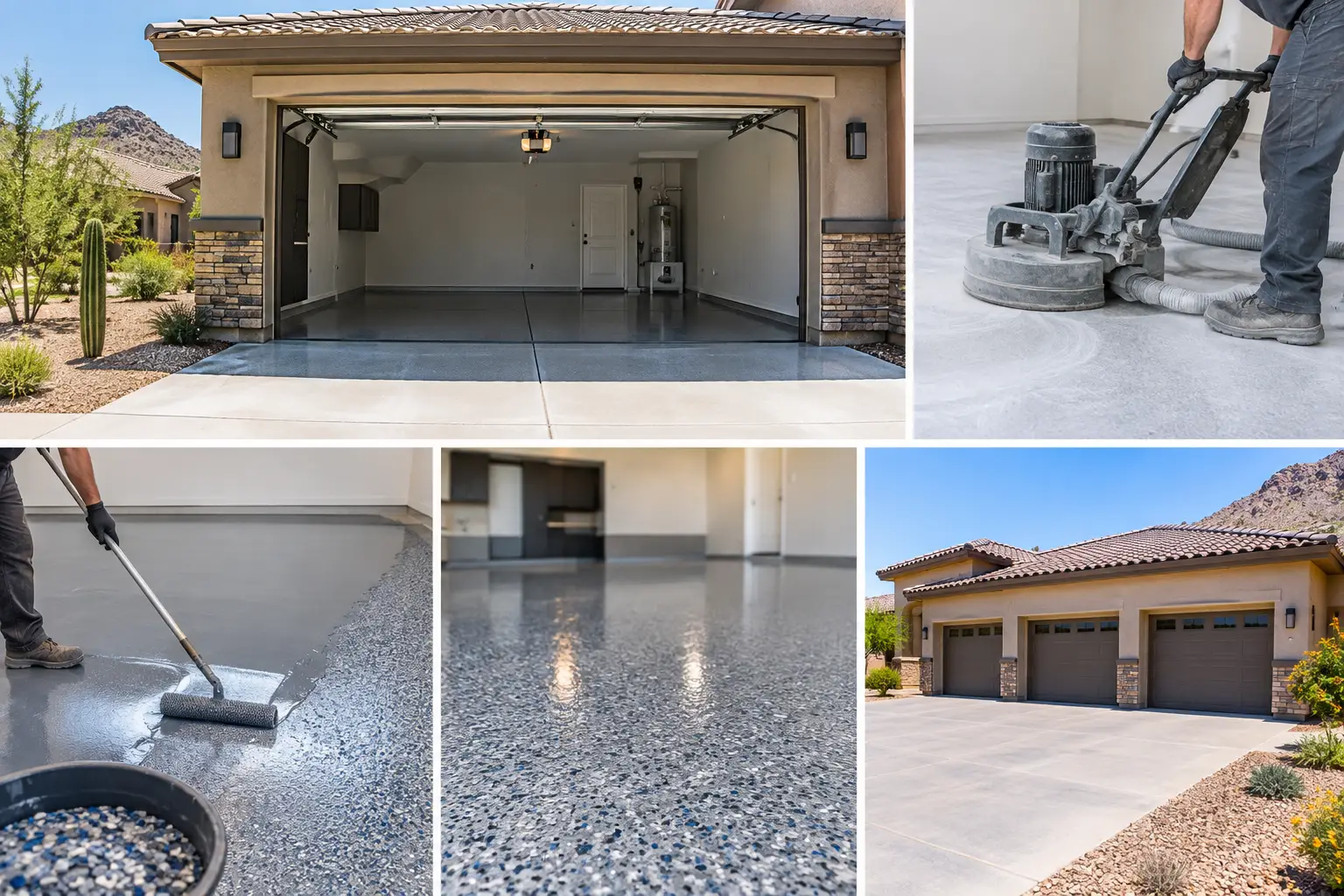
Diamond grinding uses a floor machine fitted with industrial diamond tooling. As the machine passes over the slab, the diamonds remove the weak top layer of concrete along with surface contaminants, failed coatings, paint, and old adhesive residue. At the same time, they leave behind a controlled surface profile - a fine texture with enough tooth for the coating to grab.
Think of it as preparing a wall before paint, but with much higher stakes. A coating placed over a smooth, sealed, or contaminated floor may look good at first. The bond beneath it is the question. Once heat, moisture pressure, vehicle traffic, or an impact tests that bond, weak preparation shows up as peeling, delamination, or bare spots.
Grinding is also different from simply pressure washing or acid etching. Pressure washing removes loose dirt but does not reliably remove sealers or create a consistent profile. Acid etching can be unpredictable, especially on dense concrete, and it introduces water and residue that must be managed correctly. Mechanical diamond grinding gives installers direct control over the surface they are creating.
Why Arizona Concrete Needs Thorough Preparation
East Valley concrete takes a beating. Garage slabs collect oil drips, fertilizer, road grime, and tire plasticizers. Outdoor patios and pool decks face sun exposure, temperature swings, dust, and occasional standing water. Some slabs also have curing compounds or sealers applied when the home was built, even if the owner has never added anything to the floor.
Arizona heat creates a second challenge. Hot tires can put significant stress on a coating system, particularly if the slab was not prepared properly or if a lower-grade product was used. A professionally installed polyaspartic coating is built for demanding conditions, but it still needs a properly profiled concrete surface beneath it. Good chemistry cannot make up for poor preparation.
Concrete age matters, but it is not the only factor. A newer slab may be hard, dense, and covered with curing compounds. An older slab may be dusty, stained, cracked, or soft at the surface. Each condition changes how the crew approaches grinding, repairs, and coating application.
The Surface Profile Is the Point
The goal is not to grind as aggressively as possible. The goal is to create the right concrete surface profile for the coating system being installed. Too little profile can limit adhesion. Too much profile can leave a rough appearance, use more material than necessary, and make a finished floor harder to achieve evenly.
Diamond tooling is selected based on the condition and hardness of the concrete, as well as the coating being applied. Hard, smooth concrete may require a different diamond bond than a softer slab or a floor with an existing coating. This is one reason a quick look at a garage from the doorway is not a real preparation plan.
A trained installer assesses the slab before work begins. They look for prior coatings, topical sealers, moisture-related issues, cracks, spalling, oil contamination, and areas where the concrete has weakened. The preparation method should follow what is actually on the floor, not a one-size-fits-all routine.
Grinding Removes the Weak Layer
Many garage floors have a fragile layer of cement paste at the surface. It may appear solid until it begins to dust under foot traffic or break down beneath a coating. Grinding removes that weak material and exposes stronger concrete below.
This is especially important on floors that leave a powdery residue when swept. Coating over concrete dust is like applying tape to chalk. The material may stick briefly, but the layer underneath is not strong enough to support it.
Grinding Helps Reveal Problems Early
Preparation also makes hidden issues easier to see. Once the surface is cleaned and opened, cracks, pitting, old patch failures, and areas of contamination become more obvious. That gives the installer a chance to repair the right areas before the coating goes down.
Crack repair is not just about making a floor look better. Open cracks can telegraph through a finished coating, collect dirt, or allow edges to break down over time. Repairs need to be compatible with the coating system and allowed to cure as required before the next step.
What a Professional Grinding Process Looks Like
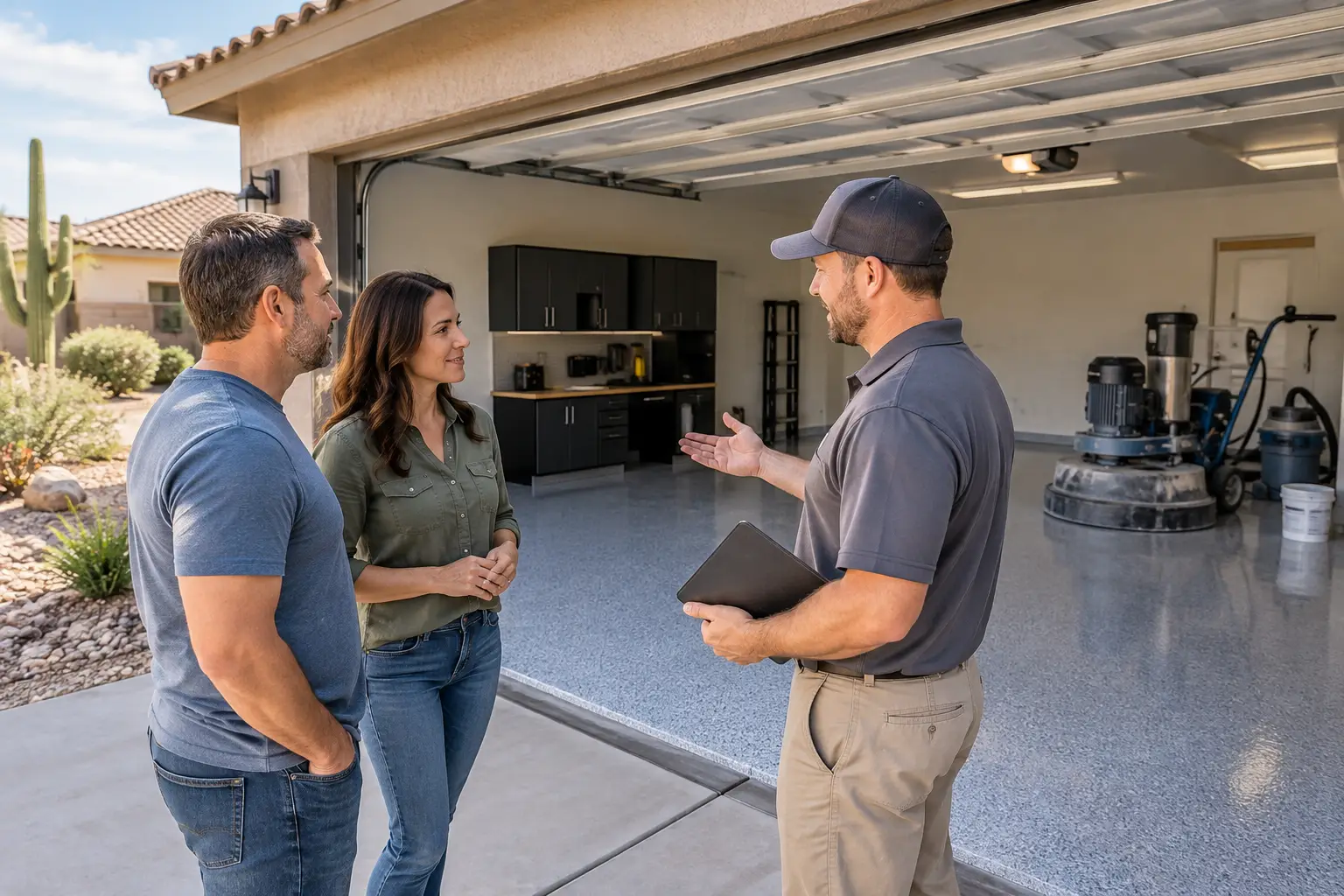
The exact process depends on the slab, but a disciplined installation follows a clear order. First, the area is cleared and inspected. Crews protect nearby walls, cabinets, and doorways, then remove anything that would prevent access to the concrete.
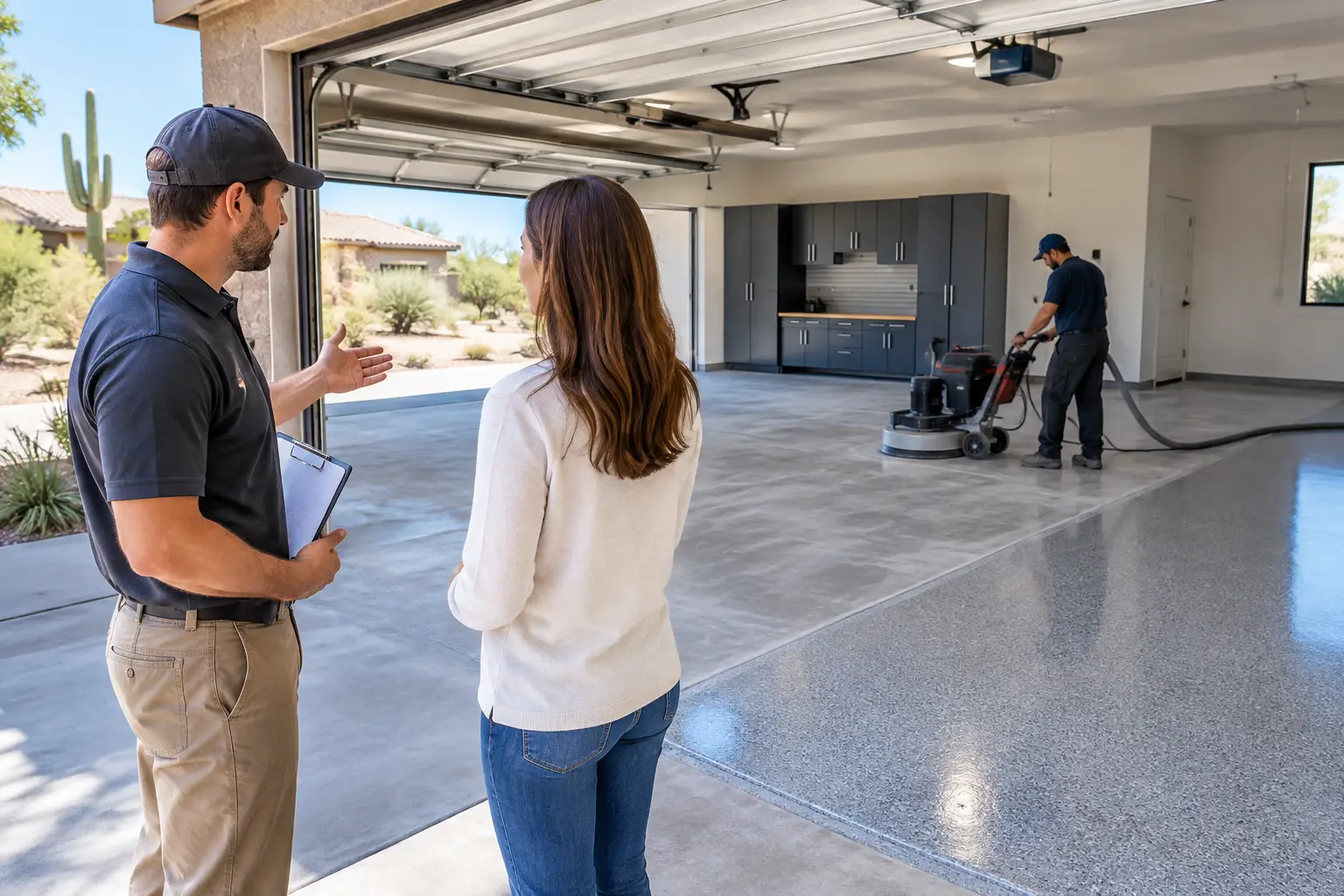
Next comes mechanical grinding. Professional floor grinders use vacuum systems designed to capture concrete dust at the source. No dust-control method is perfect, and a small amount of fine dust may still settle in a work area, but proper equipment dramatically reduces the mess compared with open grinding.
After grinding, the floor is vacuumed thoroughly and inspected again. The crew checks whether the entire slab has been properly opened, not just the easy center section. Edges, corners, door thresholds, and transitions deserve the same attention as the main floor. A coating failure often starts where preparation was rushed.
Cracks, pits, and damaged areas are then repaired as needed. Once repairs are shaped and prepared, the installer applies the selected coating system. With a 100% polyaspartic system, this can often be completed in one day, with vehicle traffic generally restored the following morning. Fast return to use is valuable, but it should never mean skipping the preparation that makes the floor last.
Common Shortcuts That Cause Coating Failures
The most common shortcut is coating over a floor that has only been cleaned. Degreasing is useful, but it does not replace mechanical profiling. Another is spot grinding - preparing visible stains or peeling areas while leaving the rest of the slab smooth and sealed.
Relying on acid etching alone can also create uneven results. It may not adequately profile hard or contaminated concrete, and the floor must be rinsed and dried correctly afterward. In the Arizona climate, fast drying can be helpful, but it does not fix an incomplete etch or residues left behind.
A third issue is ignoring moisture conditions. Diamond grinding cannot stop moisture vapor moving through a slab. If the concrete has a serious moisture-related concern, the coating plan may need to change. An honest contractor will explain that risk rather than promise that every slab can be treated exactly the same way.
Finally, some installers use lightweight equipment that cannot properly profile dense concrete or remove failed coatings. The floor may look scuffed, but a scuff is not necessarily a coating-ready profile. The right equipment, tooling, and operator experience all matter.
What Homeowners Should Ask Before a Coating Is Installed
You do not need to become a concrete expert to recognize a sound process. Ask how the slab will be prepared and whether the contractor mechanically diamond grinds the full surface. Ask how cracks and oil-stained areas will be handled. Ask what dust-control equipment they use, what coating chemistry they recommend for Arizona conditions, and when the floor can safely return to vehicle traffic.
It also helps to ask what happens if the crew finds old sealer, extensive concrete damage, or a moisture concern once grinding begins. Concrete can hold surprises. A professional estimate should set clear expectations about what is included and how unforeseen conditions are addressed.
For commercial shops, warehouses, and showrooms, the conversation should include traffic patterns, downtime requirements, forklift or vehicle use, and slip resistance. A high-traffic work area may need a different finish than a residential garage, even when the same preparation principles apply.
Preparation Is Where a Floor Earns Its Durability
A finished polyaspartic floor is easy to admire. The color is clean, the flake system hides minor debris, and the surface is far easier to sweep than bare concrete. But the lasting value is built before the first coat is applied.
At TRM Garage Floors, preparation is treated as part of the installation, not an optional add-on. The right profile, proper repairs, careful cleanup, and a final walkthrough give homeowners and business owners a clear path from worn concrete to a surface that is ready for real use.
Before choosing a coating, look past the sample board and ask what will happen to the concrete itself. The answer should be specific, practical, and built around the condition of your floor - because that is where a durable result begins.
TRM Garage Floors installs 100% polyaspartic coating systems for garages, patios, and commercial spaces across the East Valley. Free estimates, done in one day.