A garage floor can look great on estimate day and still fail a year later if the concrete was not prepared correctly. That is why homeowners need to look beyond color chips, before-and-after photos, and the lowest number on a proposal. When you choose a coating contractor, you are really choosing the preparation process, the materials under the flakes, and the person responsible if something goes wrong.
For homeowners in the East Valley, that decision matters even more. Arizona garages deal with heat, UV exposure at open doors, hot tires, dust, oil drips, and daily vehicle traffic. A coating system needs to be selected and installed for those conditions, not simply applied because it was inexpensive or available.
Choose a Coating Contractor by Looking Below the Surface
The finished floor is what you see, but the bond to the concrete is what determines whether it stays put. Most coating failures start before the coating is ever mixed. A contractor can use a quality product and still get poor results if they rush preparation, coat over contamination, or skip needed repairs.
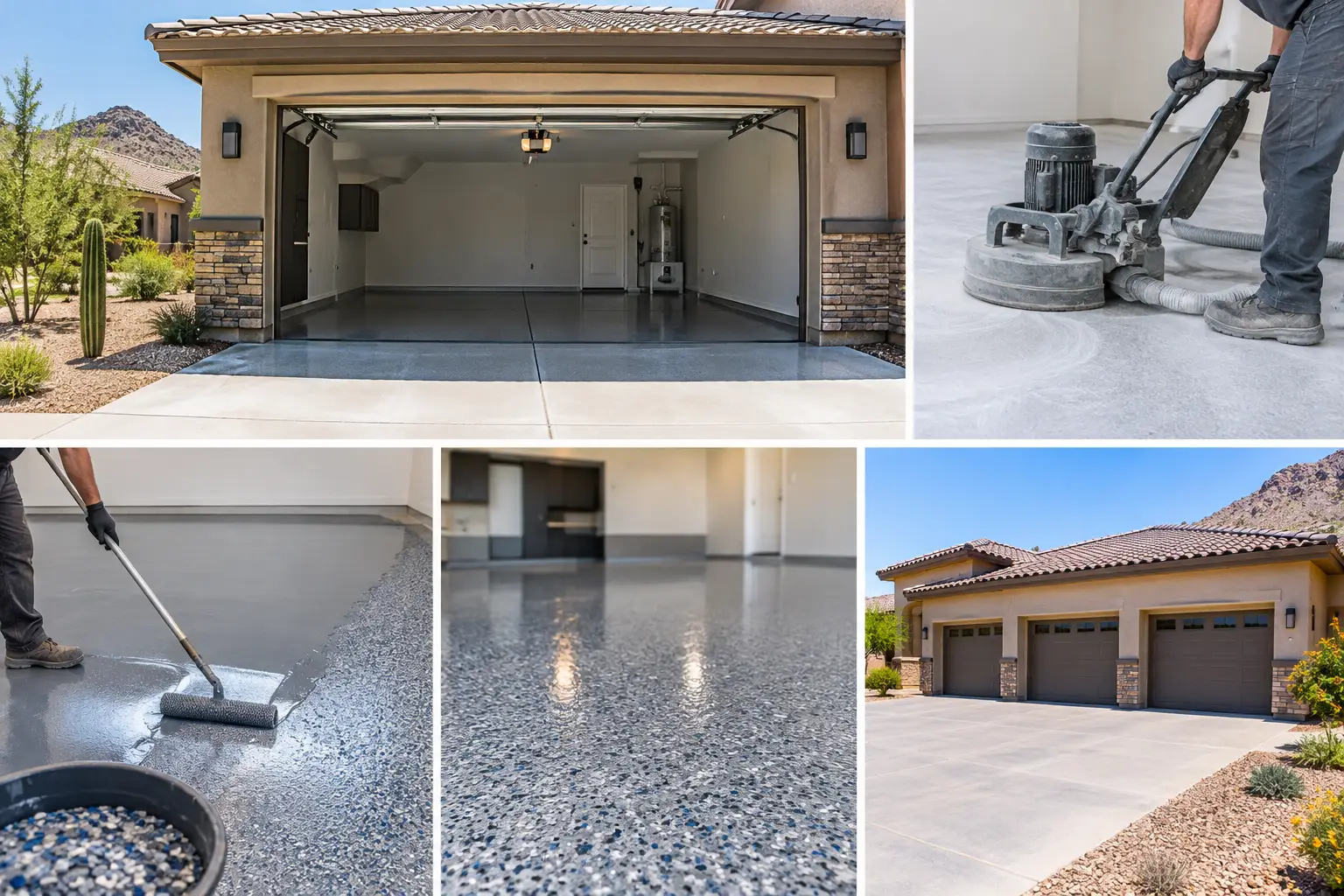
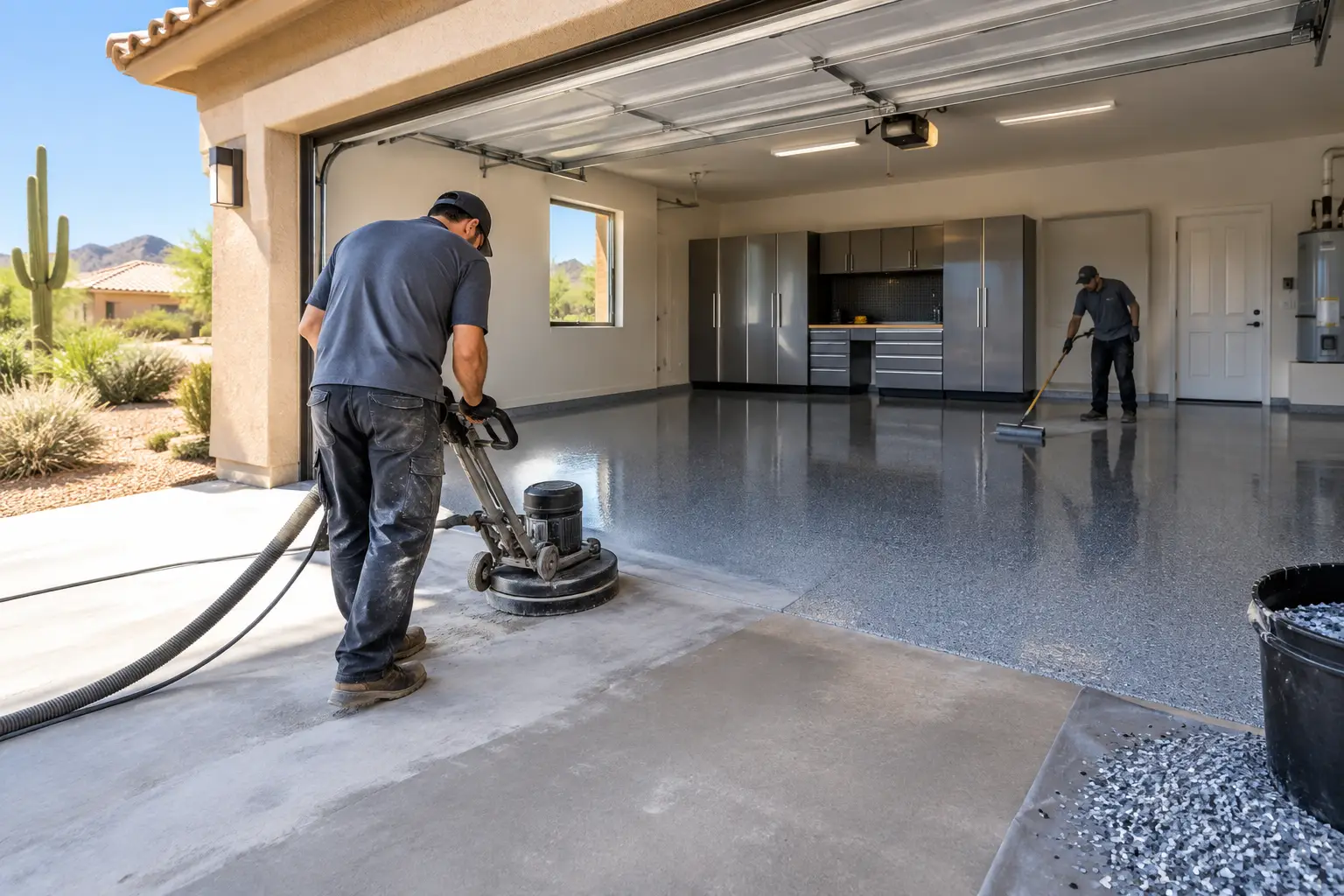
Ask each contractor exactly how they prepare the slab. A professional garage floor installer should be able to explain the answer plainly. For most residential garages, commercial diamond grinding is the right starting point. It mechanically opens the concrete surface so the base coat has something clean and properly profiled to grab onto.
Be cautious when the preparation answer is vague. Terms such as "we clean it really well" or "we acid wash every floor" do not tell you enough. Cleaning is necessary, but it is not a substitute for mechanically preparing concrete. Acid etching may have a place in limited situations, but it is not the same as diamond grinding a garage slab.
Preparation should also include checking for concrete cracks, old coatings, paint overspray, oil contamination, weak concrete, and moisture concerns. Hairline cracks can often be filled and blended into the system. Larger cracks or movement joints need a more honest discussion because no coating can permanently stop a moving slab from moving.
Ask What Happens to Repairs
A good estimate should explain whether crack repair is included and how damaged areas will be handled. Some repairs become far less noticeable after a full flake broadcast, but they do not disappear by magic. A contractor who promises an old, cracked slab will look like perfectly poured new concrete is setting an expectation that may not hold up.
The right approach is straightforward: repair what can be repaired, prepare the entire floor properly, and explain what may remain visible. That is better than a surprise after installation.
Compare the Entire Coating System, Not One Product Name
Homeowners often hear epoxy, polyurea, and polyaspartic used almost interchangeably. They are not interchangeable, and a proposal that names only the topcoat leaves out much of the story.
Ask what is being applied directly to your concrete, what receives the flakes, and what seals the floor. Some companies promote a polyaspartic topcoat while using a lower-cost base coat underneath. That may be appropriate for certain systems, but you should know what you are buying. The base coat is the layer bonded to your slab. It is not a minor detail.
For a residential Arizona garage, a complete 100% polyaspartic system from base coat through protective topcoat offers practical advantages: fast installation, strong adhesion when paired with proper preparation, UV stability, and resistance to common garage stains and hot-tire pickup. It also lets homeowners get their garage back quickly, often in one day depending on the floor condition and scope of work.
That does not mean every epoxy floor is automatically bad or every polyaspartic floor is automatically good. Product quality, slab condition, application conditions, and installer skill all matter. Still, comparing complete systems is far more useful than comparing a single buzzword printed at the bottom of an estimate.
Full Flake Coverage Is More Than a Style Choice
A full flake broadcast gives the floor its finished appearance, but it also adds texture and visual depth. After the flakes are broadcast to full rejection, excess material is removed and the floor is sealed with a protective topcoat. The result is a finished surface that helps hide minor concrete imperfections better than a thin, painted-looking coating.
Ask whether flakes are being applied lightly for decoration or broadcast to full coverage. The two methods look and wear differently. If slip resistance matters, especially near an entry door, water heater, or workbench, ask about options before the topcoat is applied. More texture can improve footing, though it may also take a little more effort to clean than a smoother finish. That is a real trade-off, not a sales problem.
Read the Estimate Like a Scope of Work
A coating estimate should not be a mystery with one total at the bottom. Price matters, but a low price can leave out the work that makes a floor last. When comparing proposals, look for clear language about diamond grinding, concrete repairs, coating layers, flake coverage, topcoat, and cleanup.
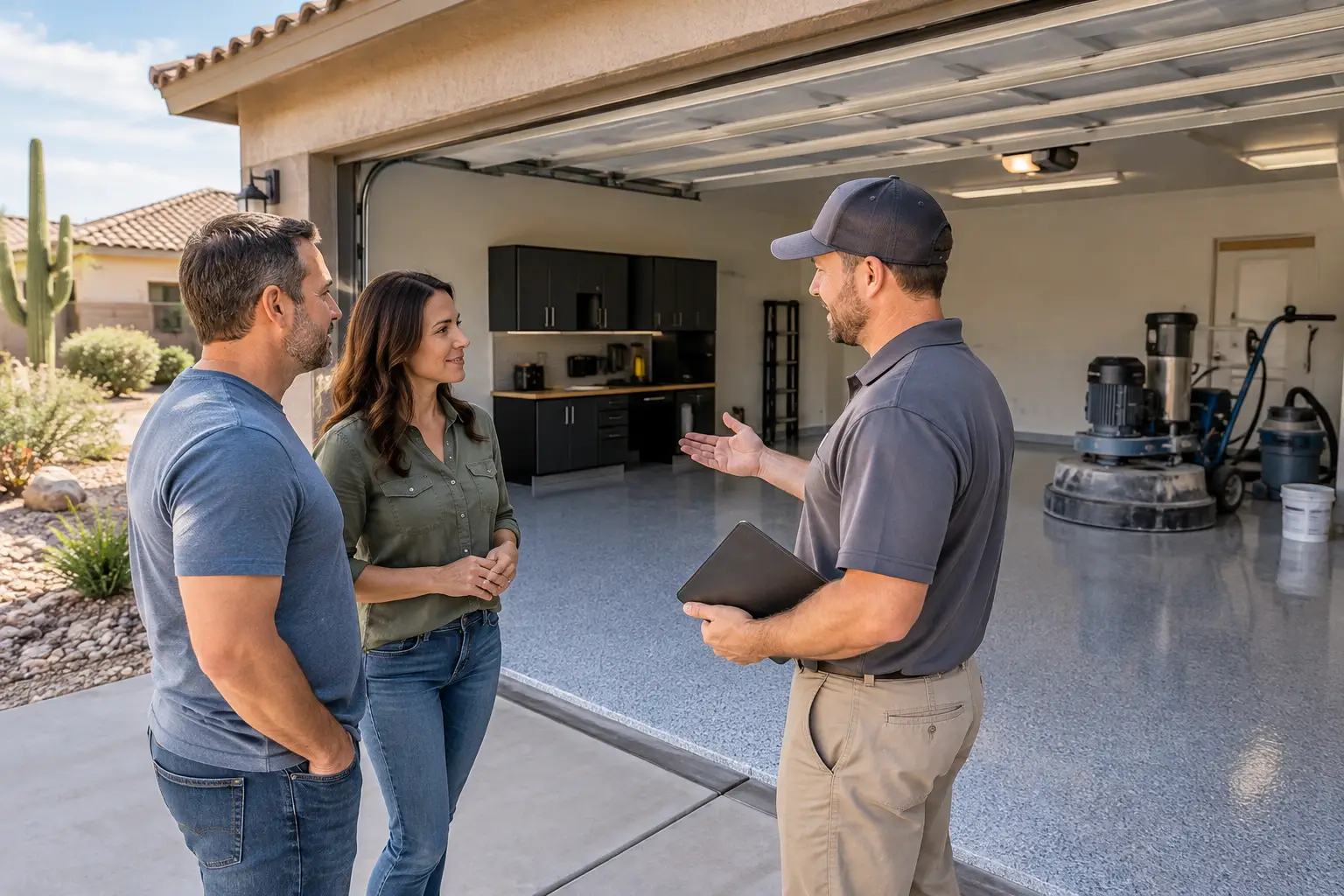
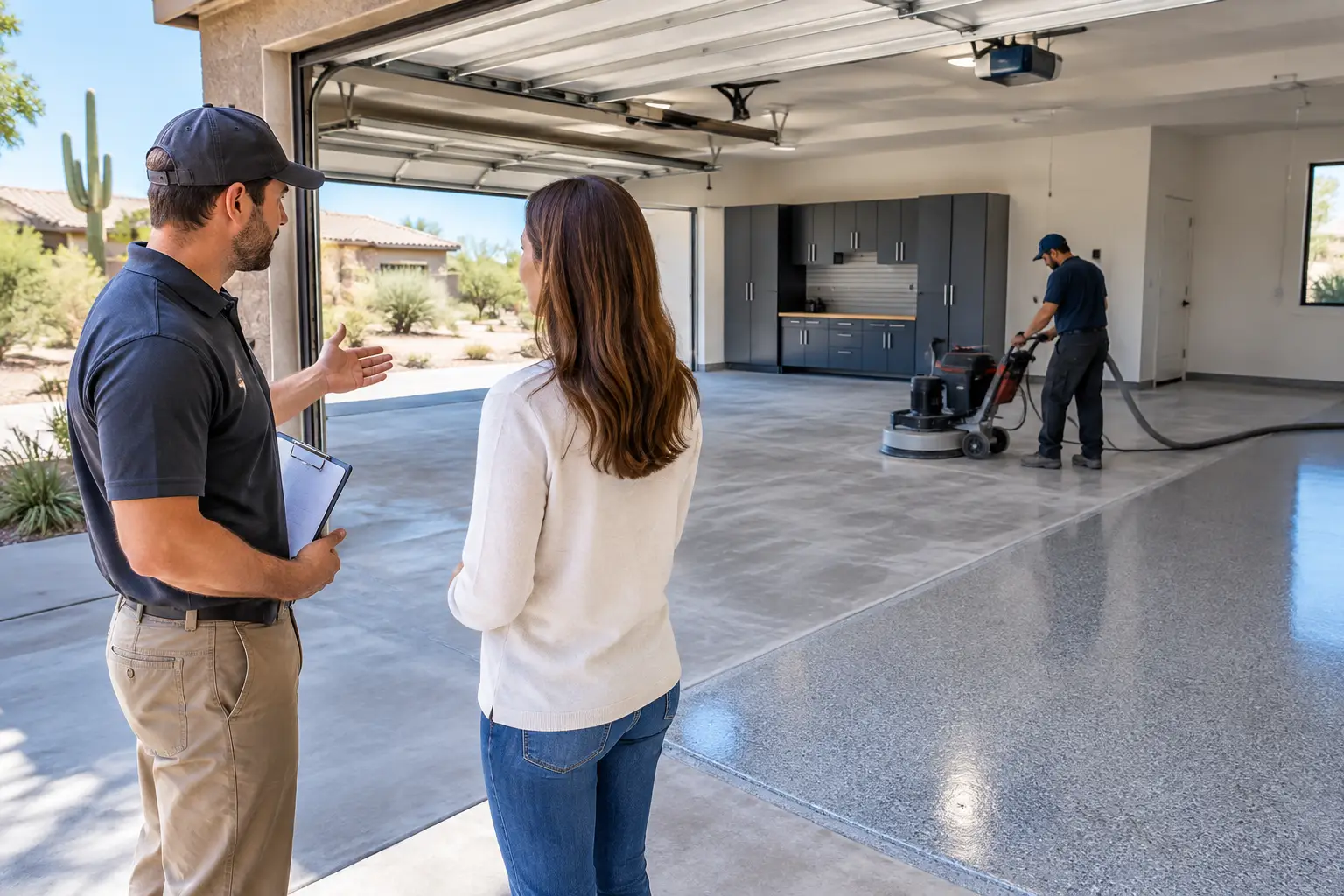
You should also know what could change the price. Garage size is only one factor. A two-car garage with sound concrete and no existing coating is different from a three-car garage with peeling paint, major crack repair, built-in cabinets, or heavy oil contamination. A credible contractor will inspect the floor and explain those variables during an on-site estimate rather than offering a universal price that may not fit your project.
Ask whether the estimate includes moving appliances or other items, coating stem walls, protecting drywall, and masking the garage door and transitions. These details affect the finished appearance. They also reveal whether the contractor has a defined process or is figuring it out at your house.
Look for Accountability, Not Just a Warranty Card
A warranty has value, but only when the company is available and willing to stand behind the work. Read what the warranty covers, how long it lasts, and what conditions apply. More importantly, ask who handles a problem if one comes up.
You want a contractor who is licensed and insured, communicates clearly, and can show actual local work. Reviews can help, especially when they mention preparation, cleanliness, punctuality, and how the company handled questions. Photos are useful too, but ask to see examples of garages similar to yours, including repaired concrete or older slabs if that is your situation.
Direct owner involvement can be a meaningful advantage. It reduces the game of passing responsibility from a salesperson to a scheduler to an unfamiliar crew. TRM Garage Floors takes that accountability seriously because a garage floor is too visible, and too heavily used, for shortcuts to hide for long.
Questions Worth Asking Before You Sign
A good contractor should welcome practical questions. Ask how they test or evaluate the concrete, whether they diamond grind every floor, and what they do when they find old adhesive or weak concrete. Ask for the full coating system in writing, including the base coat and topcoat.
Also ask how long you need to keep vehicles off the floor, how to clean it once it is finished, and whether the surface can be adjusted for more slip resistance. If you have a golf cart, heavy truck, motorcycle kickstand, or specialty vehicle, mention it before installation. Those details may affect recommendations for your specific garage.
Finally, pay attention to how the contractor answers. Clear answers usually signal a clear process. Evasive answers, pressure to sign immediately, or promises that nothing can ever fail should make you slow down. Frank the Frog would call that a slippery patch of concrete.
The Cheapest Quote Can Become the Expensive One
A low bid is not always wrong. Some contractors have lower overhead, smaller crews, or a simpler scope. But it becomes risky when the price is low because preparation is reduced, materials are unclear, repairs are excluded, or the proposal leaves room for surprise charges later.
A professionally coated garage floor should make daily life easier. It should clean up without much fuss, hold up to tires and routine spills, and look finished when the garage door is open. That value comes from careful work beneath the flakes as much as the color you choose.
Take the time to compare written scopes, ask direct questions, and have the slab evaluated in person. The best contractor is not necessarily the one with the flashiest sample board. It is the one who can explain the work, prepare the concrete correctly, and be there after the floor is done.
TRM Garage Floors installs 100% polyaspartic coating systems for garages, patios, and commercial spaces across the East Valley. Free estimates, done in one day.