A garage floor can look like a simple square-footage project until the crew starts checking the concrete. Cracks, old paint, tire damage, moisture concerns, cabinet layouts, and the condition of the slab all affect garage coating costs. That is why two garages with the same footprint can receive very different estimates - and why the lowest number on paper is not always the lower-cost choice over time.
For homeowners in the East Valley, material selection matters too. Arizona garages deal with intense heat, UV exposure at open doors, hot tires, dust, oil drips, and daily traffic. A properly installed polyaspartic floor costs more than a quick paint-and-roll job, but it is built for a very different result.
What Garage Coating Costs Actually Include
A professional garage coating estimate should cover more than the visible color flakes and shiny topcoat. The finish is the part you see. The preparation underneath is what determines whether it stays attached.
At TRM Garage Floors, the installed system is 100% polyaspartic from the base coat through the protective topcoat. That matters because some estimates may describe a polyaspartic floor while using epoxy or another lower-cost product beneath the surface. There is nothing wrong with asking exactly what goes on the concrete first. In fact, you should.
A complete proposal should clearly account for surface preparation, concrete repairs, coating materials, flake broadcast, protective topcoat, labor, and cleanup. It should also explain any add-ons, such as a slip-resistant texture or extra repair work, rather than dropping surprises on installation day.
The Biggest Factors That Change the Price
Garage size and layout
Square footage is the starting point, not the whole story. A standard two-car garage is typically more straightforward than a three-car garage with a tandem bay, storage alcoves, steps, built-in cabinets, or several door openings. More edges and transitions mean more detailed prep and coating work.
Larger garages can sometimes have a lower per-square-foot price because setup and mobilization are spread across more area. Still, homeowners should compare total scope, not just a per-foot number. A low per-foot quote can leave out repairs, flake coverage, or a real protective topcoat.
Concrete condition and repairs
Concrete has a way of revealing its history once it is properly diamond-ground. Hairline cracks may be minor. Wider cracks, spalling, damaged control joints, old adhesive, paint, and failed coatings take more labor to address.
Repair work is not cosmetic window dressing. If a contractor coats over loose concrete or an active failed coating without correcting the problem, the new floor may look fine for a while. Then it starts telling on them. Peeling around the edges is not a charming design feature.
A good estimator will inspect the slab in person and explain what can be repaired, what will remain visible, and how the work affects the final price. Not every crack can be made invisible, but it can be stabilized and treated correctly.
Preparation method
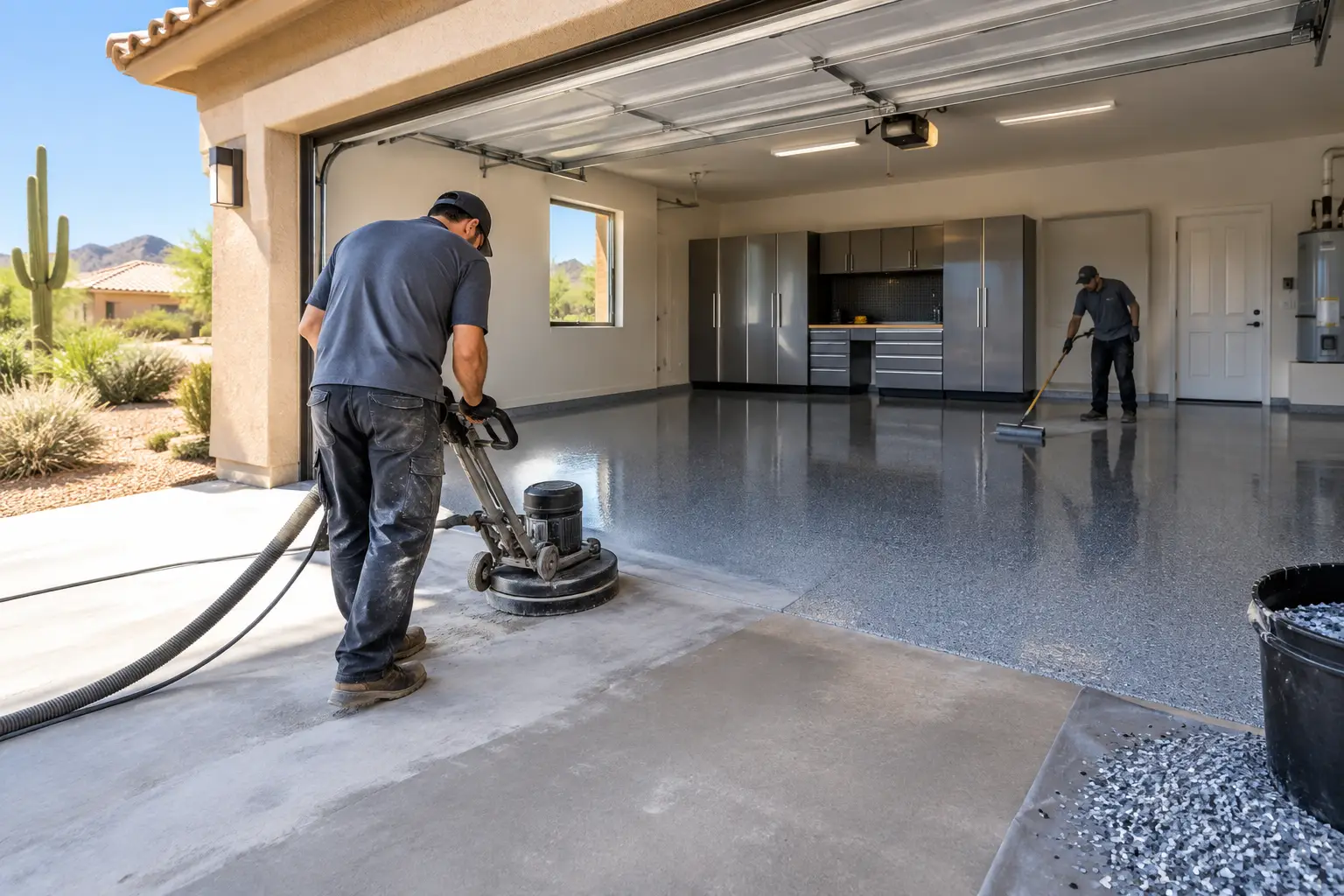
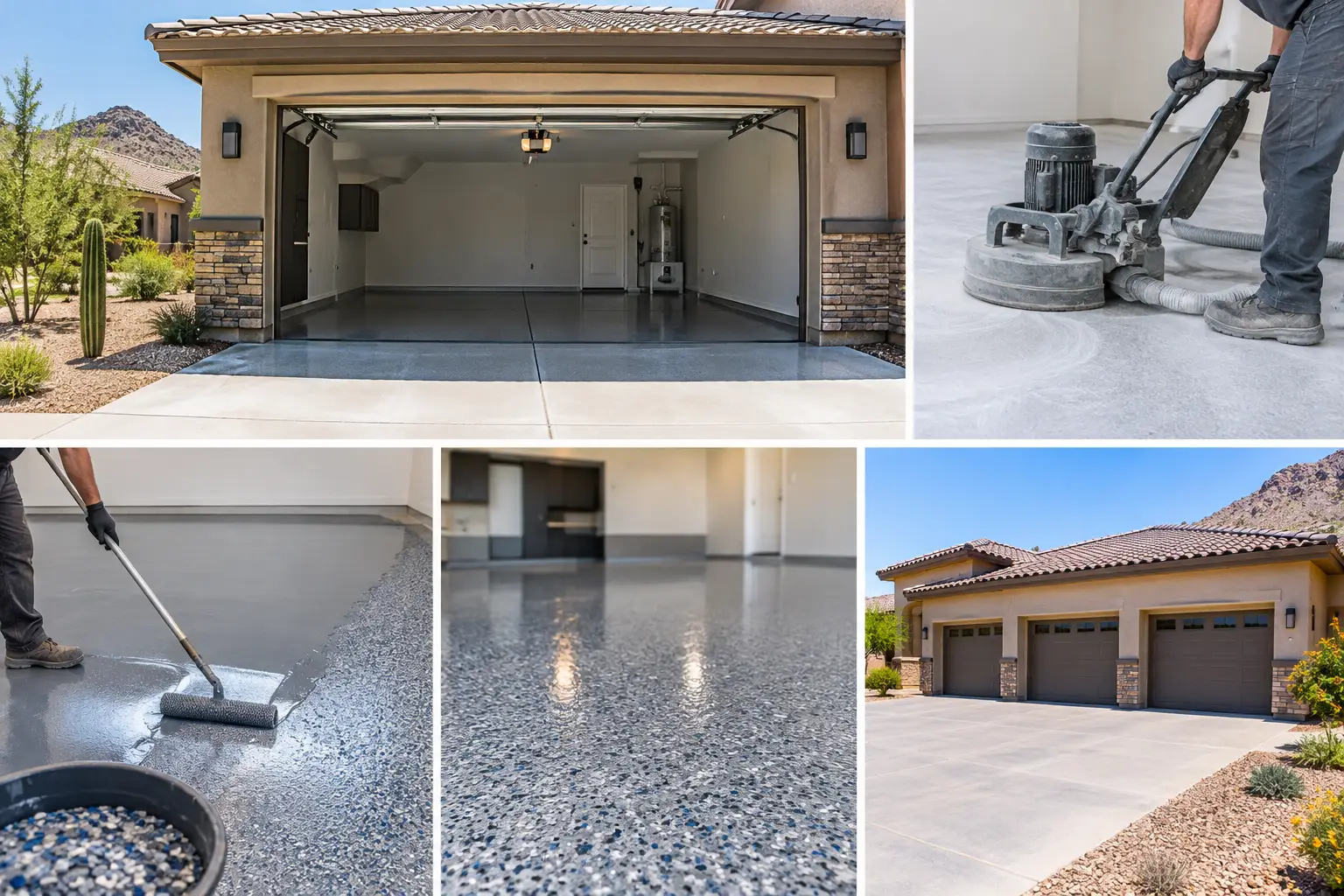
This is one of the largest differences between professional estimates. Commercial diamond grinding creates the proper concrete profile for the coating to bond. It also removes weak surface material, contaminants, old paint, and failed coatings where needed.
Acid washing, light sanding, or simply coating over an existing surface may cost less up front. The problem is that coatings depend on mechanical bond. If the concrete was not prepared correctly, even a good product has little to hold onto. Preparation is not an upgrade. It is the job.
Coating system and finish
Not all garage floor products perform or install the same way. Epoxy, polyurea, and polyaspartic systems have different cure times, UV resistance, application windows, and pricing. Homeowners comparing quotes should ask for the exact system, not just a broad label such as “garage floor coating.”
A full flake broadcast uses decorative vinyl flakes across the entire floor, rather than scattering flakes lightly over a colored base. It provides a finished appearance, helps disguise minor concrete variation, and adds texture. The protective topcoat then seals the flakes and provides the wear surface.
Color choice, flake blend, and slip-resistant additives can affect the final price modestly. Slip resistance is worth discussing when a garage sees wet vehicles, frequent washing, or a household member who needs extra footing. More texture can improve traction, though it may also require a little more effort when cleaning.
Access and site conditions
A mostly empty garage is easier to prepare than one packed with storage, vehicles, and wall-to-wall belongings. Homeowners do not need to make the space perfect, but access should be discussed before the crew arrives. Cabinets, water heaters, steps, and areas that cannot be moved may require masking, transitions, or a different scope.
Weather and slab conditions can also influence scheduling. Polyaspartic coatings cure quickly, which is a major advantage for homeowners who want their garage back fast. The concrete still needs to be dry, clean, and properly prepared. Fast curing does not mean skipping the steps that make the floor last.
Why Cheap Estimates Can Be Expensive
An unusually low quote is not automatically a bad quote. It may reflect a smaller garage, clean newer concrete, or a contractor offering a simpler system. But it should prompt a few direct questions.
Ask whether diamond grinding is included, whether crack repairs are included or billed separately, what products are used for each coat, and whether the flakes are fully broadcast. Ask who will be doing the work and whether the proposal identifies the warranty terms. Clear answers are a good sign. Vague answers usually stay vague after the deposit is paid.
Be cautious with estimates that focus only on a “lifetime” promise while saying little about preparation. Warranties matter, but a warranty does not repair a floor before it fails. The better question is what steps the contractor takes to avoid failure in the first place.
How to Compare Garage Coating Costs Fairly
Put competing estimates side by side and compare the scope line by line. A useful comparison includes:
- The preparation method, including diamond grinding and removal of failed material
- The repair plan for cracks, chips, and damaged concrete
- The exact coating system used for the base coat and topcoat
- Whether the floor receives full flake broadcast and a protective topcoat
- Return-to-service timing for walking, parking, and normal garage use
- Any exclusions for moving contents, cabinets, repairs, or moisture-related issues
The goal is not to find the most expensive estimate. It is to understand what each price buys. A detailed proposal gives you a practical way to make that decision. A one-line number does not.
What Homeowners Can Expect From an On-Site Estimate
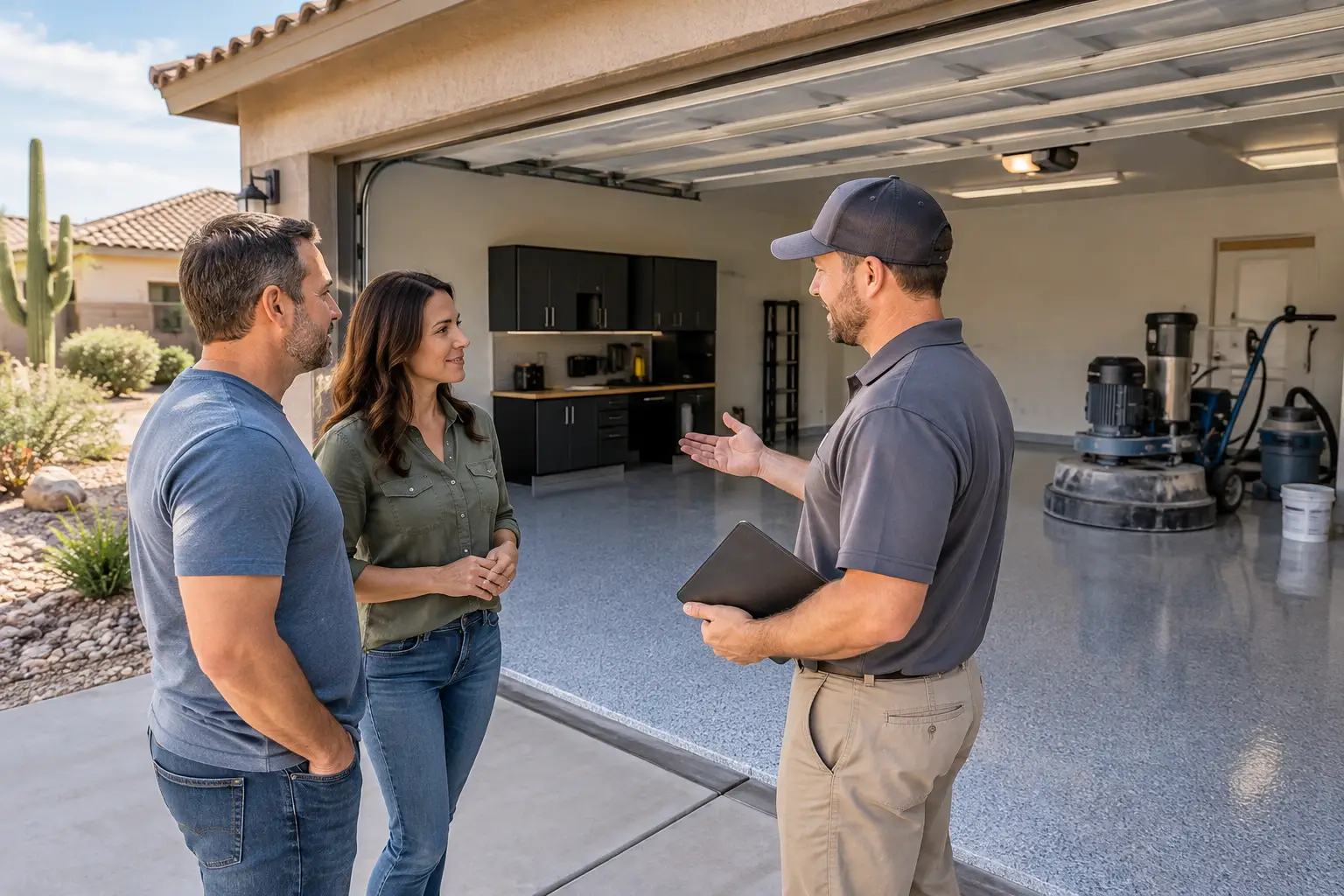
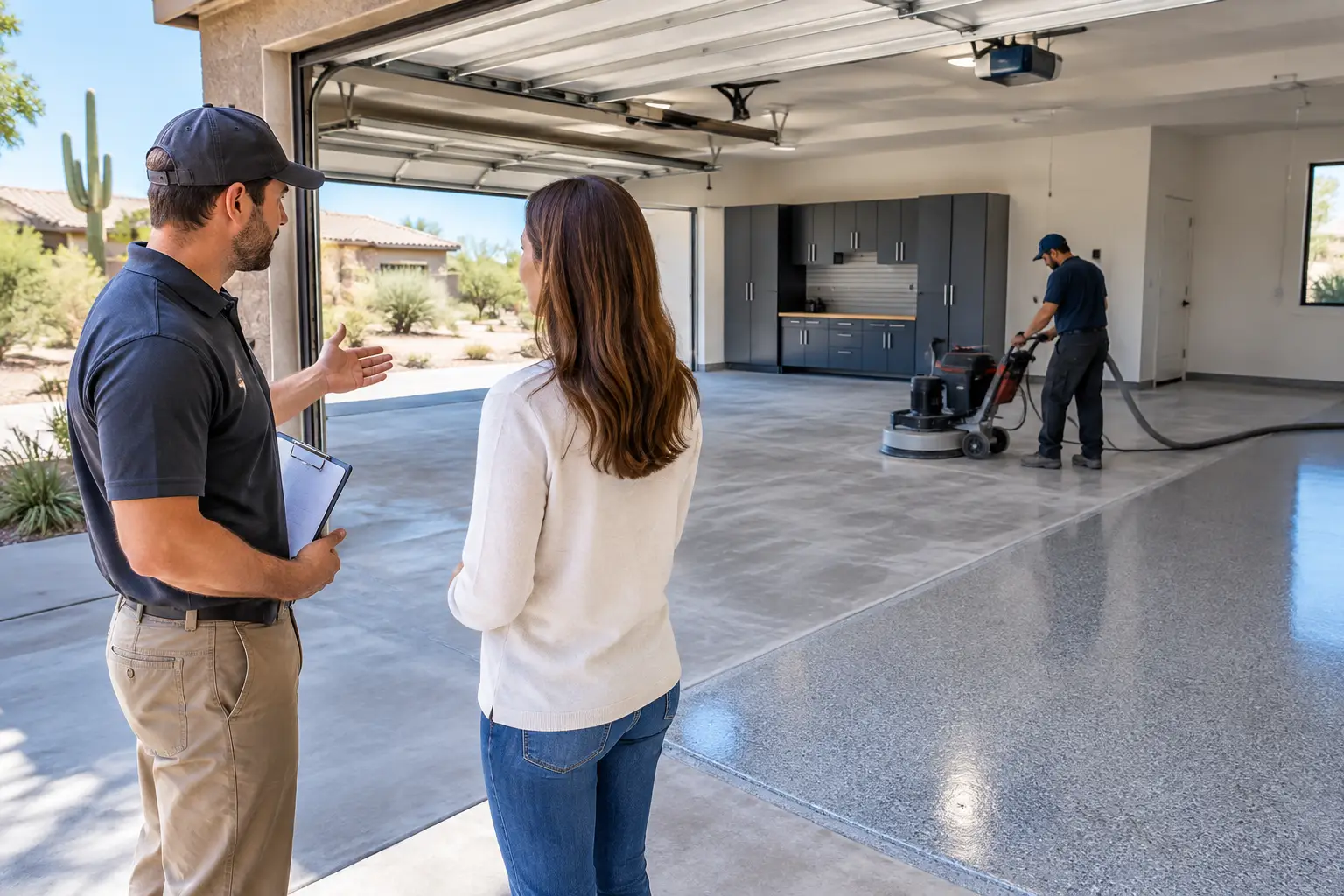
A proper estimate starts with looking at the actual garage. The contractor should measure the space, inspect concrete condition, ask how the garage is used, and discuss preferences for color, flake blend, and traction. If you are replacing a peeling coating, that existing failure should be part of the conversation, not an inconvenient detail brushed aside.
The estimate should then explain the expected work in plain language. Most residential polyaspartic garage floors can be completed in one day when conditions allow, with a short cure period before vehicles return. Exact timing depends on the system, weather, and job conditions, so it is reasonable to ask for specific instructions rather than guessing.
For East Valley homeowners, the best value is rarely the cheapest coating and rarely the fanciest sales pitch. It is a floor installed on properly prepared concrete with a complete system that fits Arizona garage use. Get the details in writing, ask the blunt questions, and choose the contractor who is prepared to answer them before work begins.
TRM Garage Floors installs 100% polyaspartic coating systems for garages, patios, and commercial spaces across the East Valley. Free estimates, done in one day.