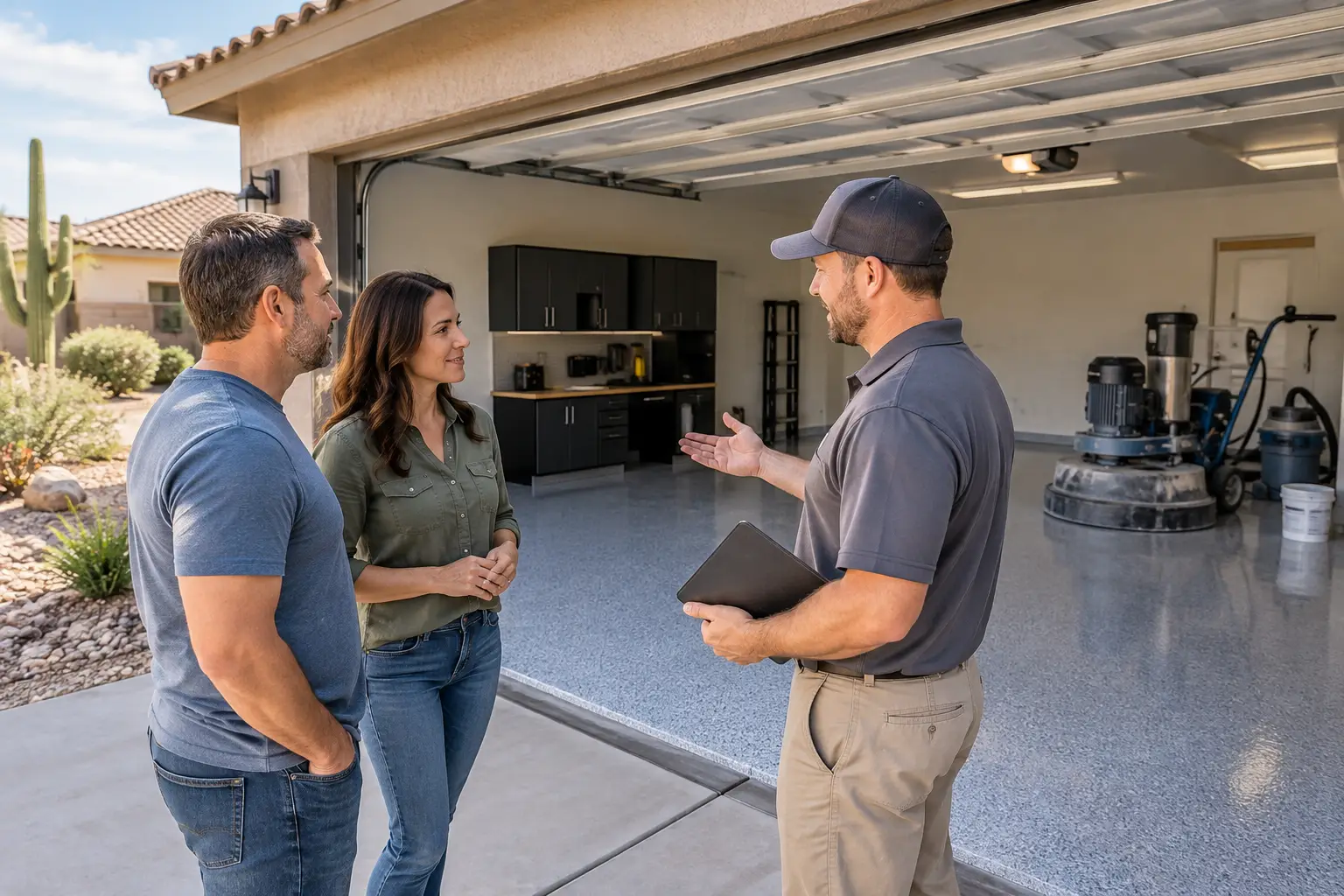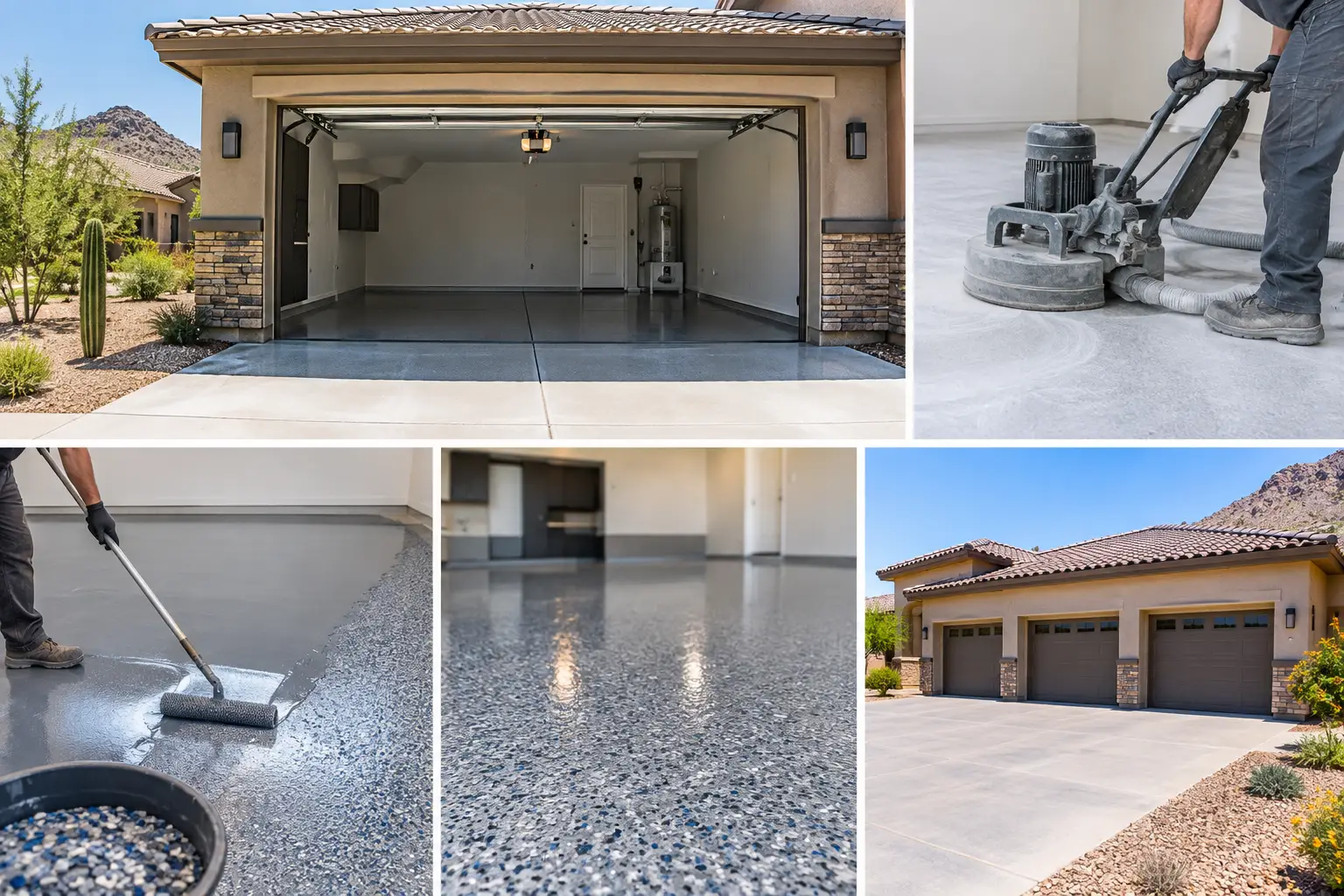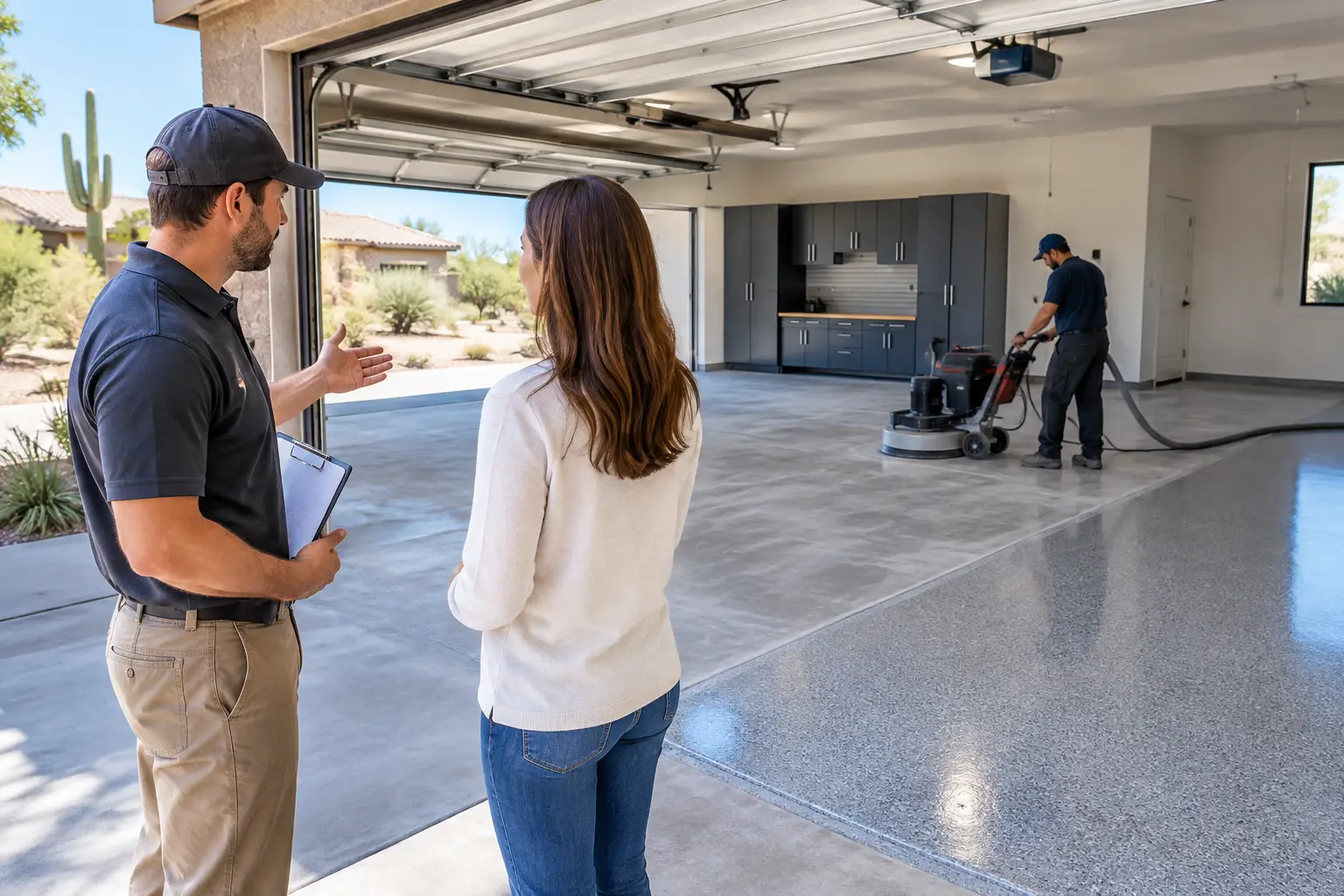

A garage floor in the East Valley takes more abuse than most people realize. Hot tires roll in after an afternoon on the 202, oil and fertilizer leave marks, and bare concrete keeps producing dust no matter how often you sweep. So, are polyaspartic floors worth it? For many Arizona homeowners and commercial property owners, yes - provided the concrete is properly prepared and the coating system fits the space.
Polyaspartic is not a magic cover-up for every slab. It is a high-performance coating that needs a sound foundation and disciplined installation. When those pieces are in place, it can turn a dusty, stained concrete floor into a surface that is easier to clean, better looking, and built for Arizona conditions.
Why bare concrete becomes a problem in Arizona
Concrete may look solid, but its surface is porous. It absorbs oil, tire residue, chemicals, and moisture. Over time, the top layer can wear down and release fine concrete dust that gets tracked into the house, settles on storage bins, and makes a garage feel perpetually dirty.
Arizona heat adds another layer of stress. Garage slabs expand and contract, patios receive intense UV exposure, and hot tires can put pressure on lesser coatings. A basic DIY epoxy kit may look good at first, then peel, yellow, or show wear where vehicles park. That is usually not just a product issue. It can also point to poor surface preparation, trapped contaminants, or a coating that was never designed for the conditions.
A professionally installed polyaspartic floor addresses the everyday issues people actually notice: stains, dust, cleaning time, worn appearance, and the frustration of a floor that feels impossible to keep tidy.
What makes polyaspartic different from basic epoxy
Polyaspartic is part of the polyurea family. In plain terms, it is a fast-curing coating designed to bond strongly to properly prepared concrete. It is commonly used in full broadcast flake systems, where decorative vinyl flakes are applied across the floor and sealed beneath a clear protective topcoat.
Compared with many standard epoxy systems, a quality polyaspartic system generally offers better UV stability, faster curing, and stronger resistance to hot-tire pickup. That matters in Gilbert, Mesa, Chandler, Queen Creek, and other East Valley communities where garages and outdoor concrete are exposed to high temperatures for much of the year.
The quick cure is a practical benefit, not just a sales point. A garage can often be coated in one day and returned to vehicle traffic the following morning, depending on site conditions and the specific system being installed. That is much easier on a household than a floor project that keeps the garage out of service for several days.
Polyaspartic also creates a nonporous, easy-clean surface. Spills stay closer to the surface instead of soaking into the slab, so routine cleanup usually takes a broom, blower, mop, or mild cleaner rather than aggressive scrubbing.
Are polyaspartic floors worth it for your space?
The value comes down to how you use the concrete and what you expect from the finish. A polyaspartic coating is often worth the investment for a garage that doubles as a workshop, home gym, storage area, or entry point into the house. It is also a strong option for showrooms, shops, warehouses, and other commercial spaces that need a clean, durable floor with limited downtime.
For homeowners, the improvement is both practical and visual. The floor stops being the part of the garage you try not to look at. A full flake finish helps hide minor dirt between cleanings, gives the room a finished appearance, and makes cabinets, vehicles, and organization systems look better around it.
For outdoor spaces, the answer requires more care. Polyaspartic can be an excellent choice for covered patios, covered outdoor living areas, and certain pool-deck applications when the system is selected for the environment. Texture and traction matter around water. Direct sun exposure, drainage, slab condition, and intended use should all be evaluated before coating exterior concrete. The right coating can improve safety and appearance, but a smooth indoor-garage system should not simply be copied onto a wet pool deck.
The biggest factor is preparation, not the brochure
A premium coating cannot make up for skipped prep. No shortcuts, no skipped steps.
Before coating begins, the concrete needs to be mechanically ground to open the surface and remove weak material, old coatings, and contaminants. Grinding creates the profile needed for proper adhesion. Surface cracks should be assessed and repaired as appropriate, although it is important to be realistic: concrete moves, and some cracks may continue to show movement over time.
Moisture conditions also matter. A professional installer should inspect the slab, identify problem areas, and explain what can and cannot be corrected before work begins. If an old epoxy coating is peeling, it must be removed or properly addressed. Coating over failure only hides it temporarily.
The installation itself needs attention to timing. Polyaspartic cures quickly, which helps with fast return to service but leaves little room for rushed work. The crew must apply the base coat evenly, broadcast flakes thoroughly, remove excess material after cure, and install the correct topcoat for the surface and use case. A final walkthrough gives the homeowner or facility manager a chance to inspect the finished floor and ask questions before the job is considered complete.
When a polyaspartic floor may not be the right choice
Polyaspartic is a premium solution, so it is not always the lowest-cost answer. If you are preparing a property for a short-term sale and only need a cosmetic improvement, a full professional coating system may be more than the situation requires. Likewise, if the slab has major structural movement, active moisture problems, severe drainage issues, or widespread deterioration, those underlying concerns should be addressed before any decorative coating goes down.
It is also worth setting the right expectations about texture and maintenance. A flake floor is easier to clean than bare concrete, but it is not self-cleaning. Dirt, leaves, and brake dust will still need occasional removal. Textured finishes improve grip, yet no floor is completely slip-proof when wet. Outdoor applications need the right texture level and routine care to perform safely.
Color selection deserves some thought, too. A lighter flake blend can brighten a dark garage, while a medium-toned blend may do a better job disguising dust and tire marks. A good installer will help you choose based on how the space is used, not just what looks best on a sample board.
Cost versus long-term value
The initial price of a professionally installed polyaspartic floor is higher than a paint-and-roll DIY kit. That comparison can be misleading, though. A DIY product may require extensive cleaning, acid etching, repairs, multiple coats, and several days of cure time. If it peels or wears early, the next project becomes removal plus replacement.
A professional quote reflects more than the material. It includes concrete preparation, crack repair where appropriate, labor, equipment, flake coverage, protective topcoats, and the experience needed to complete the work without cutting corners. Square footage, slab condition, layout, repairs, color selection, and indoor versus exterior use all affect the final price.
The better question is not whether polyaspartic costs more on day one. It is whether you want to keep fighting a dusty, stained slab or invest in a surface designed to hold up for years with normal care. For a garage used every day, that calculation often favors a professionally installed system.
How to judge an installer before you commit
Ask what preparation method will be used. Mechanical grinding is the standard you want to hear, not a vague promise to "clean it really well." Ask how cracks, oil spots, old coatings, and moisture concerns will be handled. Ask what coating chemistry is being installed, what topcoat is included, and when you can safely walk or drive on the finished surface.
You should also ask about exterior traction if the project involves a patio or pool deck. The installer should be willing to explain the finish rather than treating every slab as the same job. A pressure-free on-site estimate is valuable because it lets the contractor see the concrete, measure the area, and identify issues that photos can miss.
At TRM Garage Floors, that job-specific approach starts with the condition of the slab and ends with a final walkthrough. The goal is not to sell the same coating to every customer. It is to install a system that makes sense for the surface, the environment, and the way you use the space.
A floor coating should make life easier after installation, not create another item on the home-maintenance list. If your concrete is dusty, stained, worn, or difficult to clean, schedule an on-site evaluation and get clear answers about preparation, traction, timing, and expected performance before making the investment.
TRM Garage Floors installs 100% polyaspartic coating systems for garages, patios, and commercial spaces across the East Valley. Free estimates, done in one day.