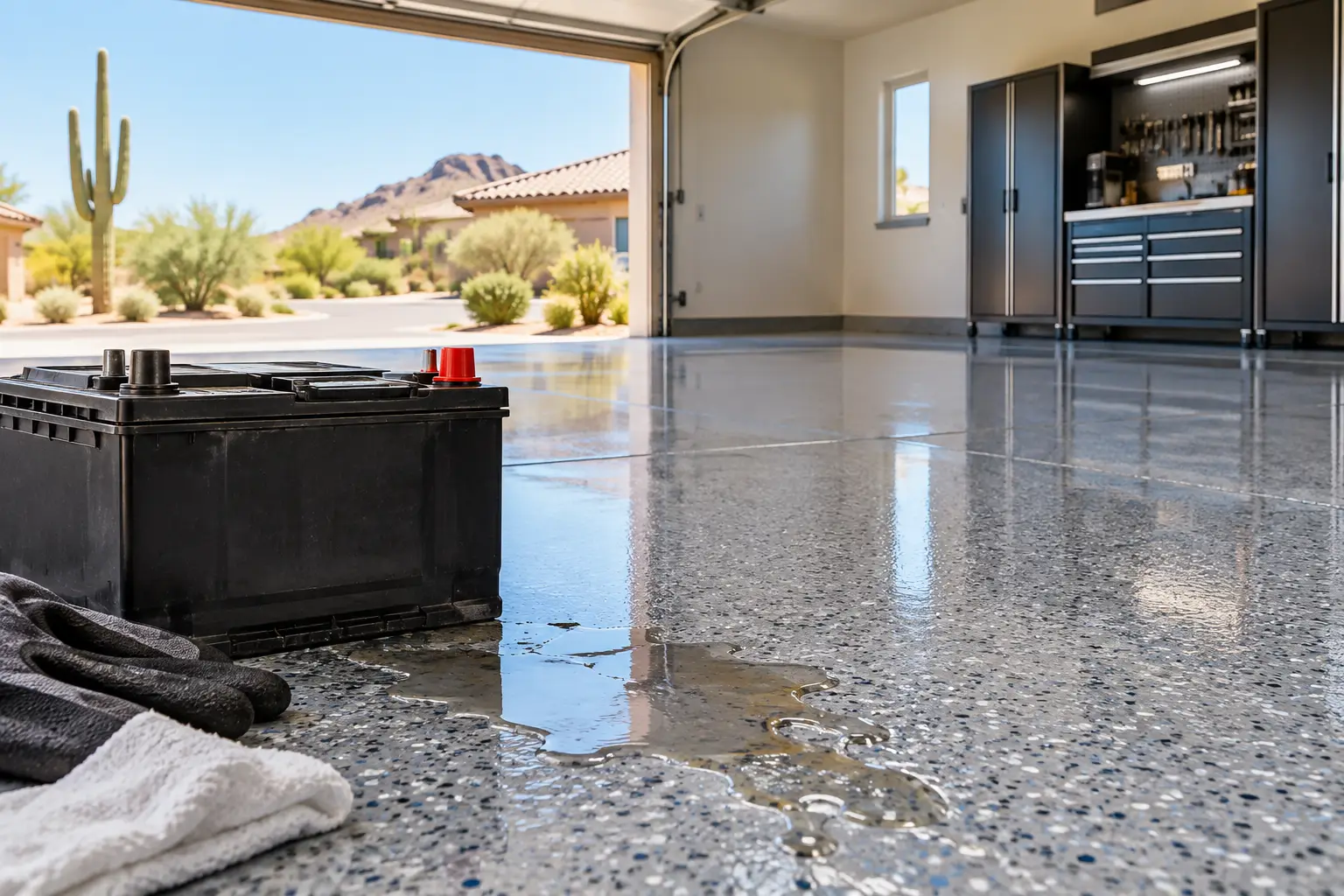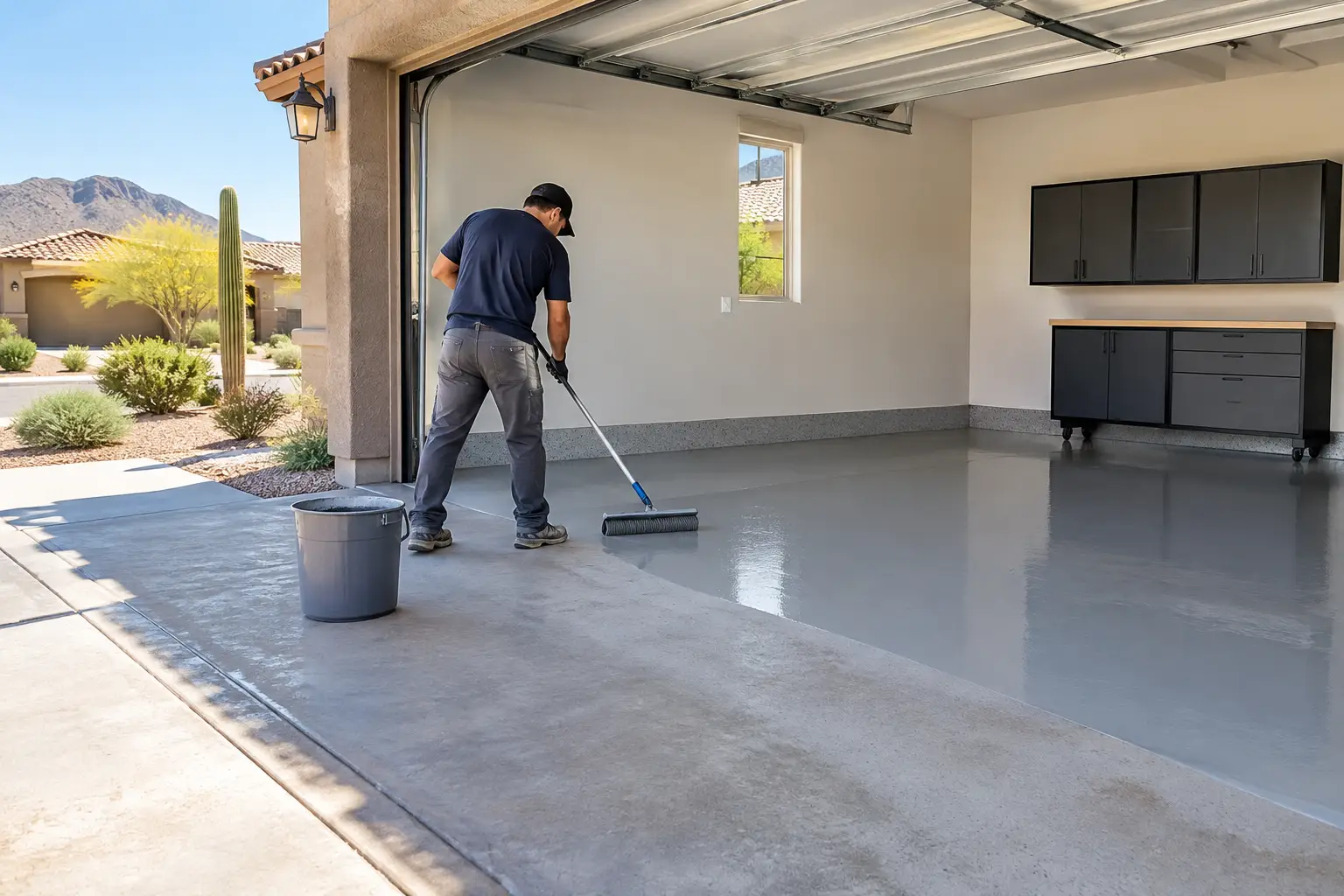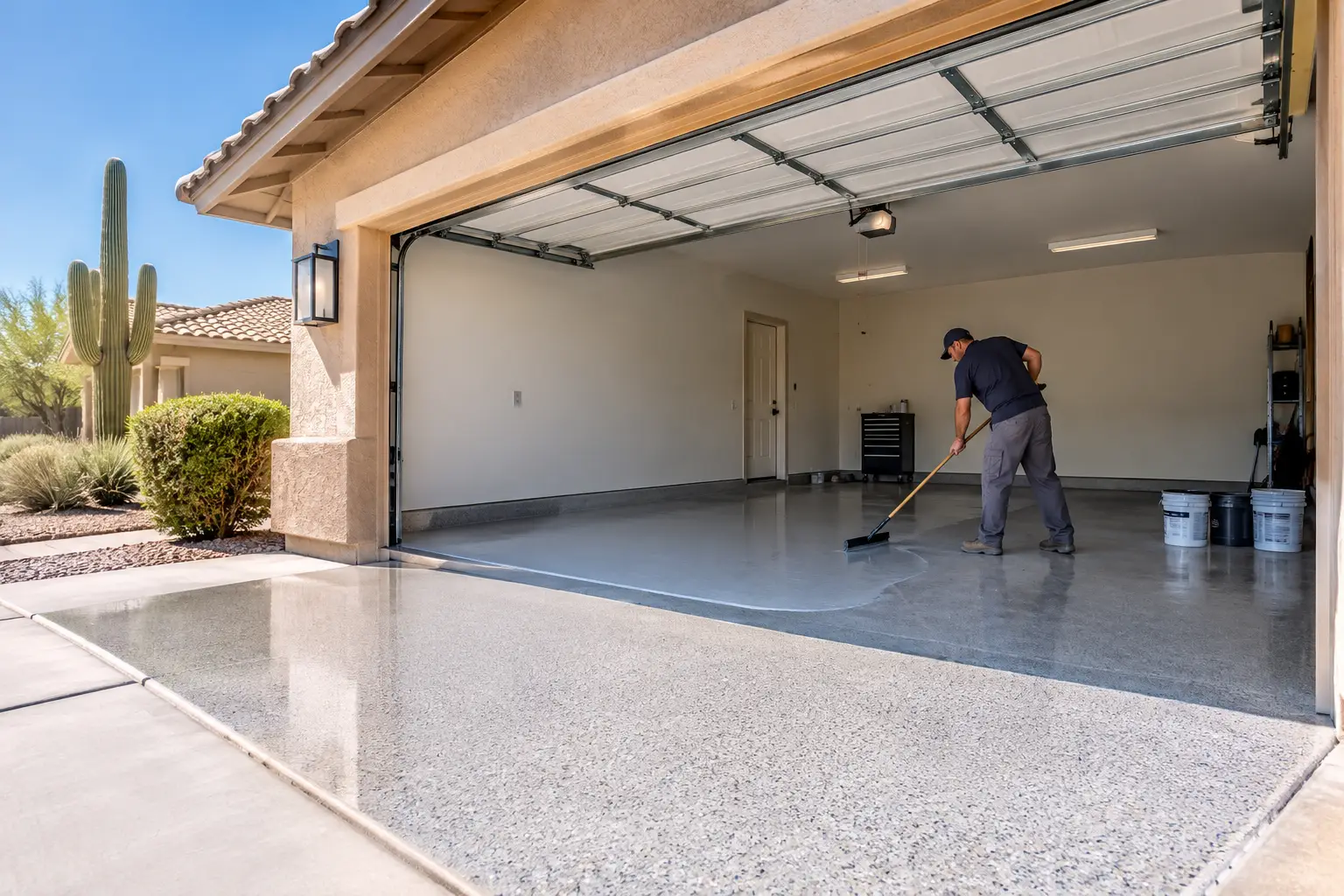
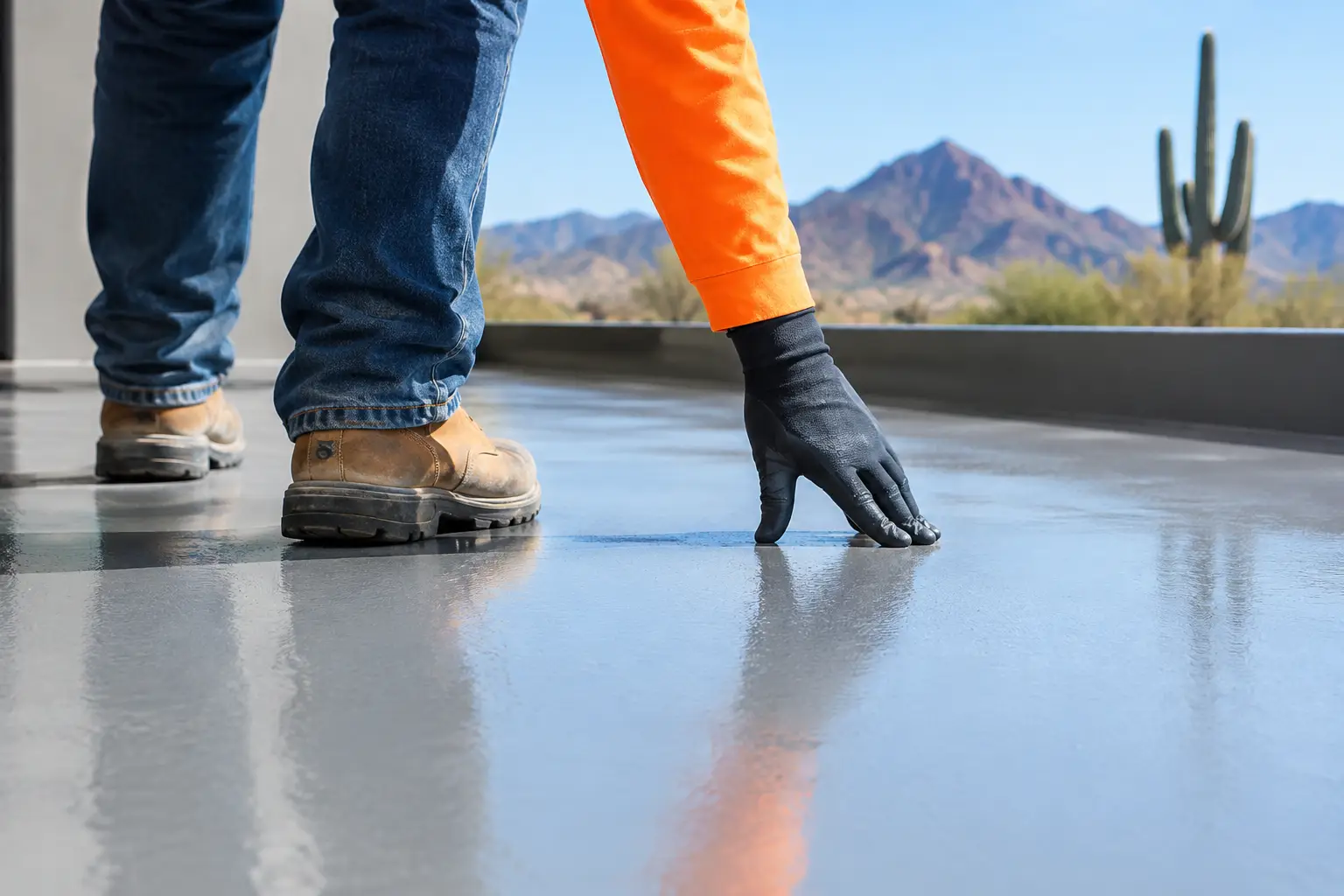
A garage floor can look great and still raise a fair question: are coatings slippery? The honest answer is that a properly installed coating should not feel like a skating rink, but traction depends on the system, the finish, and where it is installed. A smooth glossy surface behaves very differently from a full-flake floor with texture underfoot. That distinction matters when you are carrying groceries through the garage, stepping onto a wet patio, or pulling a vehicle in after a monsoon storm.
At TRM Garage Floors, we do not treat slip resistance as an afterthought. The coating choice, concrete preparation, decorative broadcast, and final topcoat all affect how a finished floor performs day to day.
Are Coatings Slippery When Wet?
Any hard surface can become slick when water, oil, sunscreen, soap, or dust sits on top of it. That includes bare concrete, tile, sealed pavers, and coated concrete. The goal is not to claim that a floor is slip-proof. No responsible contractor should make that promise. The goal is to build appropriate traction into the surface for the way the space will be used.
A smooth, solid-color coating with a high-gloss topcoat can be more slippery when wet than a textured system. It may be a reasonable fit for certain low-traffic interior areas, but it is usually not the best choice for a garage entry, patio, pool deck, or commercial workspace where moisture is part of the routine.
A full-flake polyaspartic floor has a different feel. Decorative vinyl flakes are broadcast into the base coat, creating subtle texture across the surface. Once the floor is sealed with a clear polyaspartic topcoat, it remains easy to clean while offering better grip than a flat, glass-smooth finish. For many garages, that texture provides the practical balance homeowners want: clean appearance, simple maintenance, and dependable footing in normal conditions.
For exterior spaces or areas with frequent water exposure, an additional traction additive may be the right move. This fine aggregate is mixed into the topcoat to create more grip without turning the floor into a rough, difficult-to-clean surface.
Texture Is the Main Factor in Coating Traction
The phrase “coated floor” covers a lot of different products and finishes. That is why broad claims about slipperiness can be misleading. Two floors may both be called epoxy or polyaspartic, yet perform very differently because of their surface profile.
A finished floor gets its traction from three main sources: the texture created by the flake or aggregate, the level of gloss in the final coat, and the condition of the floor at the moment it is walked on. A clean, dry surface with light texture generally feels secure. Add standing water, spilled oil, or a layer of windblown Arizona dust, and traction drops quickly.
This is also why bare concrete is not automatically safer. Many homeowners assume rough-looking concrete has good grip. In reality, old concrete can develop smooth, worn traffic paths, especially near garage doors and walkways. When wet, those areas can be surprisingly slick. Dusty concrete also creates a loose layer beneath shoes, which can reduce footing even before water enters the picture.
Full Flake Floors Offer Everyday Grip
For garages, workshops, and many covered outdoor areas, a full-flake system is often the practical choice. The flakes break up the smooth coating surface and help disguise minor dirt, tire marks, and everyday scuffs. They also provide a finished look that does not show every footprint.
The benefit is not just cosmetic. That light texture gives shoes and tires more purchase than a flat coating. It is particularly useful near doors, utility sinks, refrigerators, and other places where small spills tend to happen.
Traction Additives Make Sense in Wet Zones
Pool decks, uncovered patios, and commercial areas with regular washdowns may need more than a standard flake finish. A traction additive can be included in the final clear coat to increase surface grip where people walk with wet shoes or bare feet.
There is a trade-off. More texture generally means more traction, but too much texture can make a floor feel abrasive, hold more dirt, or become harder to mop. The right level depends on the space. A pool deck needs a different finish than a showroom, and a busy auto shop needs a different finish than a residential garage.
Why the Coating Type Matters in Arizona
Arizona heat changes the conversation. Coatings on patios and garage floors face intense UV exposure, hot tires, dramatic temperature swings, and occasional heavy rain. A coating system that is not built for those conditions can fade, peel, soften, or lose its finish. Once a surface begins to fail, traction and appearance can both suffer.
Polyaspartic coatings are well suited to this environment because they cure quickly, bond strongly when the concrete is prepared correctly, and offer strong UV stability. They are not simply applied over a dirty slab and left to do the work alone. Lasting results begin with surface preparation.
At TRM Garage Floors, preparation includes mechanically grinding the concrete to create the profile the coating needs to grip. Cracks and damaged areas are addressed before the base coat goes down. No shortcuts, no skipped steps. If the coating cannot properly bond to the slab, no amount of texture in the topcoat will solve the bigger problem.
This preparation also helps eliminate concrete dusting, a common frustration in older garages. A dusty floor is harder to keep clean and can feel less secure underfoot. A properly bonded polyaspartic system seals the concrete and creates a finished surface that is much easier to maintain.
What Makes a Coated Floor Safer Day to Day?
The coating system matters, but so does routine care. A textured floor can still become slippery if oil, water, or cleaning residue is allowed to build up. Fortunately, coated concrete is typically easier to maintain than unsealed concrete because spills stay on the surface instead of soaking in.
For regular cleaning, sweep away dust and debris, then use water and a mild cleaner as needed. Avoid leaving soap residue behind, especially on outdoor surfaces. In a garage, wipe up oil, coolant, and other automotive fluids promptly. Near a pool or patio door, address standing water before it becomes a walking hazard.
Footwear also matters. Smooth-soled flip-flops, worn work boots, and wet bare feet will not grip any surface as well as clean shoes with sound tread. That is true whether you are walking on coated concrete, tile, or bare cement.
For commercial properties, safety planning should go beyond the floor itself. Entry mats, drainage, housekeeping practices, marked transitions, and appropriate footwear all contribute to safer movement through the facility. A good coating supports those efforts, but it does not replace them.
Choosing the Right Finish for Your Space
The best question is not simply, “Is this coating slippery?” It is, “What finish is appropriate for this specific area?” A garage used for parking and home projects may benefit from a full-flake floor with a standard clear topcoat. A covered patio may need a little more traction. An exposed pool deck or frequently wet commercial area may call for a more aggressive slip-resistant finish.
During an on-site estimate, the right contractor should ask how the surface is used, where water comes from, whether children or older family members use the space, and how much cleaning the owner is willing to do. Those details shape the recommendation. A one-size-fits-all finish is rarely the right answer.
A well-built coating should make your concrete easier to use, not give you another hazard to manage. If traction is a concern, say so before installation. The right texture can be designed into the system from the start, giving you a floor that looks finished, cleans up easily, and feels dependable underfoot.
TRM Garage Floors installs 100% polyaspartic coating systems for garages, patios, and commercial spaces across the East Valley. Free estimates, done in one day.