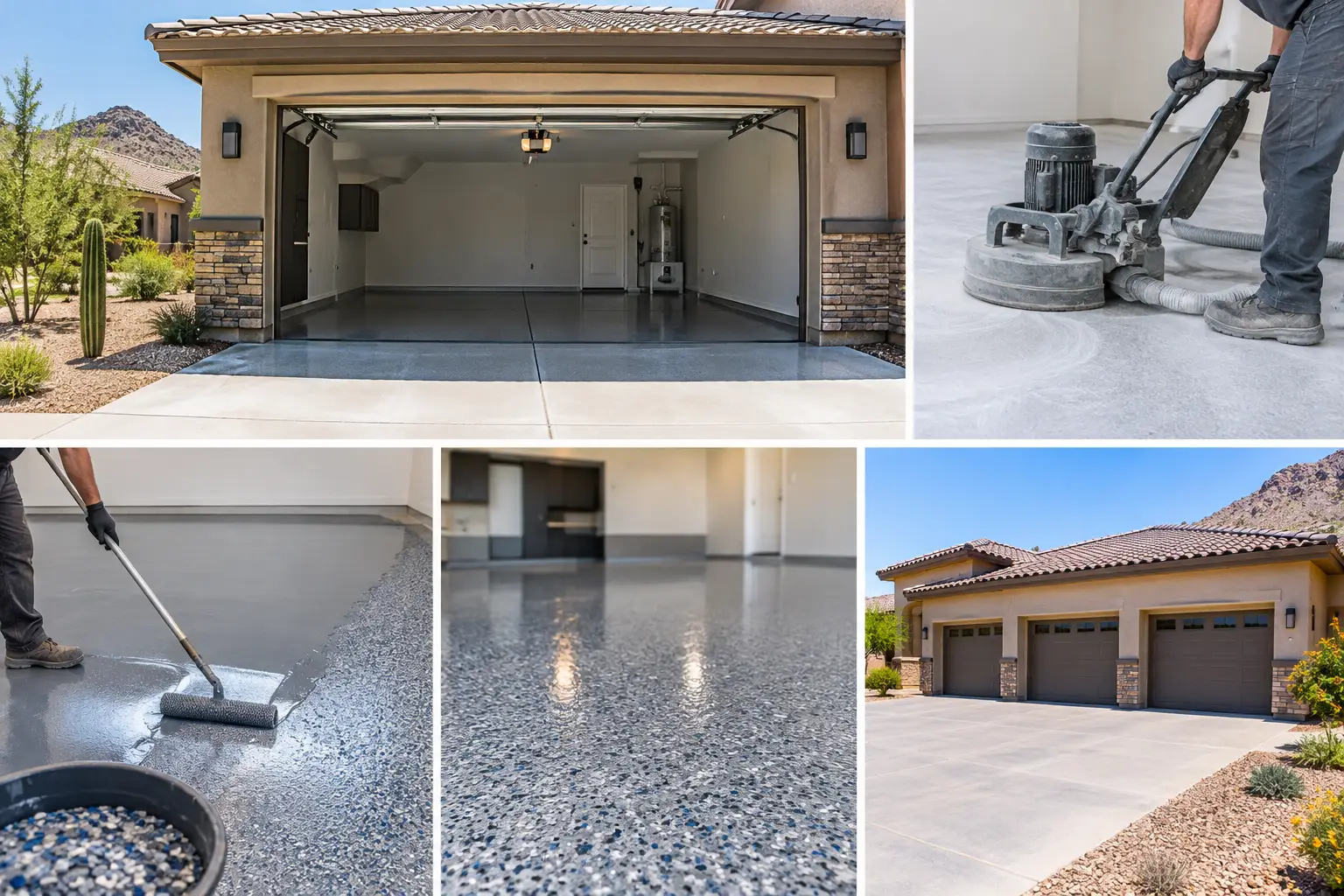
A garage floor can look fine from the driveway and still be a bad coating job waiting to happen. Peeling at the edges, hot-tire marks, bare spots around cracks, and a yellowed finish are usually signs that something went wrong long before the topcoat dried. That is why comparing garage contractors should be about more than color samples and a fast quote.
For homeowners in the East Valley, the details matter. Arizona heat, UV exposure, vehicle traffic, and dusty concrete put a floor coating system to work. A professional garage floor should be easy to clean and look good, but it also needs to stay bonded to the slab beneath it. The contractor's preparation process and materials make the difference.
Start With the Concrete, Not the Color
A garage coating is only as reliable as the concrete surface it is attached to. Concrete may look solid, but it can have contaminants from oil, tire dressing, old paint, curing compounds, moisture, or years of dirt ground into the surface. If a contractor applies coating over that without proper preparation, the coating is relying on hope. Hope is not a bonding method.
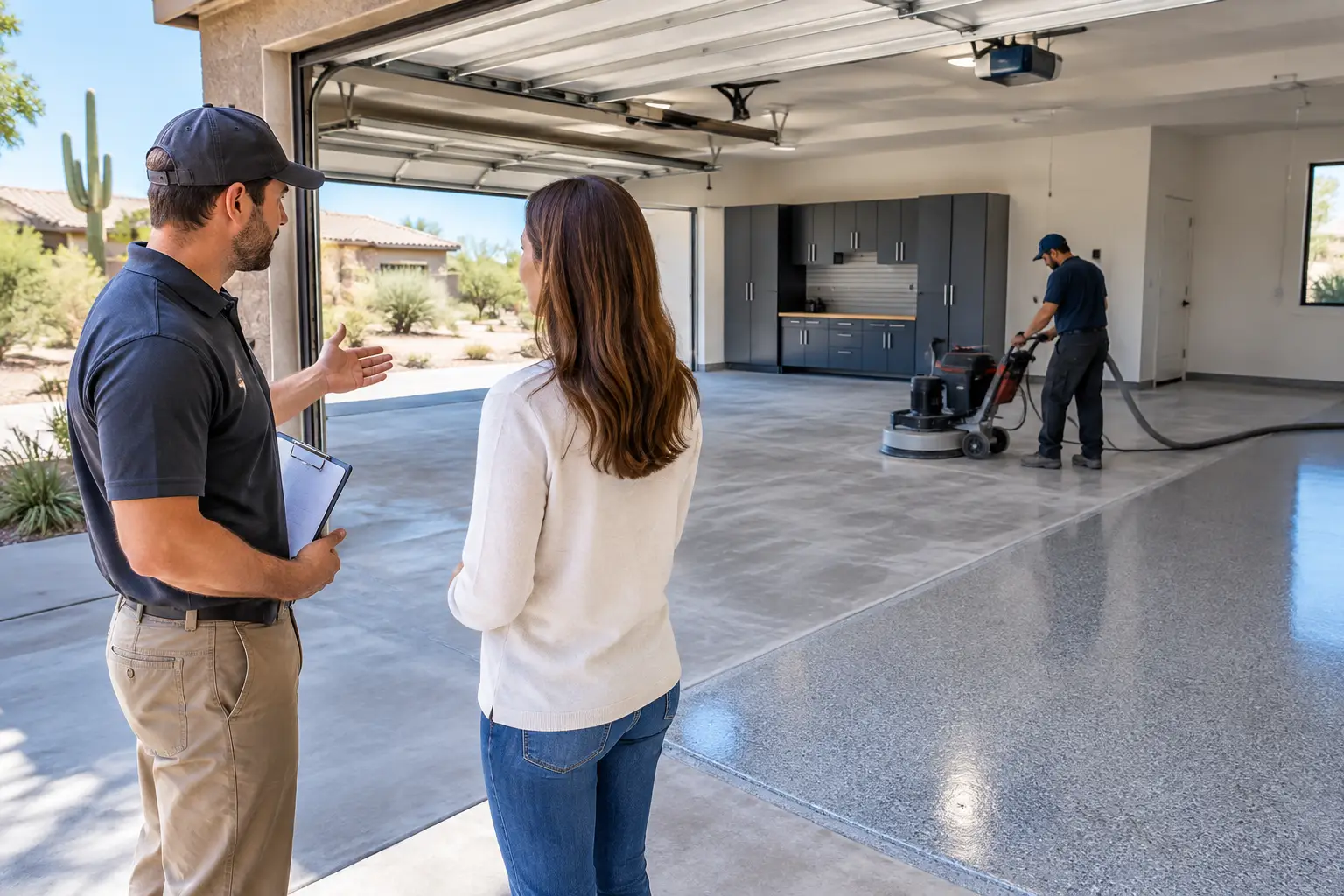
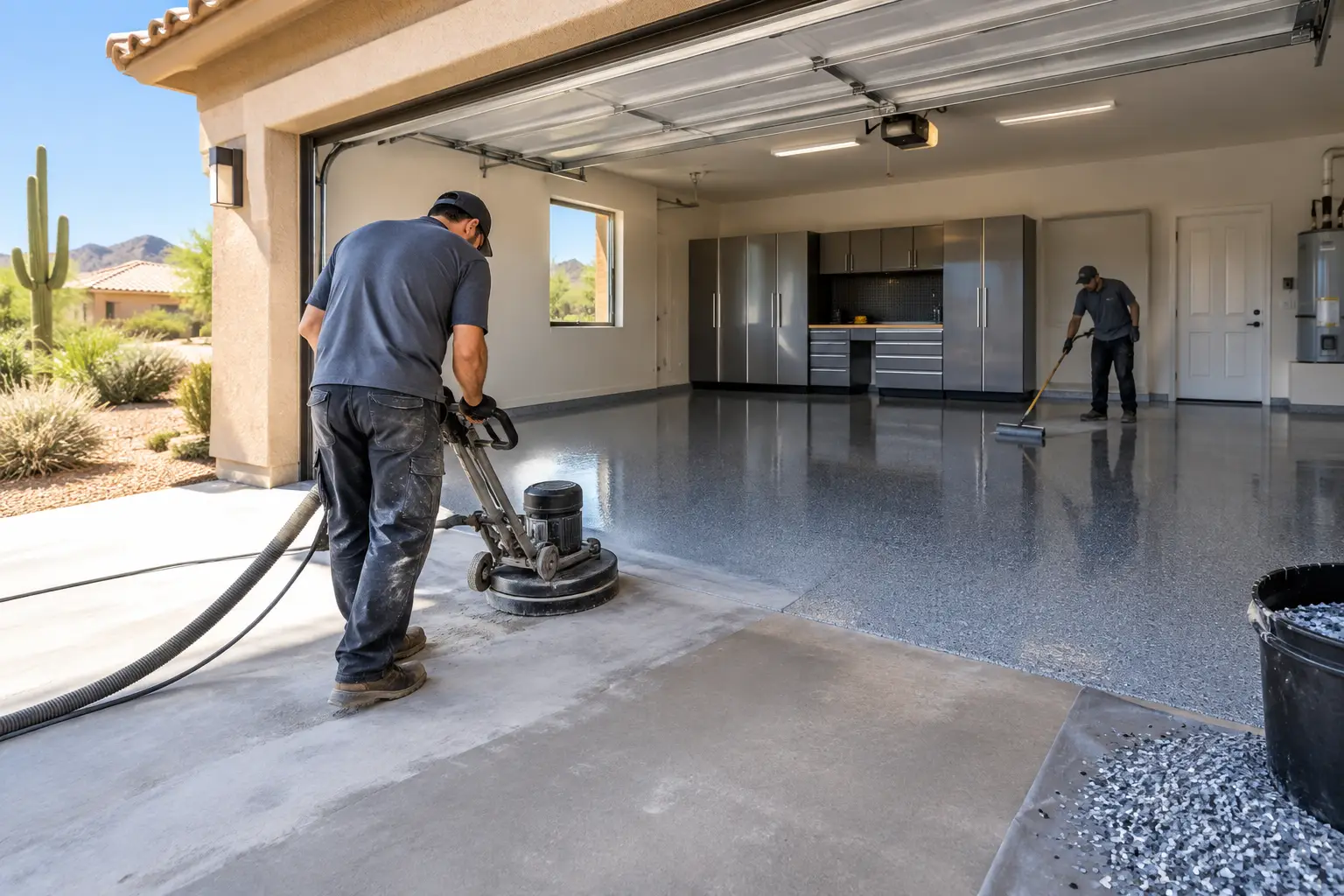
Ask each contractor exactly how they prepare the floor. For most residential garage coatings, professional diamond grinding is the right starting point. Commercial-grade diamond grinders remove weak surface material and create the texture needed for the coating to grip the slab mechanically.
Acid washing is sometimes presented as a shortcut or lower-cost alternative. It may etch certain slabs, but it does not provide the same consistent surface profile as diamond grinding. It can also leave behind residue if it is not handled correctly. The point is not that every floor needs an aggressive treatment. The point is that a contractor should evaluate the concrete and use a preparation method that fits its actual condition.
A good estimate should also address visible cracks, small pits, spalling, and failed previous coatings. Repairs will not make every old crack disappear forever, since concrete moves and cracks can telegraph through a coating. Still, leaving damaged areas untreated is not a serious plan. Ask what repair materials will be used, where repairs are included, and whether the contractor expects any cracks to remain visible.
What Garage Contractors Should Include in Their Proposal
A clear proposal helps you compare more than a bottom-line number. If one quote is much lower than the others, it may be missing steps, materials, repairs, or cleanup. Sometimes a lower price is a fair price. Sometimes it is a thin coating applied over minimal preparation. Those are not the same thing.
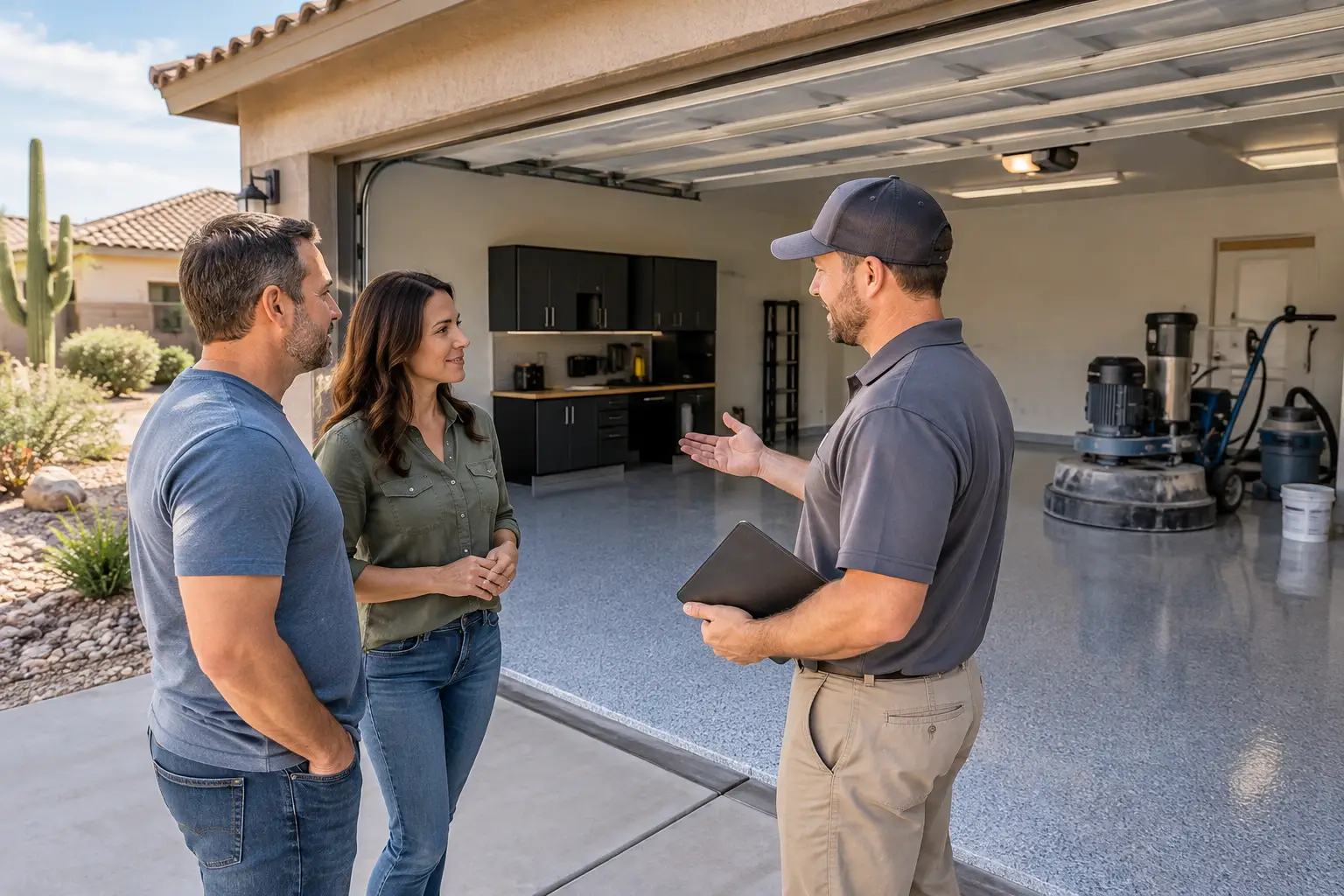
A professional proposal should explain the scope in plain language. You should be able to see how the floor will be prepared, how cracks or surface damage will be handled, what coating system will be installed, and what finish you are selecting. It should also spell out whether stem walls, transitions, steps, cabinets, or areas behind stored items are included.
For a flake floor, ask whether the flakes will be broadcast to full refusal. A full flake broadcast means flakes are applied across the wet base coat until the surface is fully covered, then excess flakes are removed before the protective topcoat is installed. This creates a more consistent appearance and gives the finished floor its texture and depth.
You should also ask about the topcoat. It is not just the final shiny layer. The topcoat helps determine stain resistance, cleanability, wear resistance, and how the floor holds its color. In a garage that sees hot tires, lawn equipment, bicycles, and regular vehicle use, it earns its keep.
Ask About the Entire Coating System
“Polyaspartic” is often used as a broad marketing term, but homeowners should ask where it is actually being used in the system. Some installers use a polyaspartic topcoat over a different base coat. That may be appropriate for certain applications, but it is not the same as a full polyaspartic system.
TRM Garage Floors installs a 100% polyaspartic system from base coat through protective topcoat. That approach is designed for the conditions Arizona garage floors face, including high temperatures, UV exposure, stains, and daily vehicle traffic. A contractor should be able to tell you what each layer does, not just repeat a product name.
It is also reasonable to ask about epoxy, polyurea, and polyaspartic options if you are comparing systems. Epoxy has been used in garages for years and can work in the right setting, but it generally has a longer cure time and can be more sensitive to UV exposure. Polyaspartic coatings are valued for fast curing, durability, and color stability. The best choice still depends on the concrete, the intended use, the installation conditions, and whether the contractor has a proven process for that material.
Do not let a contractor turn the conversation into chemistry class. You do not need to memorize resin formulas. You need a clear answer on what is being applied to your floor, why it suits your garage, and how it will be installed.
Look Closely at Installation Day
Most homeowners want the garage back quickly, especially in a two-car or three-car home where the garage is doing more than housing vehicles. It may hold storage, tools, workout equipment, golf carts, or a refrigerator that somehow became permanent. Fast installation matters, but skipped steps do not become acceptable just because the crew was done by lunch.
A typical professional installation includes surface inspection, diamond grinding, detailed vacuuming, concrete repairs, edge work, base coat application, full flake broadcast, removal of loose flakes, scraping, and a protective topcoat. The exact sequence can vary slightly by floor condition and coating system, but there should be a real process behind the one-day claim.
Ask when you can walk on the floor, move light items back in, and park vehicles on it. These timeframes depend on the product, the weather, and the job conditions. A contractor who gives you realistic return-to-service guidance is doing you a favor. Moving vehicles or heavy storage back too soon can damage a newly installed floor.
Also ask who will be on-site. Owner involvement is not required for every good contractor, but accountability matters. You should know who is supervising the work, who can answer questions during installation, and who will handle concerns if something needs attention afterward.
Compare Value, Not Just the Lowest Number
Garage floor coating costs vary for legitimate reasons. Square footage is part of the equation, but it is not the whole story. A clean, newer two-car garage with sound concrete is different from a large garage with peeling paint, cracks, extensive patching, stem walls, and heavy storage that must be moved.
The coating system, amount of prep, repair work, flake blend, topcoat, and access to the space can all affect the proposal. So can whether the quote includes a complete system or only the most visible parts of one.
When comparing estimates, line them up side by side and look for what is actually included. A slightly higher proposal can be the better value if it covers professional grinding, proper repairs, full flake coverage, and a durable topcoat. On the other hand, do not assume the highest estimate is automatically best. Ask questions until the differences are clear.
A reliable contractor will not pressure you to decide before you understand the scope. They should inspect the floor, explain concerns without inventing problems, and provide a proposal you can read without needing a decoder ring.
Warranty Questions Worth Asking
A warranty is useful only when you understand what it covers and who stands behind it. Ask whether the warranty covers adhesion failure, peeling, material defects, or workmanship. Ask what maintenance is expected and whether damage from impacts, moisture issues, or structural slab movement is excluded.
The answer will rarely be “everything forever,” and that is normal. Concrete moves, accidents happen, and no coating can prevent every form of damage. What you want is a contractor who is direct about the limits of the warranty and responsive if a legitimate issue arises.
Local experience matters here. A contractor working regularly in Chandler, Gilbert, Queen Creek, Mesa, or Sun Lakes sees the same heat, slab conditions, and homeowner expectations repeatedly. That experience tends to show up in better preparation decisions and more practical recommendations.
Before signing, take one last look at the proposal and make sure it matches the conversation you had on-site. The right garage floor contractor will make the process feel clear, not confusing. A careful estimate, honest answers, and proper preparation are a much better starting point than a cheap promise that sounds too good from the driveway.
TRM Garage Floors installs 100% polyaspartic coating systems for garages, patios, and commercial spaces across the East Valley. Free estimates, done in one day.