A garage floor can look great on installation day and still reveal whether the job was done right months later. That is why floor coating warranties deserve more than a quick glance at the number of years printed on a proposal. A long warranty sounds reassuring, but its value comes down to what it covers, what it excludes, and whether the contractor will answer the phone if there is a problem.
For East Valley homeowners, that matters even more. Arizona garages deal with hot tires, summer heat, UV exposure near open garage doors, vehicle fluids, and concrete that may already have cracks or old coatings. The right warranty should support good workmanship, not distract from the details that make a coating last.
Why Floor Coating Warranties Are Not All the Same
A warranty is a promise with conditions. Some promises are fair and specific. Others sound impressive until you read the fine print and find that peeling, discoloration, tire pickup, moisture issues, and concrete failure are all excluded. At that point, the warranty may cover very little of what a homeowner actually worries about.
Start by separating three different things that are often lumped together under one word: workmanship, materials, and normal wear.
Workmanship coverage addresses installation problems
This is the part homeowners should pay the closest attention to. A workmanship warranty generally covers failures caused by the installation itself, such as a coating that loses adhesion because the concrete was not properly prepared or the material was not applied correctly.
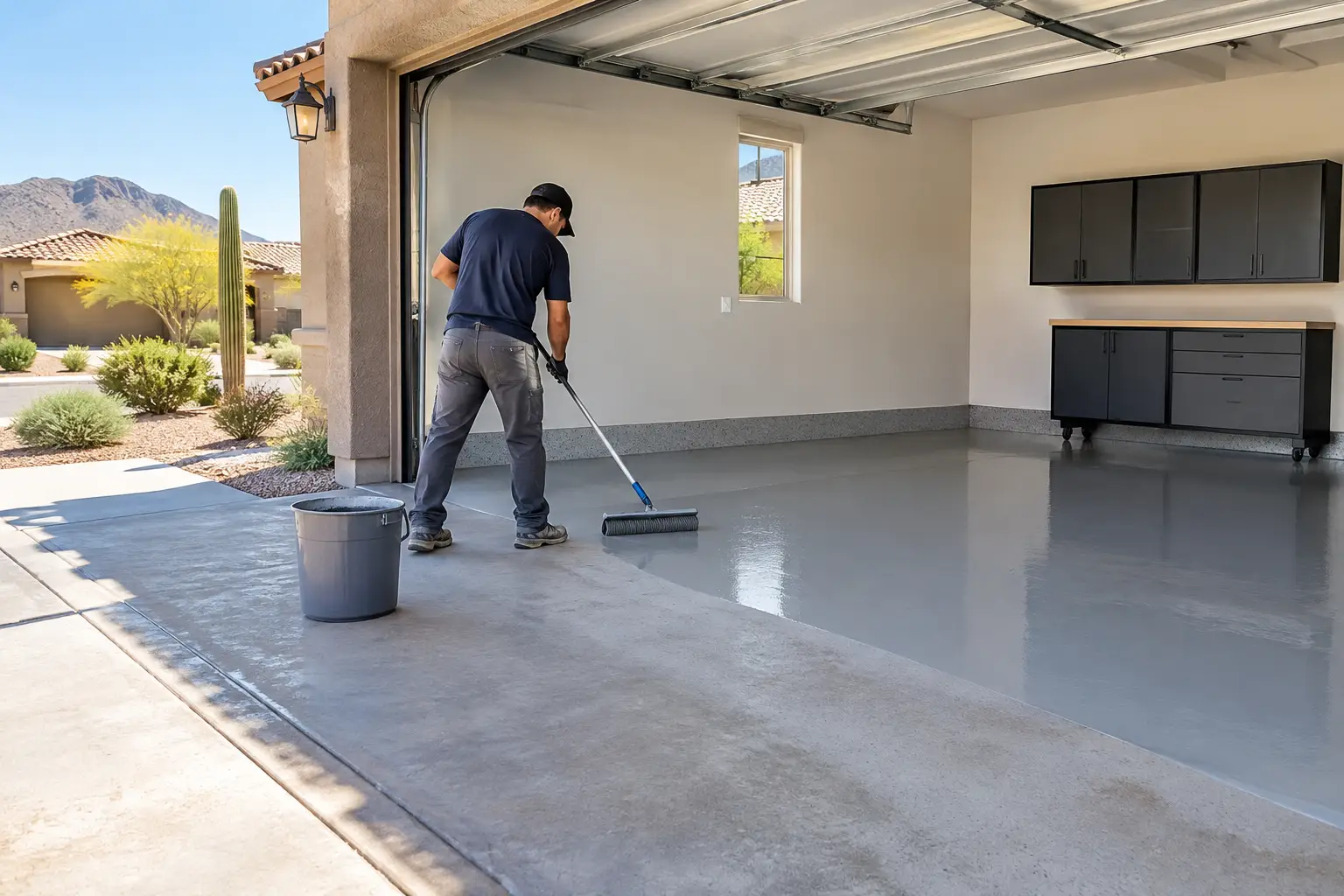
Concrete preparation is not a minor detail. If a contractor skips proper diamond grinding, coats over contamination, or applies material to a poorly prepared slab, even a good coating can fail. No warranty should be used as an excuse to cut corners before the coating goes down.
Ask the contractor directly: if the coating peels or delaminates due to installation, who inspects it, who determines the cause, and who pays to repair it? The answer should be plain, not a sales speech.
Material warranties cover the coating product itself
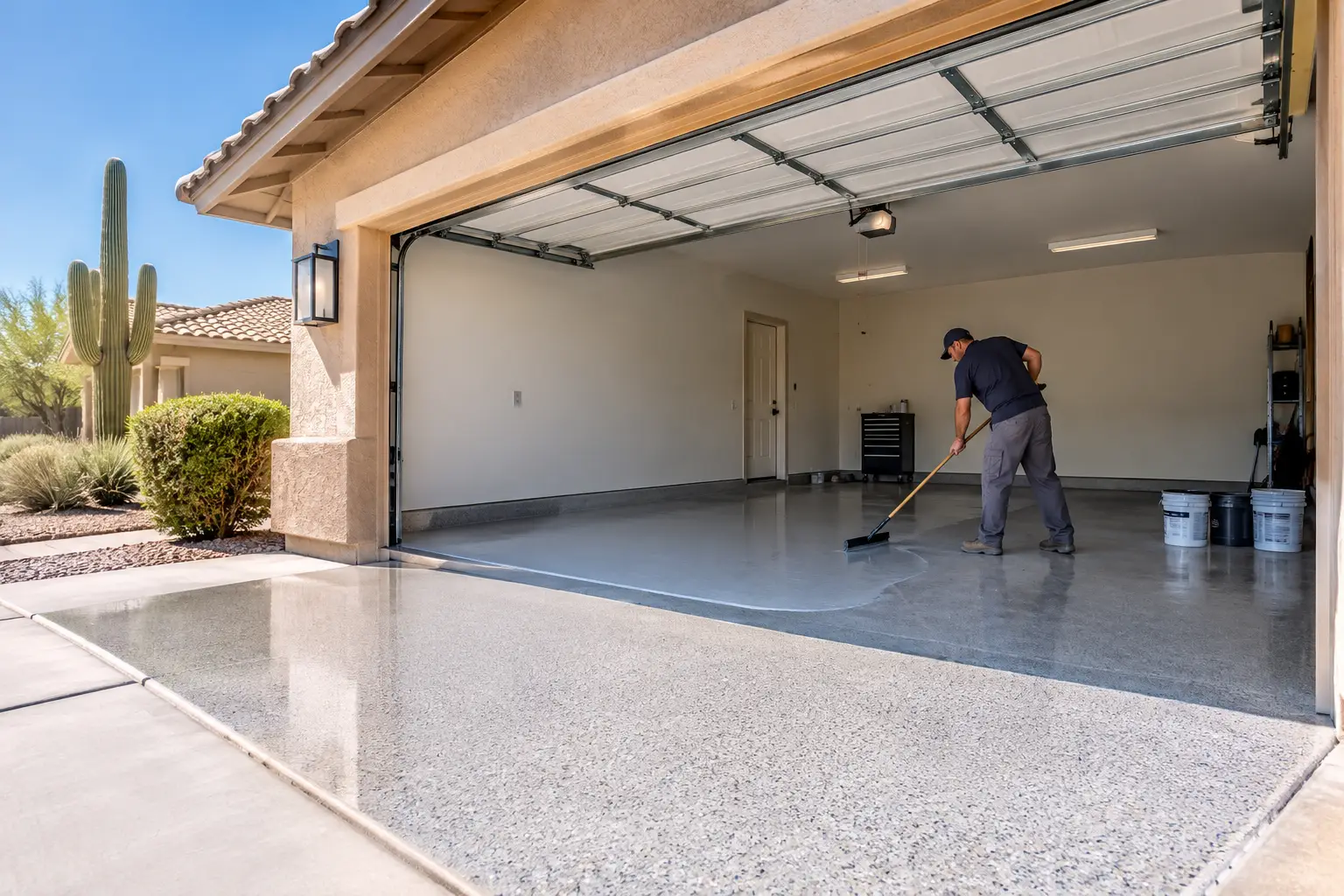
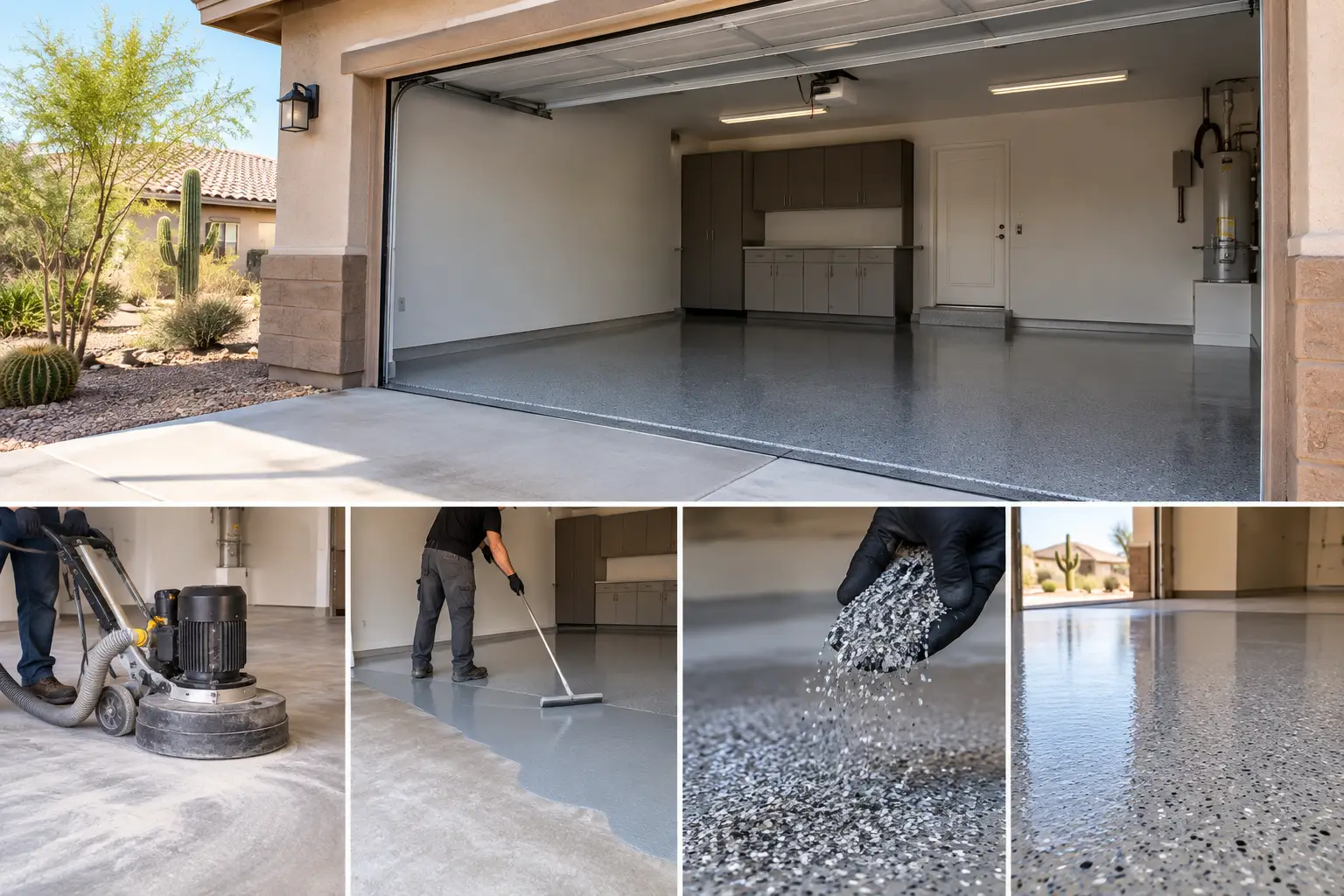
A manufacturer may offer a separate warranty on its coating materials. That can be useful, but it is not the same as a contractor standing behind the installed floor. Manufacturers make products. Contractors prepare the slab, make repairs, apply the base coat, broadcast the flakes, and install the protective topcoat.
If a proposal relies heavily on a manufacturer warranty, ask who handles the claim locally. Homeowners should not have to chase down a product supplier while their garage floor is failing. The contractor should be able to explain the process and take responsibility for evaluating the issue.
Normal wear and concrete movement are different problems
No coating warranty can turn concrete into a motionless surface. Existing cracks can move, new cracks can develop, and damage from a dropped engine part, a sharp metal stand, or a hard impact is not usually a coating defect. A practical warranty will make those limits clear.
The same goes for gradual wear in high-traffic areas. A garage floor coating is built for daily vehicle use, but it is not indestructible. Honest expectations are better than broad promises that leave room for an argument later.
What a Good Garage Floor Warranty Should Spell Out
The best warranty language is specific enough that both the homeowner and contractor know where they stand. It should identify the coating system being installed and explain the covered type of failure, the warranty period, exclusions, and the repair process.
A proposal should also tell you whether the warranty applies to the full system or only part of it. Some lower-cost estimates use a less durable base coat with a different topcoat, then advertise the topcoat warranty as if it applies to the whole floor. That is worth questioning. The performance of a garage floor comes from the entire system, including preparation and the bond to the concrete.
For a full-flake garage floor, homeowners should know whether the proposal includes concrete repairs, commercial diamond grinding, the base coat, complete flake broadcast, scraping and cleanup, and a protective topcoat. If those details are vague, the warranty may be vague for the same reason.
A 100% polyaspartic system is designed to handle the demands of a residential garage, including hot tires and regular vehicle traffic. But polyaspartic is not magic in a bucket. It still needs a clean, properly profiled slab and careful application. A contractor who talks more about a 20-year or lifetime warranty than preparation should raise an eyebrow.
Common Warranty Exclusions and When They Make Sense
Exclusions are not automatically a red flag. Some are necessary because a coating contractor cannot control every condition beneath or around a concrete slab. The question is whether the exclusions are reasonable and explained before work begins.
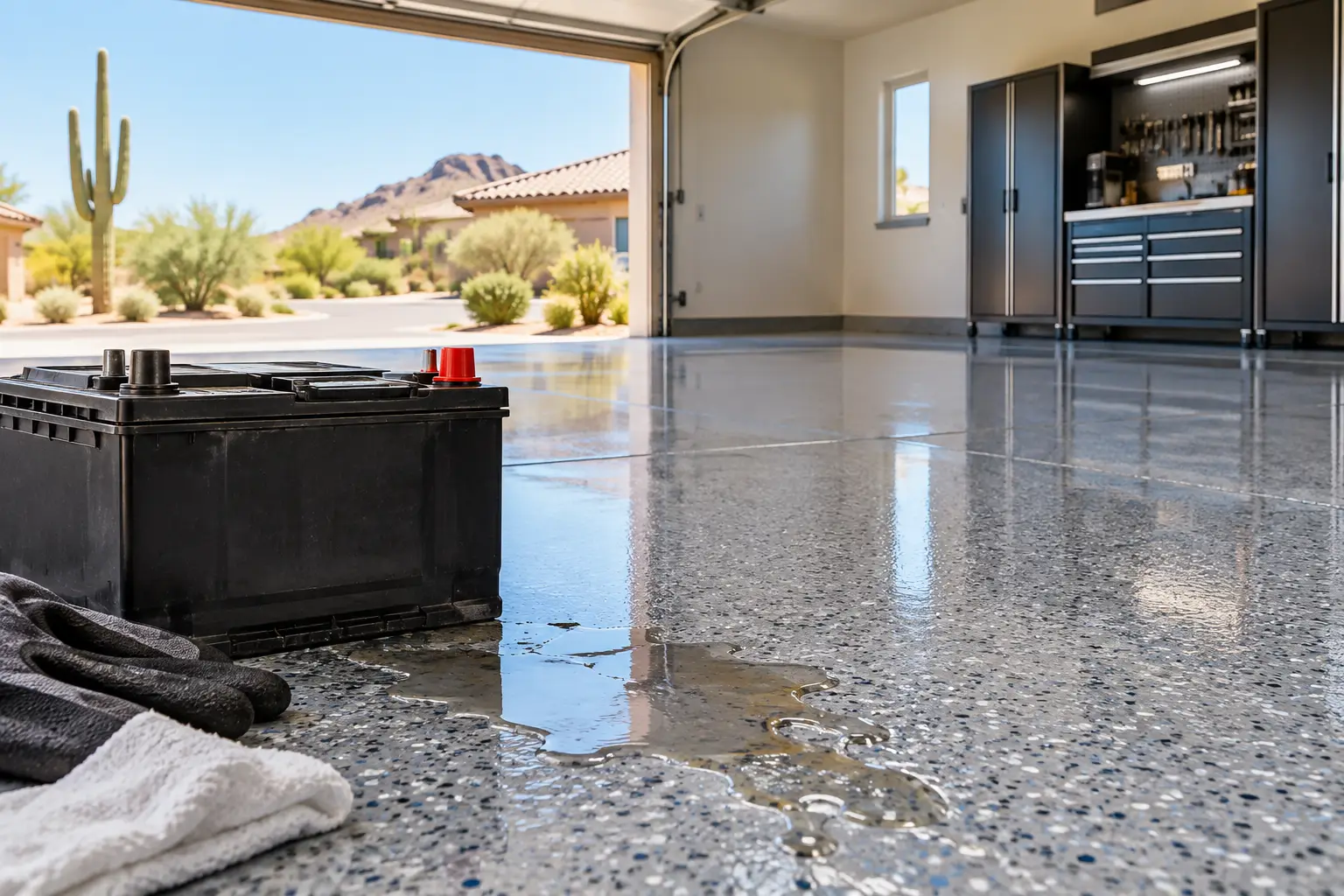
Moisture is one example. Excessive moisture vapor coming up through concrete can affect coating adhesion. A professional contractor should inspect the slab, discuss visible signs of moisture concerns, and explain how that condition affects the installation. Simply hiding behind a broad moisture exclusion after a failure is another matter.
Cracks are another common exclusion. Hairline cracks can often be repaired as part of the preparation process, but concrete may continue to move with temperature changes and settlement. A repaired crack may eventually show again. That does not necessarily mean the coating failed.
Homeowners should also expect exclusions for abuse, impact damage, improper chemical exposure, and alterations made after installation. If someone grinds through the coating, drags heavy sharp equipment across it, or applies an incompatible product, that is outside normal use.
Be careful, though, if an exclusion list is so broad that it effectively rules out every likely issue. A warranty that excludes all peeling, all stains, all tire marks, all cracking, all moisture, and all color changes is mostly a piece of paper.
Questions to Ask Before You Compare Warranty Lengths
Do not let warranty length become the only comparison point between garage floor estimates. A shorter, clearly written workmanship warranty from an established local contractor may be more useful than a vague lifetime promise from a company you cannot reach after the check clears.
Ask whether the contractor performs the work with their own crew and who will be your contact if a concern comes up. Ask how the concrete will be prepared, whether old coatings or sealers require extra work, and how cracks or damaged areas are addressed. Then ask for the warranty terms in writing before scheduling the project.
It also helps to ask what the contractor considers a warrantable failure. A straightforward answer might be: loss of adhesion caused by improper preparation or application. That is a meaningful standard. An answer that stays fuzzy usually stays fuzzy when service is needed, too.
For homeowners planning to sell, ask whether the warranty transfers to a new owner. Transferability can add value, but only if the terms are clear and the company is likely to remain available. There may be a transfer process or deadline, so do not assume it happens automatically.
Warning Signs in Floor Coating Warranty Language
Watch for a warranty that is not included with the written proposal. Verbal assurances are easy to make and hard to prove later. Also be cautious when a contractor cannot explain whether they are offering a workmanship warranty, a manufacturer warranty, or both.
A few other warning signs are worth noting:
- A lifetime promise with no definition of what lifetime means or what failures are covered.
- A warranty that names a product manufacturer but does not identify the installing contractor's responsibility.
- Broad exclusions that leave almost no common failure covered.
- No explanation of preparation, despite preparation being the foundation of adhesion.
- A warranty that requires the homeowner to pay labor, travel, removal, or reinstallation costs for a covered repair.
None of these points alone proves a contractor will do poor work. They do tell you to slow down and ask better questions before choosing the lowest estimate.
If You Need to Make a Warranty Claim
If you notice peeling, bubbling, unusual discoloration, or another concern, take clear photos and contact the installer promptly. Keep your proposal, invoice, warranty document, and any care instructions together. Early documentation makes it easier to identify whether the issue is related to the coating, the concrete, or outside damage.
Avoid having another contractor grind, patch, or coat the affected area before the original installer has a chance to inspect it. Once the surface has been altered, it can be harder to determine the cause. A reputable contractor should inspect the concern, explain what they find, and tell you what happens next.
At TRM Garage Floors, warranty terms should sit alongside the actual scope of work, not replace it. A clear on-site estimate gives homeowners the chance to see how the floor will be prepared, what system is being installed, and what support looks like after the job is complete.
The most useful warranty is one you never need to use because the slab was properly prepared and the coating was installed correctly the first time. Before signing an estimate, read the warranty, ask the uncomfortable questions, and choose the contractor whose answers are as solid as the floor they are promising to install.
TRM Garage Floors installs 100% polyaspartic coating systems for garages, patios, and commercial spaces across the East Valley. Free estimates, done in one day.