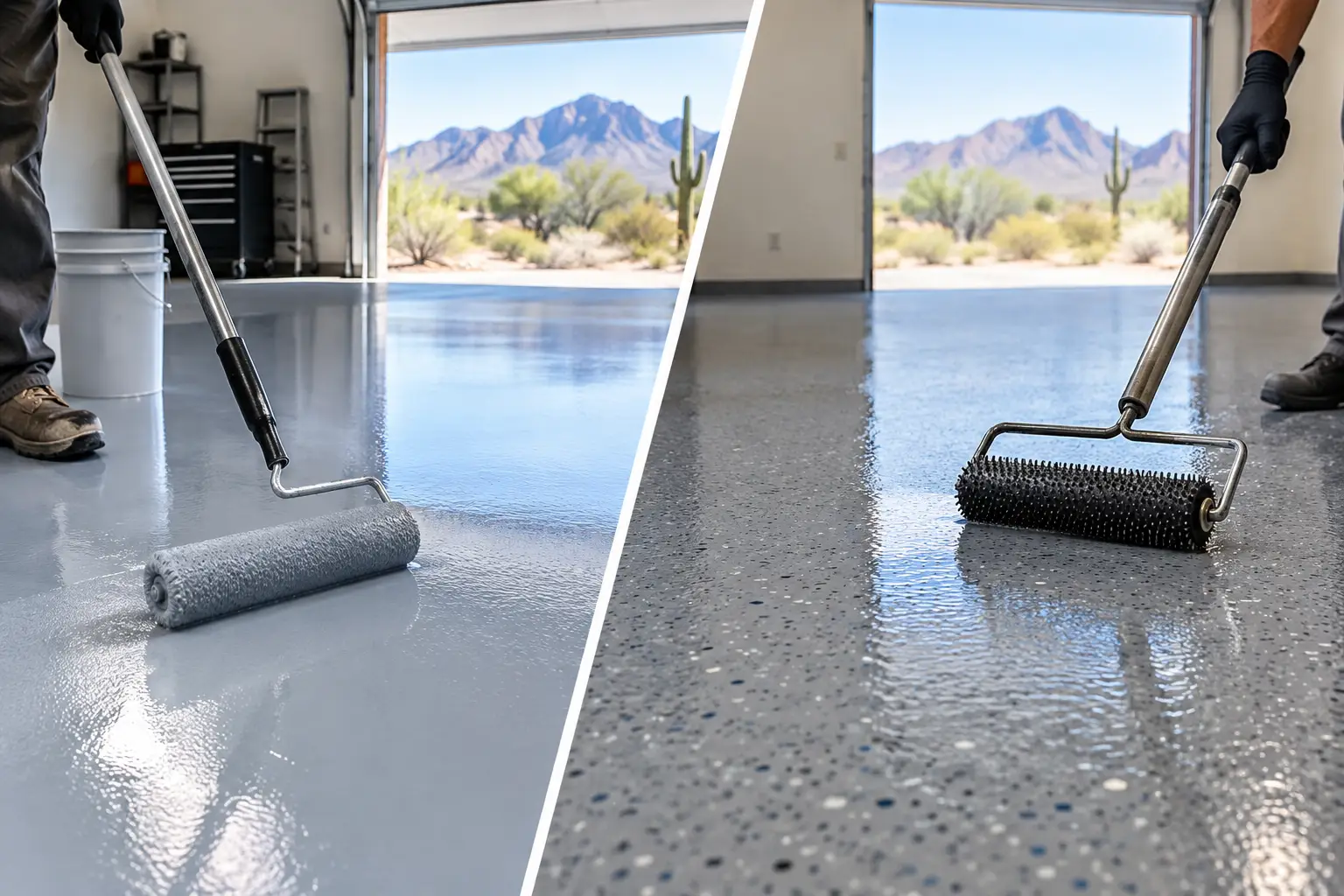
A garage floor can look fine until the first summer of hot tires, dropped oil, pool chemicals, and everyday traffic expose weak spots. In the epoxy versus polyurea conversation, the right answer is not simply whichever coating has the lowest price or the shiniest sample board. For Arizona concrete, cure time, UV exposure, surface preparation, and long-term adhesion all matter.
Homeowners often start researching after a DIY epoxy kit peels near the garage door, a patio fades, or bare concrete becomes difficult to clean. Commercial owners have a different pressure: they need a floor that can handle traffic without shutting down a shop or warehouse for several days. Understanding how these coating families behave makes it easier to choose a system that fits the space.
Epoxy Versus Polyurea: The Core Difference
Epoxy is a two-part coating that has been used on concrete for decades. When it is properly installed over well-prepared concrete, epoxy can create a thick, attractive, chemical-resistant floor. It remains a reasonable choice for certain interior spaces, especially where sunlight is limited and a slower installation schedule is acceptable.
Polyurea is a faster-curing coating family. It was developed for demanding industrial applications and is known for flexibility, adhesion, and quick return to service. Polyaspartic coatings are a type of aliphatic polyurea formulated to give installers more working time while retaining the fast cure and performance advantages that make polyurea attractive for floors.
That distinction matters. Some companies use “polyurea” as a catch-all term, while the actual system may include a polyaspartic base coat and topcoat. For a homeowner, the more useful question is not the label alone. Ask what products are being used, how the slab will be prepared, and whether the complete system is rated for the conditions your floor sees.
Heat, Sun, and Hot Tires Change the Equation
Arizona garages are not mild environments. A slab near an open garage door can absorb intense heat, while patios and pool decks receive direct UV exposure day after day. That is where coating chemistry starts to show.
Standard epoxy can amber or yellow in sunlight. A clear topcoat may slow that change, but epoxy is generally not the preferred finish layer for an exposed exterior surface. Polyaspartic topcoats are designed with stronger UV stability, so they are better suited for patios, covered outdoor spaces, and garage entrances that receive substantial light.
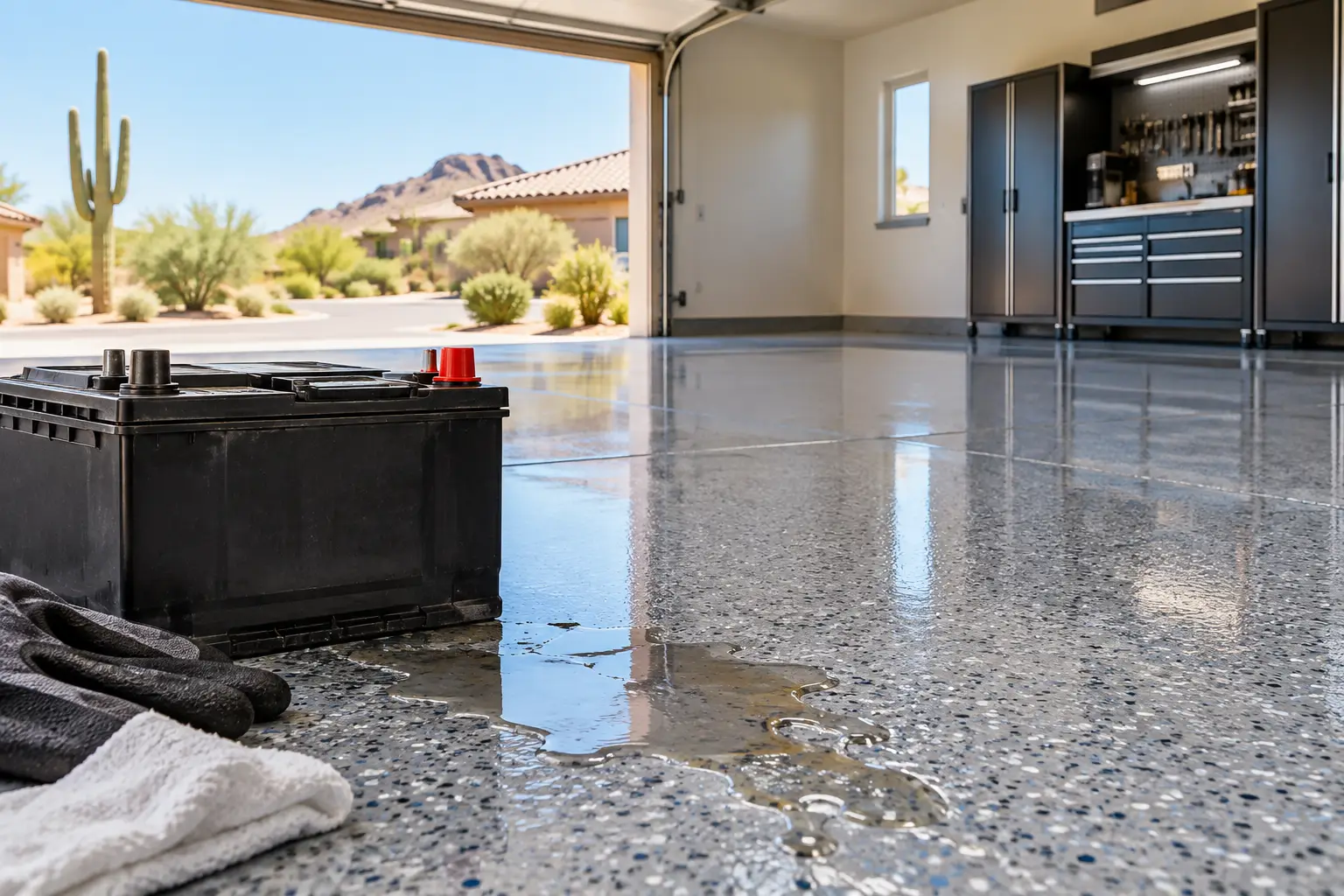
Hot-tire pickup is another concern. Tires arrive warm after driving on summer pavement, then sit on the same spot in the garage. A poorly bonded coating can soften or release from the concrete, leaving a visible patch under the tires. This is often blamed entirely on the coating product, but the real cause can include inadequate grinding, moisture issues, weak concrete, or skipped repairs. No shortcuts on preparation is the best defense.
A professionally installed polyaspartic system is built to handle fast temperature changes and the normal movement of concrete better than many basic epoxy systems. That flexibility is valuable in the East Valley, where a floor may go from cool overnight temperatures to significant daytime heat.
Installation Time Is More Than a Convenience
Epoxy commonly requires multiple days for installation and curing. Depending on the product and conditions, a floor may need several days before it is ready for vehicles. That can be manageable for an empty room, but it is inconvenient when the garage is where you park, store tools, or access the house.
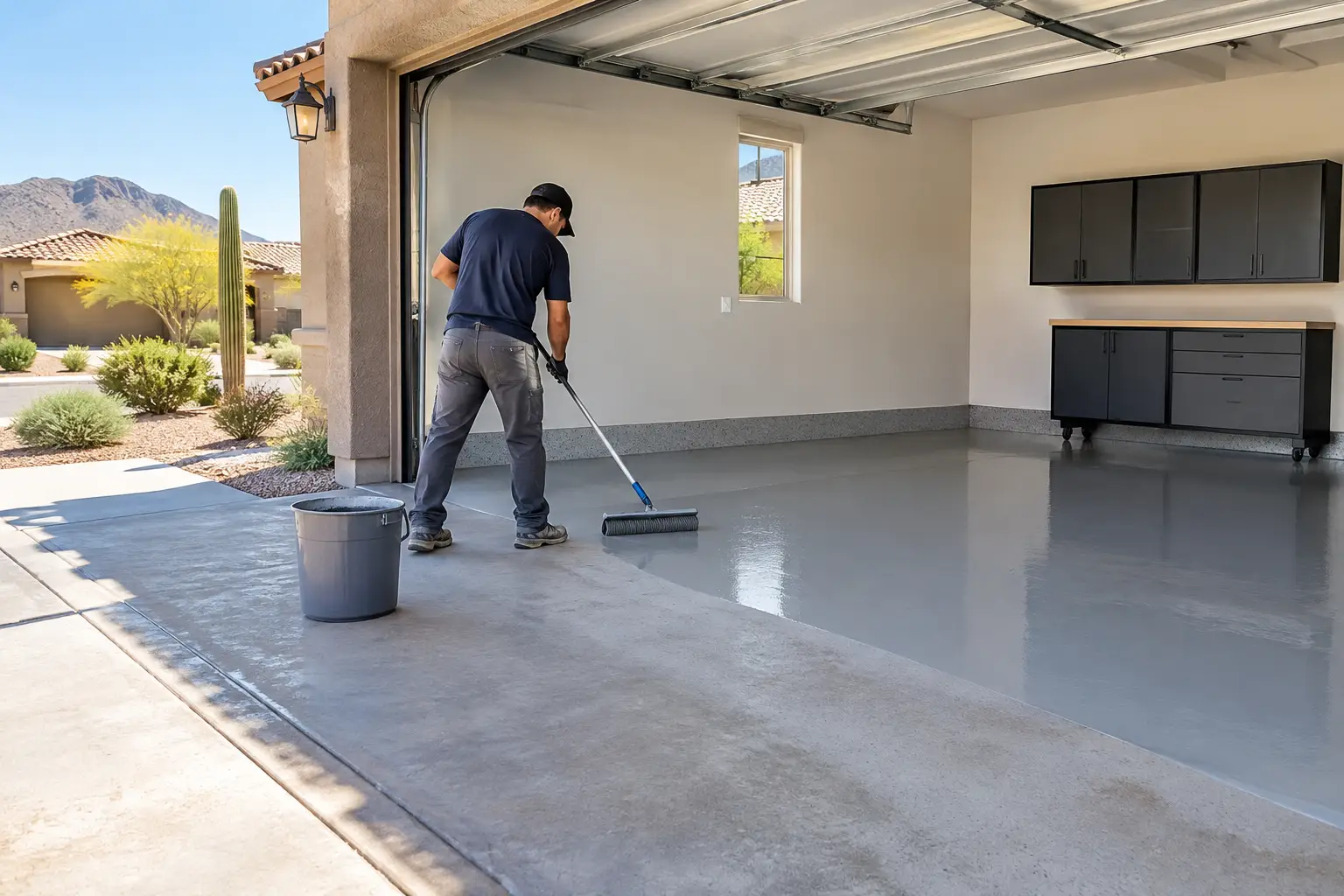
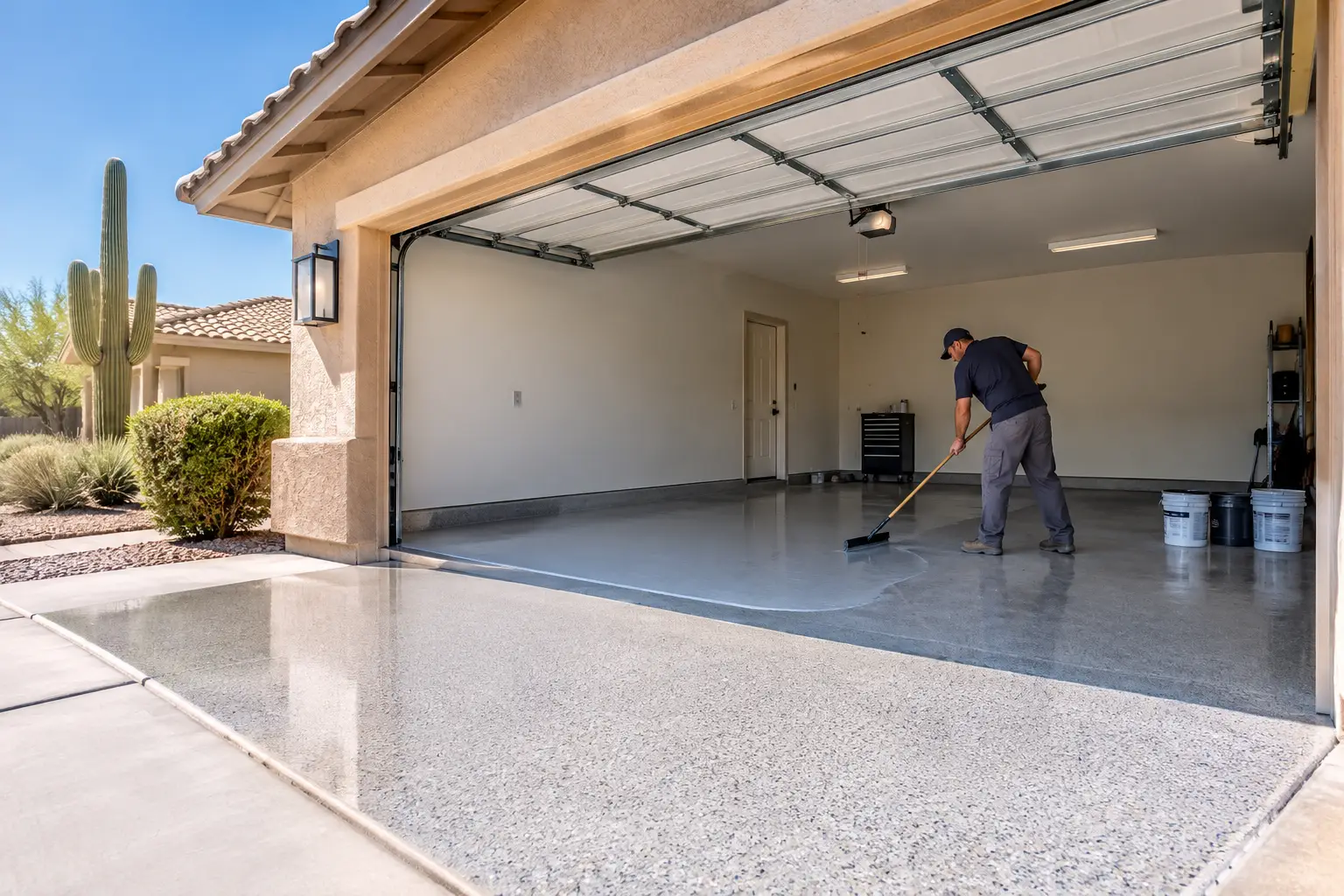
Polyurea and polyaspartic systems cure much faster. A trained crew can often prepare the concrete, repair cracks, apply the coating, broadcast decorative flakes, and install the protective topcoat in one day. Vehicle traffic is generally restored the following morning.
Fast cure does not mean rushed work. In fact, it demands disciplined installation. The crew needs to evaluate the slab, mechanically grind the surface to create the right profile, remove dust, repair cracks and divots, and apply each coat within the product’s working window. A fast-curing material leaves little room for improvisation.
For commercial spaces, reduced downtime can be a deciding factor. A shop, showroom, warehouse aisle, or service area may not be able to sit unused for a week. The ability to complete the job quickly while still building a durable system can protect operations and revenue.
Surface Preparation Decides Whether Either Coating Holds
The most expensive coating will not compensate for contaminated or poorly prepared concrete. Oil, old paint, curing compounds, moisture vapor, dust, and weak surface paste can all interfere with adhesion.
Proper preparation usually begins with a careful inspection. Cracks, spalling, previous coatings, and moisture concerns should be identified before coating starts. The surface is then mechanically diamond-ground, not simply acid-washed or pressure-washed. Grinding opens the concrete and creates a consistent profile that allows the base coat to bond.
Cracks and damaged areas need repair before the finish goes down. They may still telegraph slightly over time because concrete moves, but leaving them untreated creates a more obvious failure point. After repairs, thorough vacuuming is essential. Dust left in the surface can become a bond breaker.
Be cautious with very low estimates that do not explain preparation. A price may look attractive until the coating starts peeling, the flakes are thin, or repairs were never included. A clear estimate should identify the preparation method, repair scope, coating layers, decorative finish, and topcoat.
Appearance, Cleaning, and Traction
Both epoxy and polyurea-based systems can improve the appearance of a stained, dusty slab. Decorative vinyl flakes add color variation, hide minor imperfections, and give a garage or patio a finished look that bare concrete cannot match.
For cleaning, either properly installed system is far easier to maintain than uncoated concrete. Dirt, oil drips, fertilizer residue, and normal garage mess stay closer to the surface instead of soaking into pores. Most floors can be swept, blown out, or cleaned with a soft broom and a mild cleaner. Harsh abrasives and strong solvents should be used only when the coating manufacturer approves them.
Traction deserves a direct conversation, especially around pool decks, patios, and commercial walkways. A glossy floor can be slippery when wet if it has no texture. Decorative flake systems naturally add some texture, and additional traction media can be incorporated where needed. More texture generally improves grip, but it can also make the floor slightly more difficult to mop. The right level depends on how the space is used.
When Epoxy Still Makes Sense
Epoxy is not automatically a bad product. A quality epoxy system can make sense for an interior room with controlled conditions, limited sun exposure, and a schedule that allows for longer cure times. Some specialized industrial environments also use epoxy because of its build thickness or chemical-resistance characteristics.
The problem comes when a basic epoxy kit is presented as a one-size-fits-all answer for an Arizona garage, sunlit patio, or high-traffic work area. Those spaces place different demands on a coating. A low-cost coating may solve the appearance problem for a short time while creating a more expensive removal and replacement project later.
Choosing the Right System for Your Concrete
Start with the slab, not the color chart. Is the concrete dusty, cracked, moisture-affected, oil-stained, previously coated, or exposed to direct sun? Will cars park on it daily? Does it need to stay open for business? Is slip resistance a priority near a pool or exterior door?
Then compare complete systems rather than comparing a single product name. A durable floor includes surface preparation, concrete repair, a bonding base coat, a full decorative broadcast when selected, and a protective topcoat. Each layer has a job, and skipping one can affect the finished floor.
For most Arizona garages, patios, and active commercial floors, a professionally installed polyaspartic system offers the practical combination people want: strong adhesion, UV stability, easy cleaning, attractive finish, and fast return to use. At TRM Garage Floors, that focus allows the installation process to stay clear and accountable from the on-site evaluation through the final walkthrough.
If your concrete is showing stains, dust, peeling coating, or heat-related wear, do not choose based on a brochure alone. Have the slab evaluated, ask how it will be prepared, and select a system built for the conditions it will face every day.
TRM Garage Floors installs 100% polyaspartic coating systems for garages, patios, and commercial spaces across the East Valley. Free estimates, done in one day.