A Gilbert garage can feel like an oven by late afternoon. That heat does not stay in the air. It transfers through your tires, sits on the concrete, and exposes every weakness in a low-grade floor coating. If you are looking for the best garage floor coating for Arizona heat, the answer is not the cheapest kit on a shelf or a quick coat of paint. It is a professionally prepared and installed 100% polyaspartic system built for hot tires, UV exposure, stains, and daily use.
Arizona concrete has its own set of challenges. A garage floor may look fine when a home is new, then start collecting tire marks, oil stains, dust, and hairline cracks. Some homeowners try epoxy because it is familiar and widely advertised. But when surface preparation is skipped or the product is not suited to the climate, peeling, yellowing, and hot-tire pickup can follow.
Why Arizona Heat Is Hard on Garage Floors
Concrete is durable, but it is not maintenance-free. It is porous, which means it absorbs oils, automotive fluids, moisture, and dirt. It can also dust over time, leaving a fine powder on stored items, vehicles, and shoes. Add East Valley heat to the equation, and a bare slab works even harder.
The sun and high temperatures affect both the slab and any coating applied to it. A garage may be shaded most of the day, but it still experiences extreme temperature swings. Tires arriving from hot pavement can place intense heat directly on the floor. If a coating does not bond properly to the concrete or cannot handle thermal movement, it may soften, lift, or pull away under the tires.
UV exposure matters too. Even garages with closed doors get sunlight near the entry, and patios, covered outdoor areas, and drive-adjacent spaces receive much more. Many basic epoxy products can amber or fade with prolonged UV exposure. That may not affect every interior garage equally, but it is a real consideration for Arizona homes with bright entry areas or outdoor concrete projects.
Best Garage Floor Coating for Arizona Heat: Polyaspartic
For most Arizona homeowners, a 100% polyaspartic coating system is the strongest all-around choice. It is designed to cure quickly, bond aggressively to properly prepared concrete, and stand up to the conditions that make local garages tough on floors.
Polyaspartic is not simply a prettier version of epoxy. The chemistry and installation process are different. A professionally installed system typically includes mechanical concrete preparation, crack and joint repair where appropriate, a base coat, decorative vinyl flakes, and a clear protective topcoat. The result is a finished surface that is attractive enough for a clean, organized garage and tough enough for vehicle traffic.
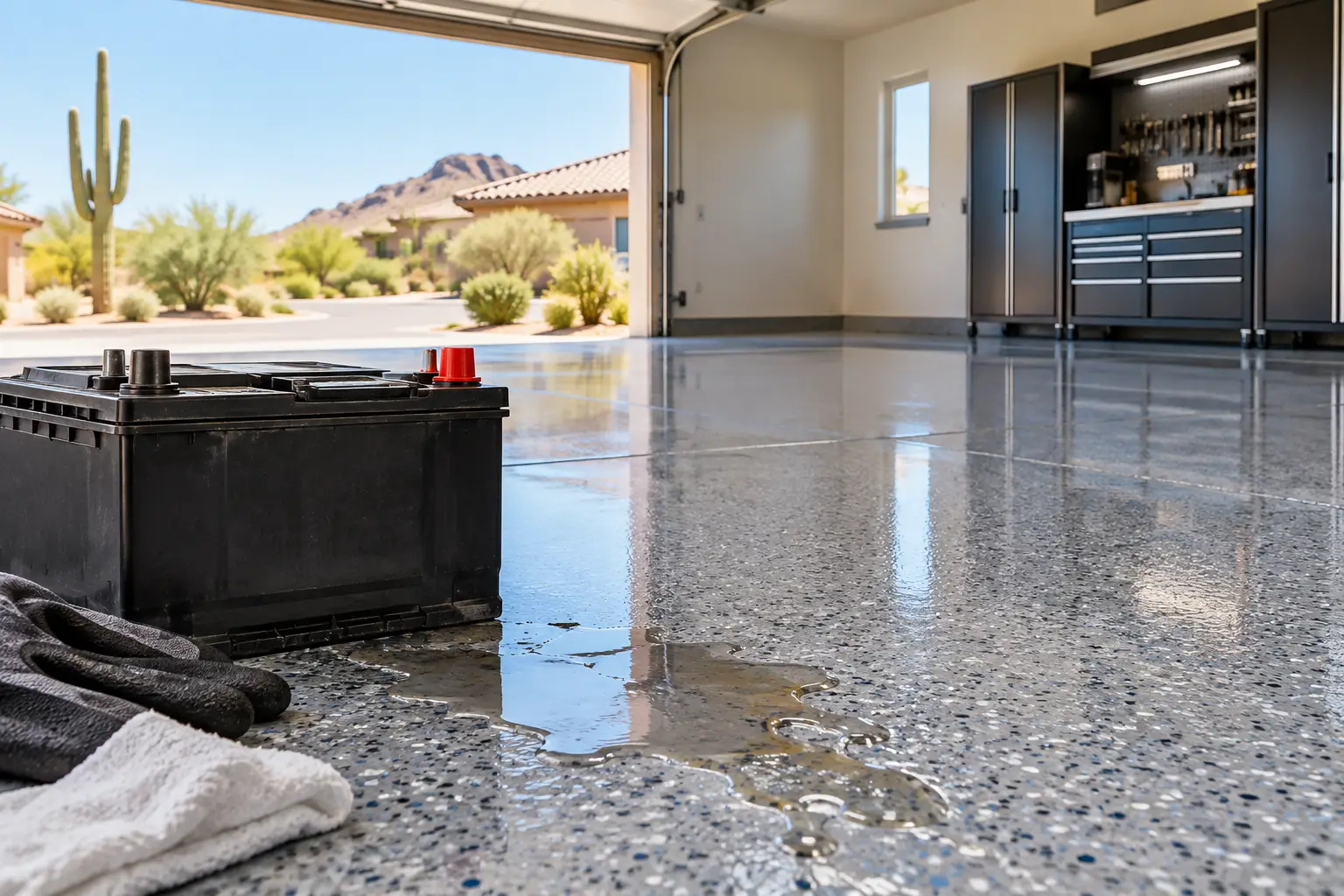
The biggest practical advantage is resistance to hot-tire pickup. When a vehicle pulls into a garage after driving Arizona roads, heat and pressure are concentrated in a small contact area. A quality polyaspartic system is built to hold up to that stress when it is installed over a properly prepared slab.
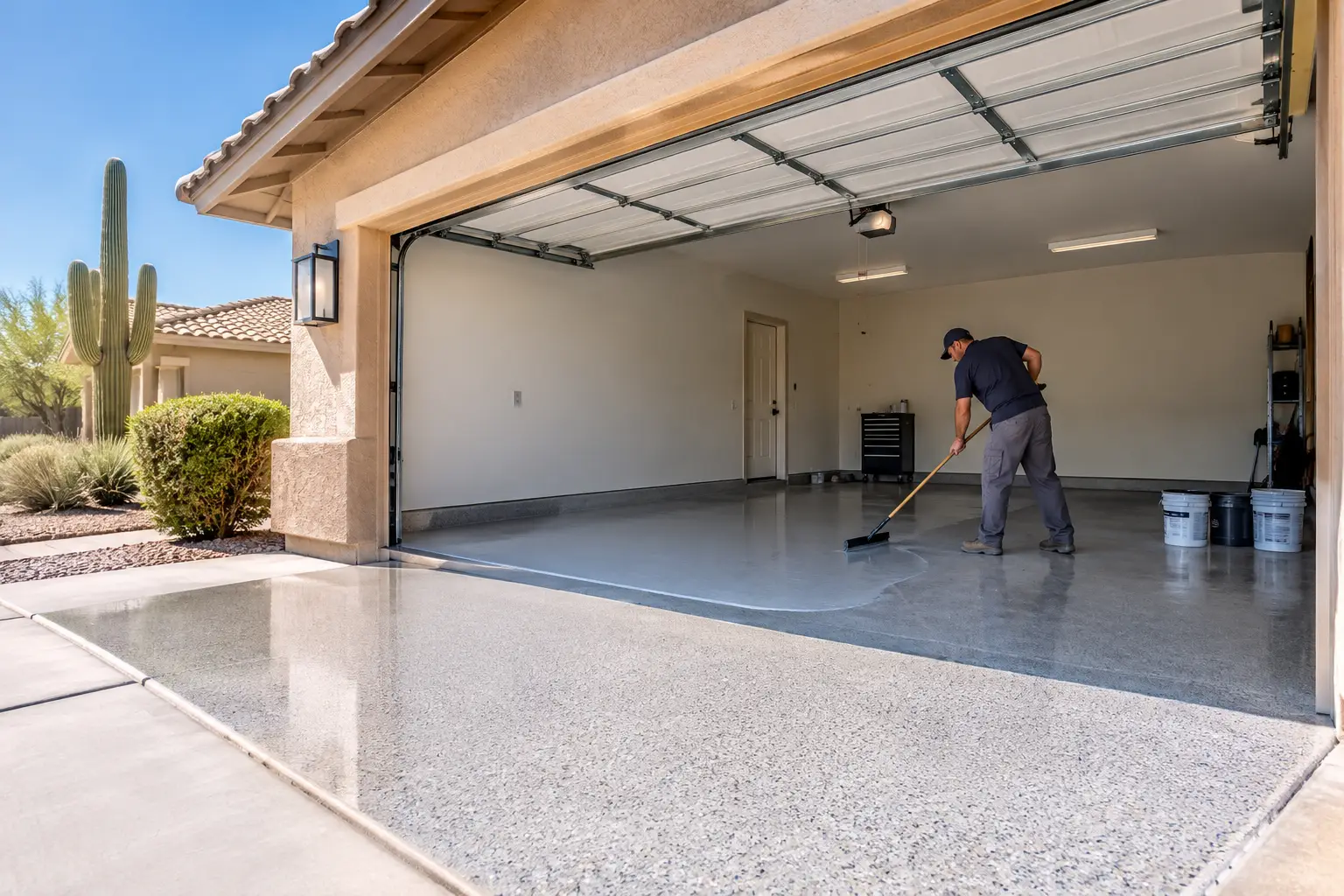
It also cures much faster than many traditional epoxy systems. That matters when you do not want a garage project to take over your home for several days. With the right conditions and professional process, a polyaspartic floor can often be installed in one day, with vehicles returning the following morning.
Polyaspartic vs. Epoxy in an Arizona Garage
Epoxy is not automatically a bad product. It has a place in certain controlled environments, and a quality commercial epoxy system can perform well when specified and installed correctly. The issue is that many homeowners are comparing a professional polyaspartic system against a basic epoxy kit or a thin coating applied with limited prep. That is not an equal comparison.
For Arizona garages, polyaspartic generally has the edge in fast cure time, UV stability, and resistance to hot-tire problems. It is particularly well suited to homeowners who need their garage back quickly and want a coating that can handle real vehicle use.
Epoxy may take longer to cure and can be more sensitive to conditions during installation. Some epoxy coatings also yellow when exposed to sunlight. A professional installer can explain which material fits a specific slab, but for a standard East Valley residential garage, polyaspartic is usually the better long-term fit.
The trade-off is cost. A true professional polyaspartic system costs more than a DIY epoxy kit because the work includes surface grinding, repair materials, trained installation, and higher-performance coating products. The lower upfront price of a kit can be tempting, especially on a clean-looking slab. But if it peels under hot tires or fails around repaired areas, the savings disappear when the floor has to be removed and redone.
Preparation Determines Whether the Coating Holds
The coating is only as good as the concrete beneath it. No shortcuts, no skipped steps. A shiny surface can hide contamination, weak concrete, previous sealers, and old paint. If those issues are covered instead of addressed, the new coating may not achieve a reliable bond.
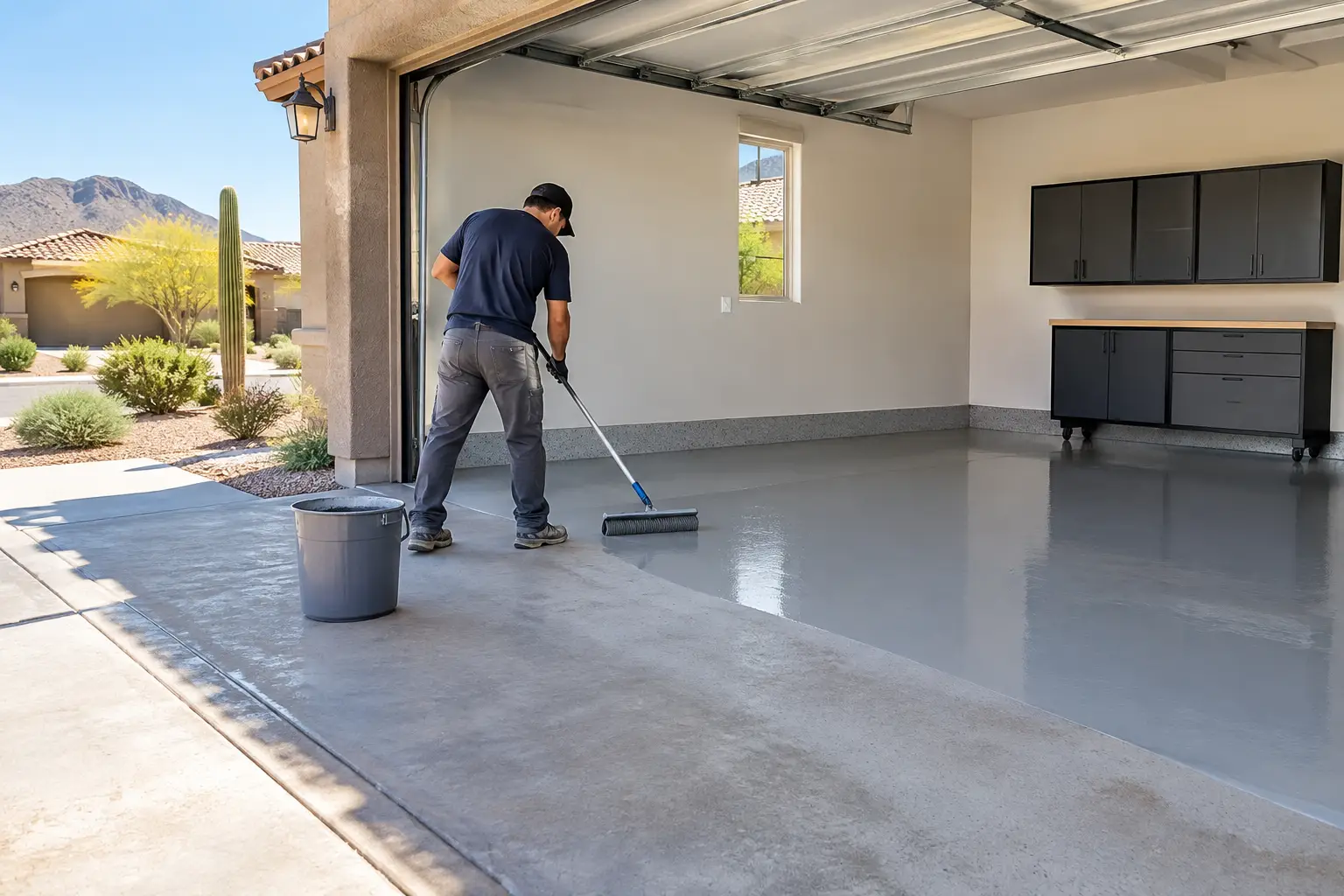
A proper installation begins with evaluating the slab. The crew looks for cracks, spalling, oil contamination, moisture concerns, and prior coatings. Then the concrete is mechanically ground to create the correct surface profile. Grinding opens the concrete and removes the weak top layer so the base coat has something sound to bond to.
Cracks and damaged areas are repaired before the coating system is installed. Not every crack can be made invisible forever, since concrete naturally moves and existing structural conditions matter. But a professional repair process creates a cleaner, more finished surface and helps prevent damage from telegraphing through as quickly.
After preparation, the coating layers are applied in the proper sequence. Decorative flakes are broadcast for color, texture, and coverage. A clear polyaspartic topcoat seals the system and makes routine cleaning easier. The final walkthrough is not just a formality. It is the point where the installation is checked with the homeowner and the finished floor is reviewed before the project is closed out.
What to Look for in an Arizona Floor Coating Contractor
A garage floor coating is a surface system, not a one-can product. Before hiring a contractor, ask what type of coating they install, how they prepare the concrete, and how they handle cracks and existing coatings. Clear answers matter.
You should also ask about cure time, return-to-service expectations, and whether the topcoat is designed for UV exposure and hot tires. Be cautious of broad promises with no discussion of the slab itself. Every floor has a history. A garage with moisture issues, heavy oil staining, old adhesive, or failed paint may need additional preparation before coating can begin.
Look at the contractor's process as closely as the color samples. A company that explains grinding, repairs, coating layers, cleanup, and final inspection is showing you how it approaches workmanship. At TRM Garage Floors, that process is centered on 100% polyaspartic systems and direct, local service for East Valley properties.
Is a Flake Floor the Right Finish?
For most garages, a full-flake finish is a practical choice. The flakes help disguise dirt and minor marks better than a solid color, while the clear coat gives the floor a clean, finished look. It can make a garage feel less like unfinished storage and more like usable square footage for parking, hobbies, a home gym, or organized tools.
Color is not only about appearance. Lighter blends can brighten a darker garage, while medium and darker blends may hide tire residue and everyday debris more easily. The right choice depends on lighting, wall color, how the space is used, and your preference for a clean modern look versus a more neutral utility finish.
For patios and pool decks, the conversation changes slightly. UV stability and slip resistance become even more important because water, bare feet, and direct sun are involved. A garage coating contractor should recommend a system and texture appropriate for the surface rather than applying the exact same finish everywhere.
Keeping a Polyaspartic Garage Floor Looking Good
A coated garage floor is easy to maintain, but it still benefits from basic care. Sweep or blow out grit regularly. Sand and small rocks can act like abrasives under tires and storage bins. For routine cleaning, use a soft broom, mop, or floor squeegee with a mild cleaner that is appropriate for coated floors.
Wipe up oil, coolant, paint, and harsh chemical spills when they happen. A quality topcoat offers strong stain resistance, but no finished surface should be treated as indestructible. Use protective mats under motorcycle kickstands, welding equipment, or very heavy sharp-edged items, and avoid dragging metal shelves across the floor.
The best floor is one that matches the way you actually use your garage. If Arizona heat, hot tires, dust, stains, and an aging concrete slab are part of the problem, choose a coating system designed to take that daily punishment - then make sure the installation process gives it a real chance to hold.
TRM Garage Floors installs 100% polyaspartic coating systems for garages, patios, and commercial spaces across the East Valley. Free estimates, done in one day.