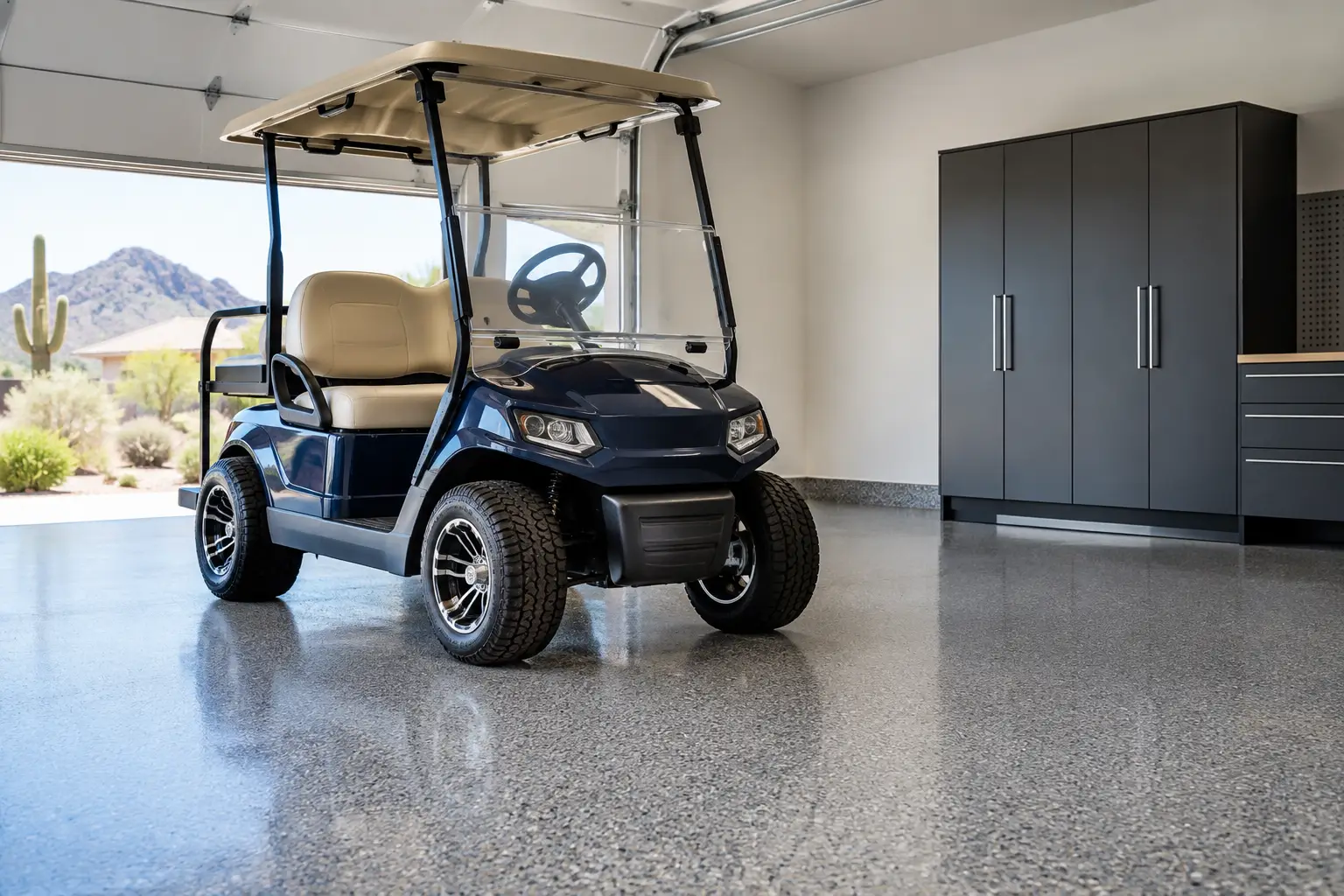
A golf cart does not put the same demands on a garage floor as a daily driver, but it can still expose every weakness in bare concrete. The right golf cart garage flooring keeps dust from following the cart into the house, makes battery and tire marks easier to clean, and gives your storage area a finished look that matches the rest of the home.
For East Valley homeowners, heat changes the conversation. A floor coating has to hold up through hot summers, frequent garage use, and the occasional wet tire after a rinse or monsoon storm. A floor that looks good on day one but peels, yellows, or flakes a year later is not a solution.
What a Golf Cart Does to a Garage Floor
Golf carts are lighter than cars, but their garage footprint is often more concentrated. Small tires sit in the same locations for long periods, and many carts are parked immediately after driving over hot pavement. That repeated pressure and heat can leave marks on unfinished concrete and reveal a coating's weak adhesion.
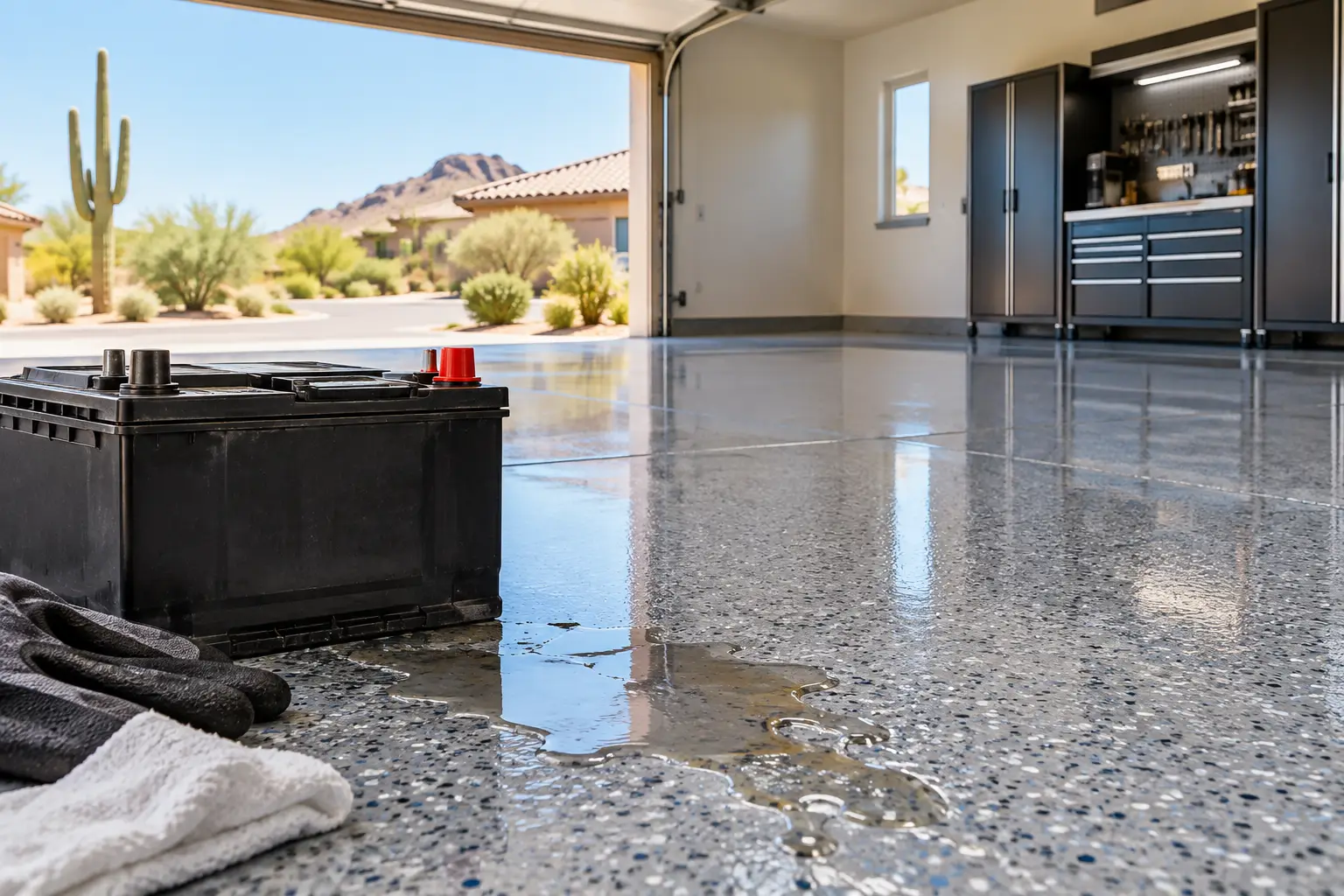
Battery-powered carts create another consideration. Modern sealed batteries reduce maintenance, but charging areas can still collect dirt, moisture, and residue over time. Gas carts may bring in small amounts of oil, fuel, or grease. Bare concrete absorbs those contaminants quickly, which is why a small spot can become a permanent stain.
Then there is Arizona concrete itself. Garage slabs commonly release fine dust as the surface wears. That dust settles on cart seats, wheels, storage cabinets, and anything else in the garage. Sweeping helps, but it does not solve the surface problem. A professionally installed coating seals the concrete and makes routine cleanup much simpler.
Why Polyaspartic Golf Cart Garage Flooring Makes Sense
Not every coating system is built for local conditions. Basic paint and many DIY epoxy kits can look acceptable at first, yet their performance often depends on perfect preparation, controlled temperatures, and a dry slab. Those are difficult conditions to guarantee in an active Arizona garage.
A 100% polyaspartic coating system is designed for stronger adhesion, fast cure times, and resistance to UV exposure. That matters if the garage door stays open, if the cart is frequently moved in and out, or if sunlight reaches the slab near the entrance. Unlike lower-grade coatings that can discolor or weaken over time, polyaspartic is made to hold its color and finish.
The key is not just the material. A quality floor depends on the preparation beneath it. Concrete must be mechanically ground to remove weak surface material and create the profile the coating needs to bond. Cracks should be repaired, edges detailed, and the slab inspected before the base coat goes down. No shortcuts, no skipped steps.
When that preparation is done correctly, the finished surface is durable enough for golf carts, passenger vehicles, workbenches, rolling toolboxes, and everyday garage traffic. It also gives homeowners a cleaner place to park a cart without treating the garage like a showroom that cannot be used.
Flake systems add traction and hide daily wear
For most golf cart garages, a full-broadcast decorative flake system is a practical choice. The flakes add color and visual depth, but they also help disguise dust, small scuffs, and the normal debris that comes in on tires. A solid-color coating can be attractive, though it tends to show more marks and dirt in a high-use space.
Texture matters too. A garage floor should be easy to sweep and mop, but it should not become slick when a cart rolls in with wet tires. The right flake profile and topcoat provide a balanced texture: comfortable underfoot, easy to maintain, and more secure than smooth painted concrete.
Choosing a Finish for Your Garage Setup
The best finish depends on how the garage is used beyond parking the cart. If it is primarily a cart bay with wall storage and a charging station, a lighter neutral blend can make the area feel brighter and cleaner. If the garage doubles as a workshop, darker flakes may better conceal tire dust and minor shop debris.
Think about the transition from driveway to garage as well. A cart that comes in from a dusty neighborhood street, golf course path, or landscaped community trail will bring in sand and grit. A mid-tone flake blend is often the easiest finish to live with because it does not show every footprint or tire track.
Color is personal, but durability should lead the decision. Choose a system that is intended for garage traffic and UV exposure, not a decorative paint that happens to come in an appealing color. The coating needs to perform long after the initial shine has worn off.
Preparation Is Where Floors Succeed or Fail
Homeowners sometimes compare coatings by topcoat thickness or warranty language alone. Those details matter, but they do not replace concrete preparation. If a coating is applied over dust, failed paint, old epoxy, oil contamination, or a smooth unprofiled slab, it is only as reliable as the weak layer below it.
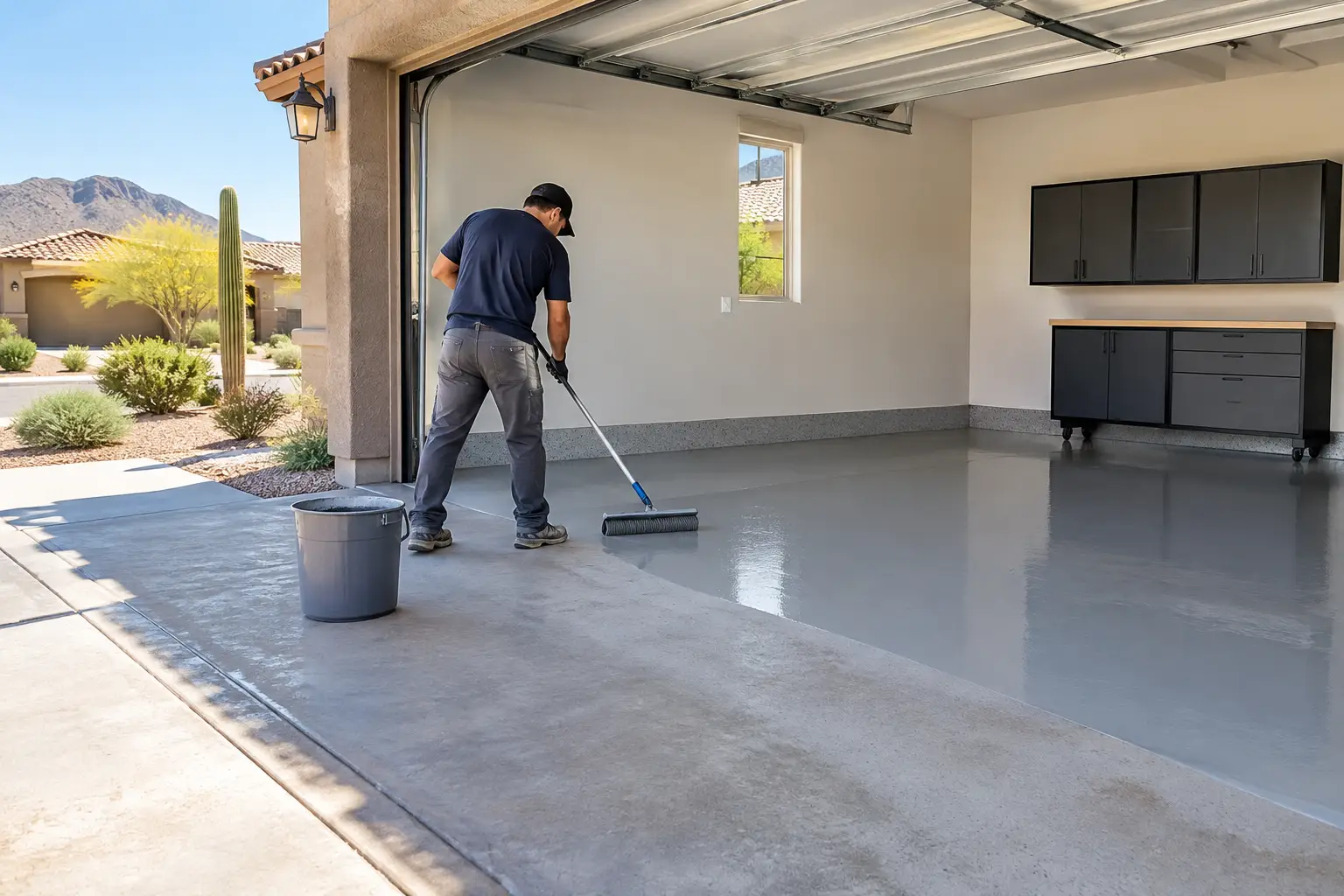
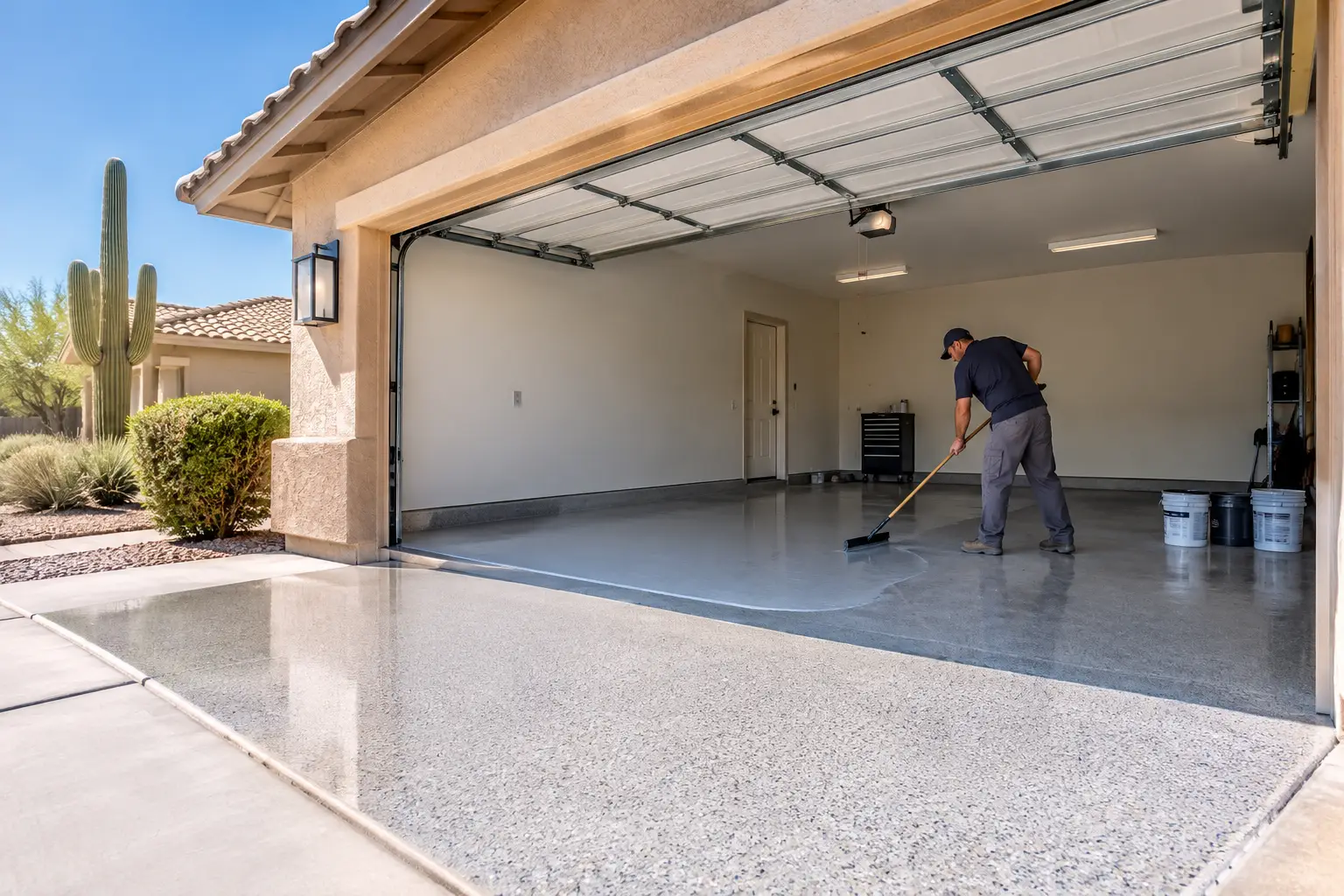
A professional installation begins with a close look at the concrete. Existing coatings are removed as needed. The floor is mechanically ground to open the surface. Cracks, pits, and joints are addressed with the appropriate repair material. Dust is thoroughly collected before the coating system is installed.
That process is especially important if the garage already has a failed DIY coating. Peeling areas cannot simply be covered and forgotten. The failed material needs to be removed so the new system can bond to sound concrete. Covering a problem usually delays it rather than fixing it.
A proper crew also protects walls, cabinets, thresholds, and nearby surfaces during the work. Before leaving, they should walk the finished floor with you, explain the return-to-service timing, and make sure the space is ready for use.
Daily Care for a Coated Golf Cart Bay
Once installed, a coated floor does not require complicated maintenance. Sweep out abrasive sand and gravel before it gets ground under tires. For routine cleaning, use a soft broom, microfiber mop, or a gentle floor cleaner appropriate for coated surfaces. Avoid harsh abrasives and aggressive chemical products unless the manufacturer specifically recommends them.
Wipe up battery residue, oil, grease, or spills promptly. Polyaspartic makes cleanup far easier than bare concrete, but quick attention is still the best habit. If the cart is washed in the garage, do not allow standing water to sit against walls or collect around charging equipment.
It is also smart to inspect the cart itself. A leaking battery, worn tire, or mechanical issue should be repaired at the source. A good floor protects the concrete and simplifies cleanup, but it should not have to hide an ongoing maintenance problem.
When Is the Right Time to Coat the Floor?
The best time is before the garage becomes fully organized. Coating is easier when storage items, carts, and cabinets can be moved out of the work area. It is also a good project to schedule after a garage cleanout, before new cabinets are installed, or after removing an old failing epoxy floor.
Fast-curing polyaspartic systems are a major advantage for homeowners who cannot leave a garage out of service for several days. In many cases, installation is completed in one day, with vehicle traffic generally returning the following morning. Exact timing can vary with conditions and the specific system, so a clear on-site assessment is always the right starting point.
A golf cart garage should feel like a useful part of the home, not a dusty holding area for expensive equipment. With thorough preparation and a coating built for Arizona heat, the floor becomes easier to clean, safer to walk on, and ready for the next ride.
TRM Garage Floors installs 100% polyaspartic coating systems for garages, patios, and commercial spaces across the East Valley. Free estimates, done in one day.