
Your garage floor may look clean right after you sweep it, then leave a pale gray film on shoes, storage bins, and car tires a few days later. That is frustrating because it feels like a housekeeping problem, but it usually is not. Why garage floors turn dusty often comes down to the concrete itself breaking down at the surface.
In Gilbert and across the East Valley, garage slabs work hard. They deal with intense heat, hot tires, windblown dirt, occasional moisture, stored chemicals, and years of foot traffic. When the upper layer of concrete is weak or worn, it slowly releases fine particles. Sweeping removes the evidence, but not the cause.
What Concrete Dusting Actually Means
Concrete dusting is the gradual breakdown of the slab's top surface. Instead of remaining dense and hard, the cement paste near the surface becomes soft, porous, or brittle. Fine particles loosen and collect as dust.
A dusty floor is not always a sign that the entire slab is failing. Many garage floors are structurally sound but have a weak wear layer. The problem is usually limited to the top portion of the concrete, though it can get worse if it is ignored.
You may notice dusting when your feet leave powdery tracks, cardboard boxes pick up gray residue, or a freshly cleaned garage becomes dirty again quickly. In more advanced cases, the surface can feel rough, show light pitting, or produce a powder when you rub it with your hand.
Why Garage Floors Turn Dusty in Arizona
Arizona conditions can expose concrete weaknesses faster than milder climates. Heat does not automatically ruin a slab, but it affects how concrete is placed, cured, used, and maintained.
The concrete was not cured properly
Fresh concrete needs time and moisture to develop strength. If a slab dries too fast during installation, the upper surface may not cure as densely as it should. High temperatures, low humidity, and direct airflow can pull moisture from fresh concrete quickly.
That does not necessarily mean anyone was careless. Concrete work in hot weather requires close timing and proper curing practices. But when the surface dries prematurely, it can end up weaker than the concrete beneath it. Years later, that weak surface begins to powder under normal garage use.
A weak surface layer was created during finishing
Concrete finishers use water carefully while working a slab. Too much water at the surface during finishing can create a thin, weak layer often called laitance. This layer may look smooth when new, but it does not have the durability needed for tires, tools, shelves, and regular cleaning.
Over time, that weak layer wears away. The result is a dusty floor that seems impossible to keep clean.
Heat, hot tires, and daily wear take their toll
A garage floor is not just a parking pad. Tires roll in hot after summer driving. Vehicles bring in road grit, oil, and moisture. Kids' bikes, tool chests, storage racks, and lawn equipment all grind against the surface.
On a dense, well-protected slab, this is manageable. On bare concrete with a weak or porous surface, those repeated forces loosen fine material. The dust may appear slowly enough that it is easy to overlook until the garage starts feeling dirty all the time.
Moisture and salts can contribute
Concrete is porous. Moisture can move through it from below or enter through cracks, edges, and spills. As that moisture evaporates, it may leave mineral deposits behind. This is known as efflorescence, and it often looks like a white, chalky residue.
Efflorescence is different from concrete dusting, although both can appear powdery. A dusty gray residue that returns after sweeping is often deteriorating concrete. A bright white, crystalline residue may point to moisture and mineral movement. In some garages, both conditions are present.
Old coatings and harsh cleaning can make the problem more visible
A peeling DIY epoxy coating can expose bare concrete that has already been weakened. Once the coating fails, it may leave behind uneven areas that trap dust and dirt. Aggressive acid washing, improper pressure washing, or repeated use of harsh cleaners can also affect an already-fragile concrete surface.
The right fix depends on the condition of the slab. A light dusting issue may need thorough preparation and protection. A slab with active moisture issues, widespread spalling, or major cracks needs a closer evaluation before any coating is installed.
How to Tell Dusting From Ordinary Garage Dirt
Arizona garages collect plenty of ordinary dirt. Wind, landscaping, vehicles, and open garage doors make that unavoidable. The difference is what happens after cleaning.
Start by sweeping and vacuuming the floor thoroughly. Then wipe a small area with a clean, damp white cloth. If the cloth repeatedly picks up a gray, cement-like powder even after the floor has been cleaned, the concrete may be dusting.
Also look at the pattern. Ordinary dirt tends to gather near the garage door, around vehicles, and along walls. Concrete dusting can show up across the slab, including under shelves or in corners that do not see much traffic. If you can scratch or rub the surface and create powder easily, that is another warning sign.
Do not confuse every dull garage floor with a failing garage floor. Bare concrete naturally has a matte, utilitarian appearance. The concern is recurring powder, surface softening, flaking, pitting, or a floor that never stays clean for long.
Why Sweeping Alone Will Not Solve It
Sweeping is still worth doing, but it is maintenance, not a repair. When concrete is shedding material, every broom pass removes loose particles while exposing more weak material below.
Concrete densifiers can help in limited situations. These products react with components in the concrete to harden the upper surface. They can be useful for sound, lightly dusting concrete, especially in certain commercial settings. But a densifier will not repair major surface damage, hide stains, bridge cracks, or turn a garage into an easy-clean finished space.
Paint and basic DIY coating kits can be tempting because they seem like a fast answer. The trade-off is preparation. A coating is only as reliable as the surface beneath it. If loose concrete dust, contamination, or failed coating residue remains, the new layer may peel, chip, or lift under hot tires.
The Lasting Fix Starts With Surface Preparation
A professionally coated garage floor is not simply painted concrete. The preparation process is what gives a coating system a fair chance to perform in Arizona conditions.
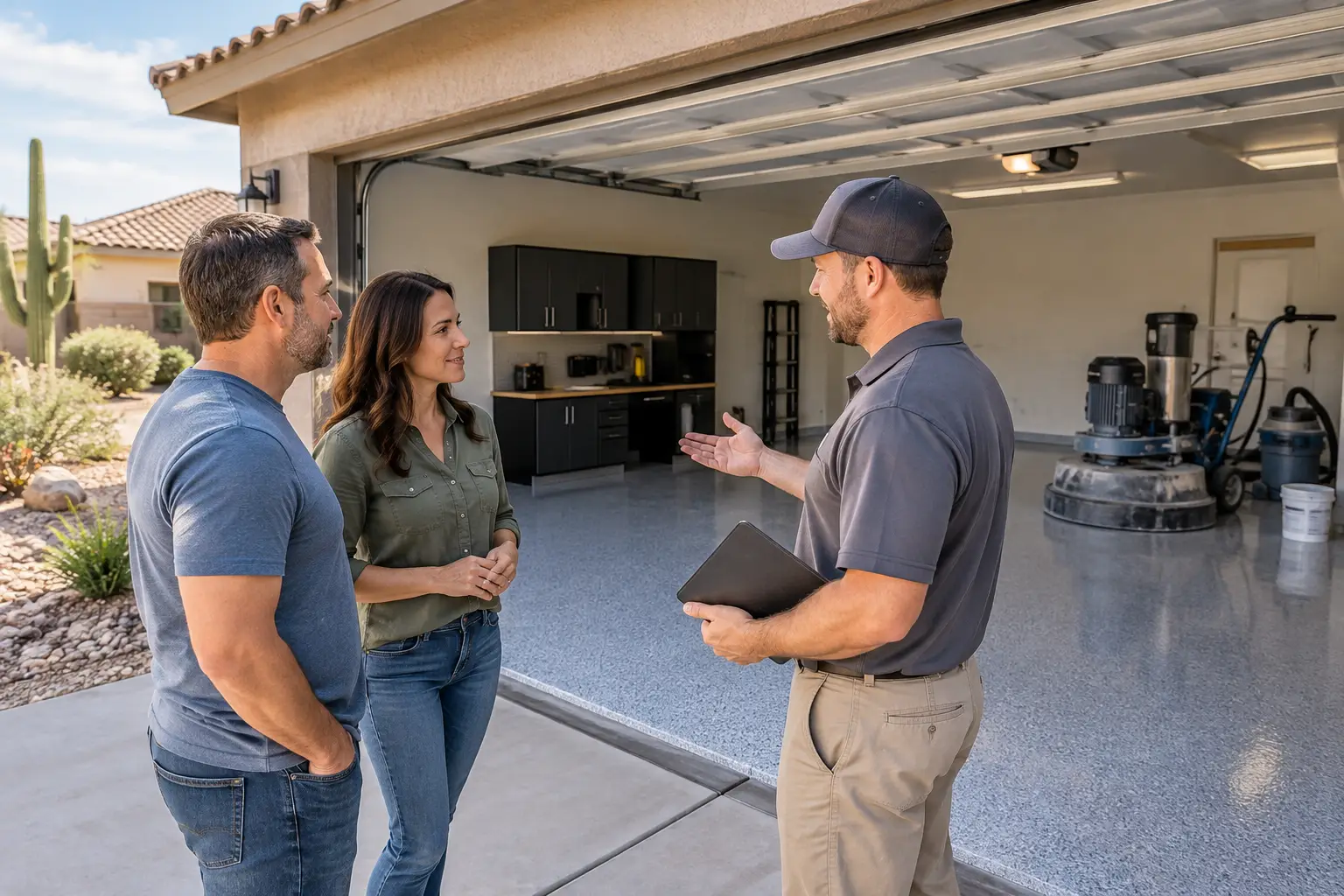
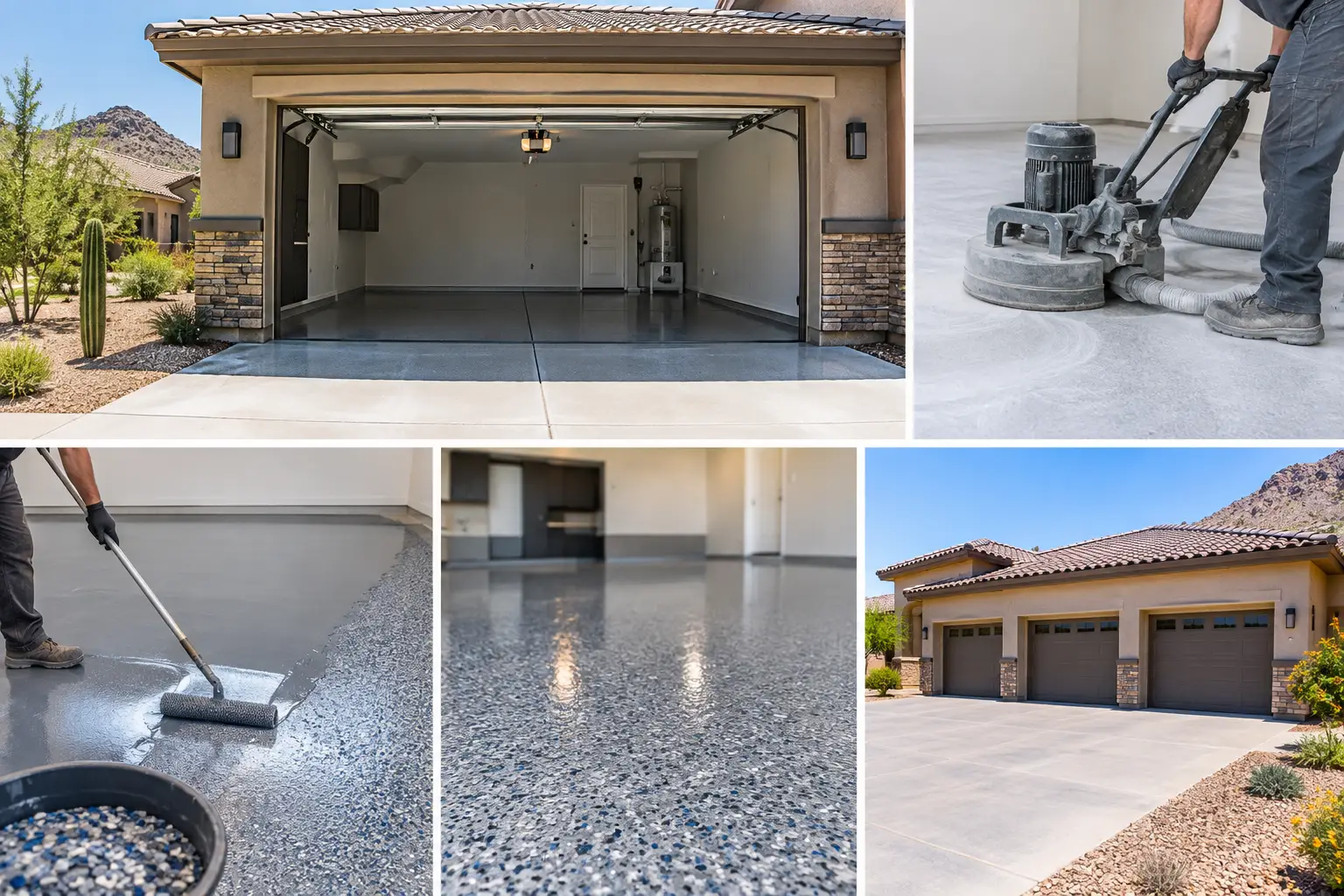
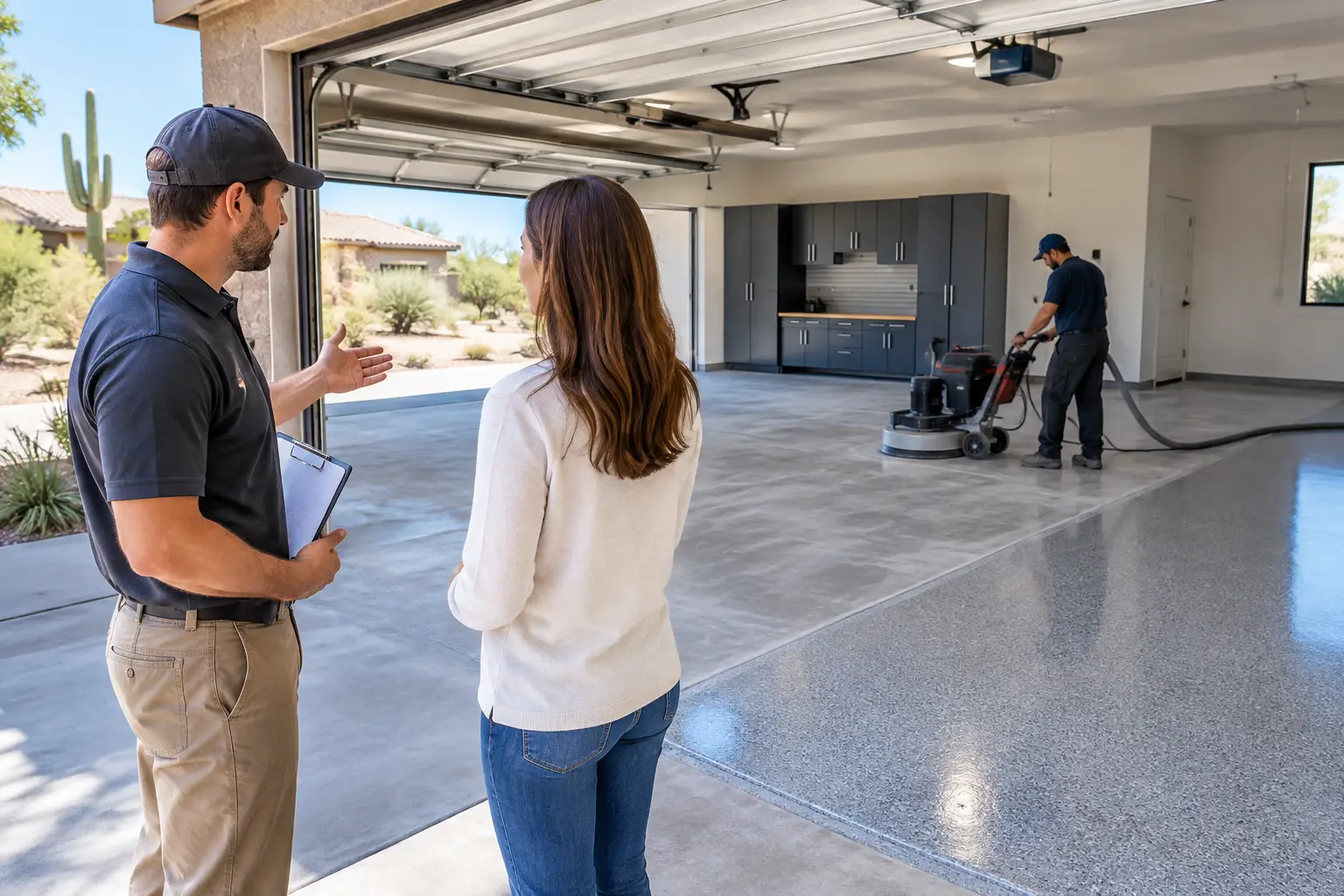
First, the concrete needs to be evaluated for dusting, cracking, contamination, moisture concerns, and previous coatings. The floor is then mechanically prepared by grinding the surface to remove weak material and create the right profile for adhesion. This is not a skipped step. It removes the layer that is causing many dusting problems in the first place.
Cracks and damaged areas are repaired as needed before the coating system is applied. For many East Valley garages, a full-broadcast polyaspartic system provides a durable, decorative surface that seals the concrete and makes regular cleaning much simpler. Polyaspartic coatings are especially useful in Arizona because they are designed to handle UV exposure and temperature swings better than basic epoxy systems.
A quality installation also means managing the details: proper edge work, careful crack repair, clean transitions, and a final walkthrough before the job is complete. TRM Garage Floors uses 100% polyaspartic systems and focuses on thorough preparation because no coating can make up for shortcuts underneath it.
When a Coating May Need to Wait
Not every dusty slab should be coated immediately. If there is active water intrusion, severe hydrostatic moisture pressure, major structural movement, or extensive concrete failure, those conditions need to be addressed first.
Likewise, a garage floor with only minor dusting may not require a decorative coating if your goal is simply to reduce powder. A densifier or targeted repair may be enough. But if you want a cleaner garage, better stain resistance, improved appearance, and a surface built for vehicles and daily use, a professionally prepared coating system is usually the more complete solution.
The best next step is not another round of sweeping or a quick coat from a home improvement store. Pay attention to what the dust is telling you. A garage floor that constantly leaves powder behind is asking for a closer look, and addressing it early can keep a manageable surface issue from becoming a larger concrete repair.
TRM Garage Floors installs 100% polyaspartic coating systems for garages, patios, and commercial spaces across the East Valley. Free estimates, done in one day.