
A garage floor can look fine at 7 a.m. and become a real test of its coating by midafternoon. Arizona heat, hot tires, UV exposure, oil drips, pool water, and concrete dust are hard on any finish. When homeowners compare polyaspartic versus polyurethane coatings, the right answer is not simply which material sounds tougher. It is which complete system is built for the slab, the space, and how quickly you need it back in service.
For East Valley garages, patios, pool decks, warehouses, and shops, that distinction matters. A coating that performs well in a mild climate or on a lightly used interior floor may not hold up the same way on sun-exposed concrete in Gilbert, Mesa, Chandler, or Queen Creek.
Polyaspartic versus polyurethane coatings: the key difference
Polyurethane is a broad family of coatings. It has been used for decades as a protective finish on floors, equipment, wood, and industrial surfaces. Some polyurethane products are durable, flexible, and highly resistant to abrasion. Others are thinner, slower-curing finishes intended primarily as a topcoat over another material.
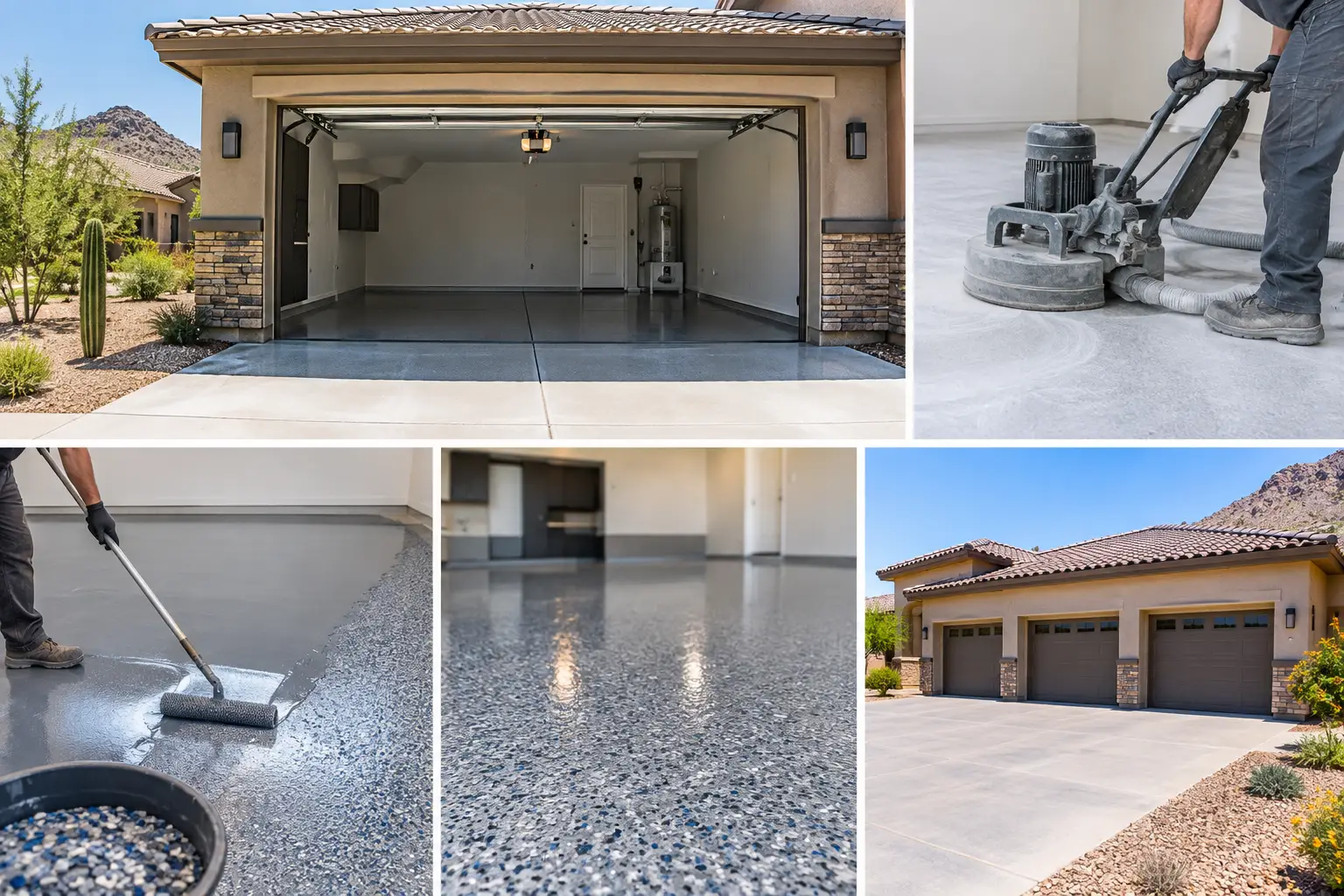
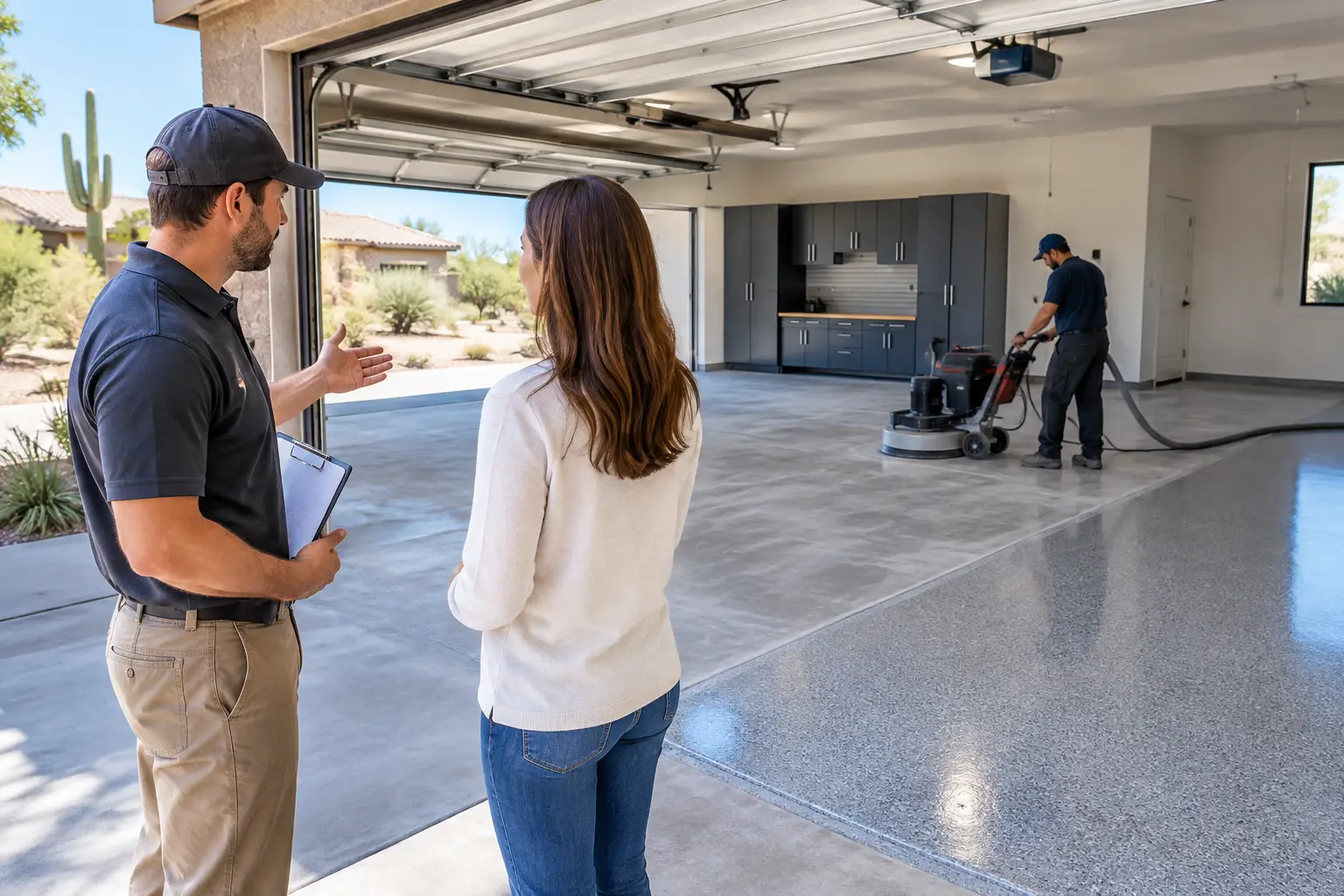
Polyaspartic is a type of polyurea chemistry. It is commonly used in professional concrete-coating systems because it cures quickly, bonds well to properly prepared concrete, and can be formulated for excellent UV stability. That fast cure is a major reason a qualified crew can often prepare, coat, and finish a garage in one day, with vehicles returning the following morning.
The comparison gets confusing because polyurethane and polyaspartic are not always used in the same way. A polyurethane may be one layer in a multi-coat floor system. A polyaspartic system may include a base coat, broadcast vinyl flakes, and a clear protective topcoat. The label on one can does not tell the whole story. Surface preparation, concrete repair, product specifications, film thickness, and installer discipline have just as much to do with the final result.
Cure time changes the whole project
Traditional polyurethane coatings generally need more time between coats and before regular use. Exact timing depends on the product, temperature, humidity, and thickness, but the process can stretch over several days. That may work for a new construction project or an area that can stay closed without causing problems.
Polyaspartic coatings are known for fast curing. For a homeowner, that means less time moving vehicles, tools, storage cabinets, and daily life out of the garage. For a commercial property, it can mean less interruption to a shop, showroom, warehouse aisle, or service bay.
Fast curing is not an excuse to rush the job. In fact, it raises the importance of experience. The installer needs to properly grind the concrete, repair cracks, address weak areas, mix materials correctly, and apply each coat within the intended working time. No shortcuts and no skipped prep steps. A fast-curing coating only performs as designed when the slab beneath it is ready.
Arizona sun and heat favor the right polyaspartic system
Sun exposure is one of the biggest practical differences for outdoor concrete. Many coatings can discolor, chalk, or lose their appearance when exposed to intense UV light over time. Some polyurethane formulations offer strong UV resistance, especially aliphatic polyurethanes, so it would be inaccurate to say polyurethane always fails in the sun.
Still, a quality polyaspartic system is a strong fit for Arizona patios, covered outdoor spaces, and pool decks because it is specifically valued for color stability and UV performance. It helps the finished surface keep its appearance instead of quickly looking faded or tired after long exposure to desert sunlight.
Heat also creates a challenge inside the garage. A vehicle arriving after a summer drive can place very hot tires directly on the floor. Weakly bonded coatings can soften, mark, or pull away from the concrete in a problem known as hot-tire pickup. Properly prepared and professionally installed polyaspartic systems are designed to resist this type of everyday garage stress.
That does not mean any polyaspartic product is automatically heat-proof. Cheap materials and poor installation can still lead to failure. The point is to select a system with the chemistry, build, and preparation standards suited to Arizona conditions.
Adhesion starts with concrete preparation, not the coating bucket
Homeowners often focus on whether a coating is polyaspartic or polyurethane while overlooking the most important part of the job: the concrete itself. Coatings do not bond well to dust, old paint, sealers, oil contamination, weak cream on the slab, or a slick surface that has never been mechanically prepared.
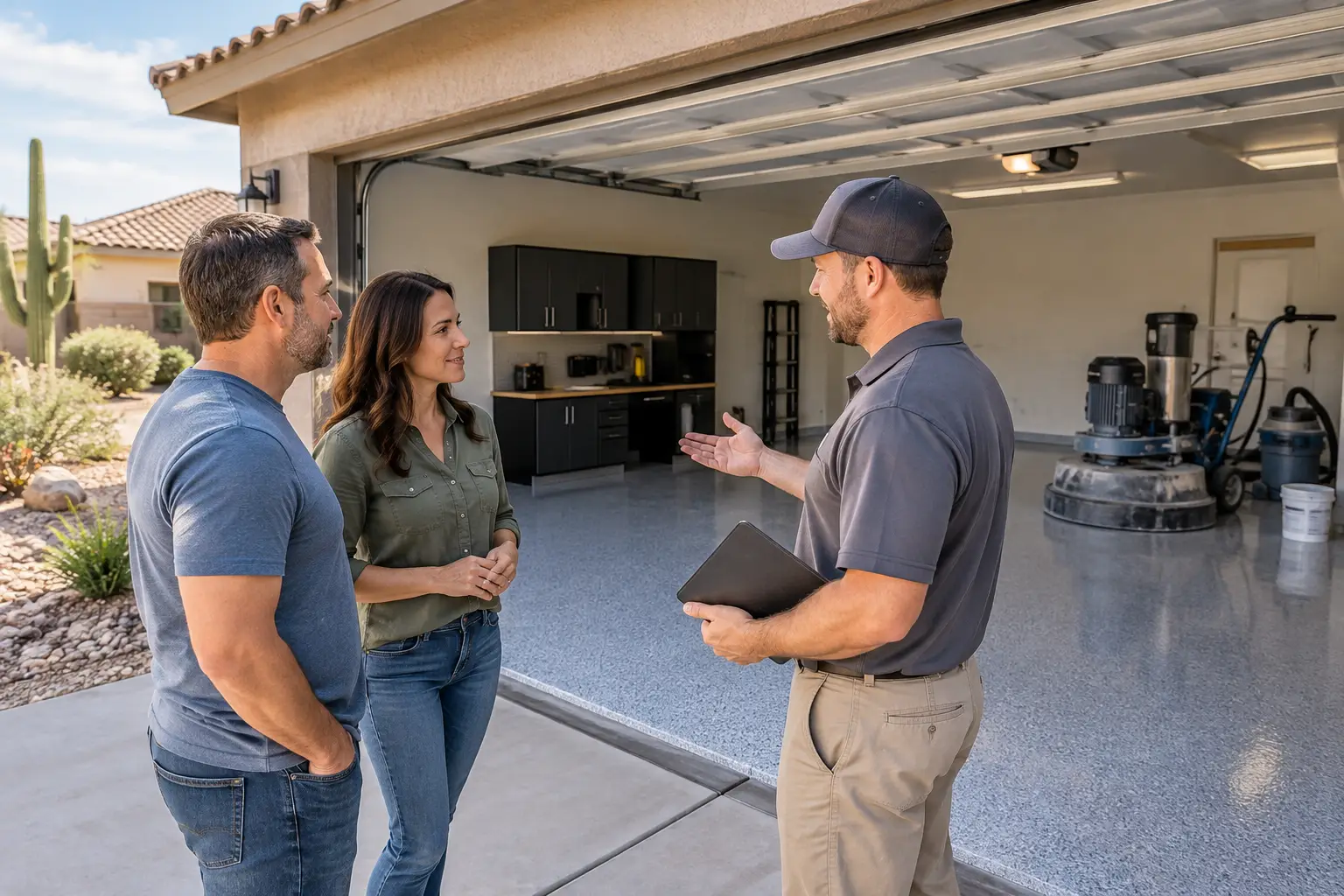
Professional preparation normally begins with diamond grinding. This opens the pores of the concrete and creates the surface profile needed for the coating to grip. Cracks, spalls, and damaged joints should be evaluated and repaired before the decorative layers go down. Moisture conditions should also be considered, particularly on slabs with a history of vapor issues.
A polyurethane finish applied over poorly prepared concrete may peel. A polyaspartic coating applied over poorly prepared concrete may peel too. Chemistry cannot compensate for a skipped grinding step or a contaminated slab. That is why a low quote based on a quick acid wash or a roll-on product can become expensive later.
Appearance, texture, and everyday cleanup
Both polyurethane and polyaspartic coatings can produce an attractive finished floor, but the full system determines the look. Solid-color floors offer a cleaner, more uniform appearance. Full-flake systems create visual depth while helping hide small amounts of dirt, dust, and everyday wear. A clear topcoat protects the design beneath it.
For garages, a flake system is often the practical choice. It turns a stained, dusty slab into a surface that is easier to sweep, blow out, and mop. Oil, dirt, and most routine messes stay on the surface rather than soaking into bare concrete. That makes cleanup simpler, though spills should still be handled promptly.
Texture deserves a direct conversation, especially outdoors. A glossy coating can look great but may become slippery when wet if it is too smooth. For patios and pool decks, the right traction additive can improve footing without making the surface harsh to walk on or difficult to clean. The goal is not the roughest floor possible. It is appropriate traction for the way the space is used.
Where polyurethane can still make sense
Polyurethane is not a bad material. In the right system, it can be an effective protective topcoat with good abrasion and chemical resistance. It may make sense in certain industrial specifications, controlled indoor environments, or projects where a longer cure schedule is acceptable.
The better question is whether that particular polyurethane product is designed as a complete concrete-floor solution for your project. A thin polyurethane finish may not provide the build, installation speed, or hot-tire performance a busy Arizona garage needs. If it is being used over another coating, the compatibility of every layer matters as well.
For a residential garage that needs to return to service quickly, or an outdoor area that sees serious UV exposure, a professional polyaspartic system is often the more practical choice. For a commercial floor, the decision should also account for forklift traffic, rolling loads, chemicals, moisture, and downtime requirements. There is no one coating that fits every facility.
Questions to ask before choosing a coating
Before approving any proposal, ask what mechanical preparation will be performed, how cracks and damaged areas will be handled, and what the complete coating system includes. Ask when you can walk on the floor, when vehicles can return, and whether the system is intended for direct sunlight or outdoor use.
It is also reasonable to ask about traction for wet areas and hot-tire resistance for garages. Clear answers matter more than broad claims about a product being "industrial grade." A good contractor should explain the process in plain language and inspect the actual concrete before recommending a solution.
At TRM Garage Floors, the focus is on 100% polyaspartic systems installed for the conditions East Valley concrete faces every day. The job is not finished when the last topcoat is applied. A final walkthrough gives you the chance to understand the surface, care expectations, and when the area is ready for use.
The best coating decision starts with an honest look at the slab and the demands you place on it. If your floor has to stand up to summer tires, desert sun, storage, vehicles, pets, foot traffic, and the occasional spill, choose a system designed for those realities and installed with the preparation they require.
TRM Garage Floors installs 100% polyaspartic coating systems for garages, patios, and commercial spaces across the East Valley. Free estimates, done in one day.