
A patio can look worn out long before the rest of the home does. Arizona sun fades bare concrete, monsoon dust settles into every pore, and pool water, grill grease, furniture feet, and everyday foot traffic leave their mark. Patio resurfacing gives that slab a new working surface without the cost and disruption of tearing out sound concrete.
The right solution is not a quick coat of paint or a weekend DIY epoxy kit. For East Valley homes, the resurfacing system has to handle intense UV exposure, high surface temperatures, stains, and occasional wet conditions around pools and outdoor kitchens. That starts with honest evaluation and proper concrete preparation. No shortcuts, no skipped steps.
When Patio Resurfacing Makes Sense
Patio resurfacing is a practical option when the concrete is structurally sound but the surface has become stained, dusty, faded, rough, or difficult to clean. It can also improve the look of a patio with minor cracking, old coating failure, or uneven color from years of weather exposure.
A professional coating system does more than cover gray concrete. It creates a finished surface that is easier to maintain and more comfortable to use as part of the home. For homeowners who entertain outside, use the pool often, or simply want a cleaner transition from the house to the yard, that change is noticeable every day.
Resurfacing is not the answer for every slab. Concrete with major settlement, heaving, widespread delamination, drainage problems, or large moving cracks may need more extensive repair or replacement first. A coating can protect and improve a stable slab, but it cannot correct a failing foundation underneath it. A good on-site estimate should identify that difference before any work begins.
Why Arizona Patios Need More Than a Basic Coating
Concrete is tough, but bare concrete is porous. It absorbs spills, collects dirt, and slowly breaks down at the surface. In Arizona, the combination of scorching sun and rapid temperature changes puts extra stress on outdoor materials. A product that looks acceptable in a shaded garage or a mild climate can fade, yellow, peel, or lose adhesion on an exposed patio.
Basic epoxy is a common source of disappointment outdoors. It may be inexpensive upfront, but many epoxy products are not designed for long-term UV exposure. They can amber in the sun and may struggle with the heat cycles that East Valley patios see every summer.
A 100% polyaspartic coating system is built for a different job. Polyaspartic chemistry offers strong adhesion when the slab is correctly prepared, fast cure times, and better UV stability for exterior spaces. It also creates a non-porous surface that resists common patio stains and cleans up without harsh scrubbing.
That does not mean every patio should receive the exact same finish. A covered courtyard, a pool deck, and a fully exposed backyard patio all have different needs. Color, texture, traction, drainage, and how the space is used should guide the recommendation.
What a Professional Patio Resurfacing Process Looks Like
The durability of a patio coating is decided before the final color goes down. Surface preparation is where professional work separates itself from a coating that starts peeling after a season or two.
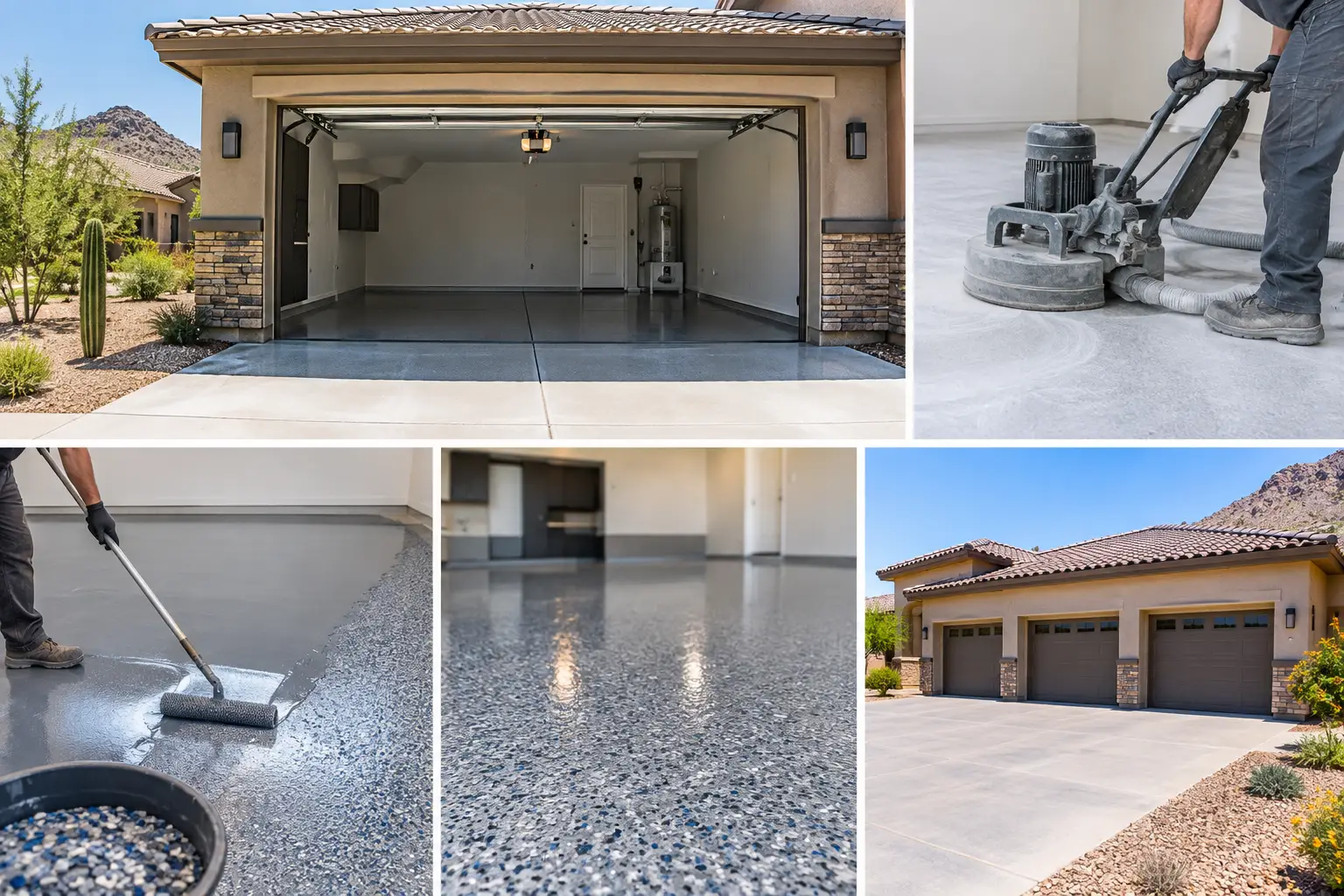
First, the concrete must be inspected for cracks, previous coatings, moisture concerns, weak spots, and areas where water sits. Old paint, failing epoxy, contaminants, and loose concrete need to be addressed rather than coated over. If the slab is not clean and mechanically prepared, even a high-quality coating has nothing dependable to bond to.
Next comes mechanical grinding. This opens the concrete surface and creates the profile needed for proper adhesion. Acid washing and pressure washing alone do not provide the same consistent preparation. Grinding also helps remove weak surface material, old residue, and the smooth finish that can prevent coatings from holding.
Cracks and small surface defects are repaired after preparation. It is worth setting realistic expectations here: repaired cracks can be made far less noticeable, but concrete moves over time. A crack caused by active slab movement can telegraph through any rigid surface system later. The goal is a clean, durable repair, not a promise that moving concrete will never move again.
Once repairs are complete, the coating system is installed in layers. For many patios, a full-broadcast decorative flake system gives the surface color variation, visual depth, and a practical texture underfoot. A clear polyaspartic topcoat seals the finish and adds protection. The result is a patio that looks finished rather than simply painted.
Many projects can be completed in one day, with the area ready for normal use quickly after curing. Timing depends on the condition and size of the slab, the scope of repairs, weather, and whether the patio connects to a pool area or other active outdoor space. Fast installation is valuable, but preparation should never be rushed to meet a calendar promise.
Choosing a Finish for Safety and Daily Use
A patio should be easy to walk on, not just easy to photograph. That is especially true near a pool, a hose bib, or an outdoor kitchen where water and spills are part of normal use.
Decorative flake coatings can provide a more forgiving surface than smooth painted concrete, and traction additives can be incorporated where appropriate. More texture can improve footing, but there is a trade-off: highly aggressive texture may be harder to sweep and may feel rougher on bare feet. The best finish balances grip, cleanability, and comfort for the way the family actually uses the space.
Color matters in Arizona, too. Lighter blends generally show less dust and can feel visually cooler in direct sunlight, while darker colors can create a sharper contrast around furniture and landscaping. Surface temperature is influenced by far more than color alone, including direct sun, slab exposure, and surrounding materials. A coating improves the finish and cleanability of the patio, but it does not turn a full-sun concrete slab into a cool surface at midafternoon in July.
How to Care for a Resurfaced Patio
One advantage of a properly coated patio is that maintenance stays simple. Sweep away dust, leaves, and gravel regularly so abrasive debris does not sit on the surface. For routine cleaning, use a hose, soft broom, or mop with mild soap and water. Rinse spills such as food grease, fertilizer, pet accidents, and pool chemicals promptly rather than letting them dry in place.
Avoid dragging sharp metal furniture legs, heavy planters, or equipment across the patio. Use protective pads under furniture and lift bulky items when possible. These small habits help preserve the topcoat and keep the surface looking consistent.
Pressure washing can be useful when done carefully, but it should not be treated as an excuse to ignore routine cleaning. Excessively high pressure or a nozzle held too close can damage nearly any finished surface over time. If a stain does not respond to normal cleaning, ask the installer what product and method are appropriate for the specific coating.
Resurfacing vs. Replacing the Patio
Replacement is the right call when the slab has serious structural damage or when a homeowner wants to change the patio layout, elevation, or drainage design. It is a bigger construction project, usually involving demolition, hauling, forming, pouring, curing, and finish work.
When the slab is stable, patio resurfacing is typically faster, less disruptive, and more cost-effective than replacement. It preserves the existing concrete while addressing the surface problems homeowners see and feel every day. Instead of living with stains, dusting, and a tired-looking finish, the patio becomes a space that is easier to keep ready for company.
The key is not choosing the fastest-sounding option. It is choosing the system that matches the condition of the concrete and the demands of Arizona outdoor living.
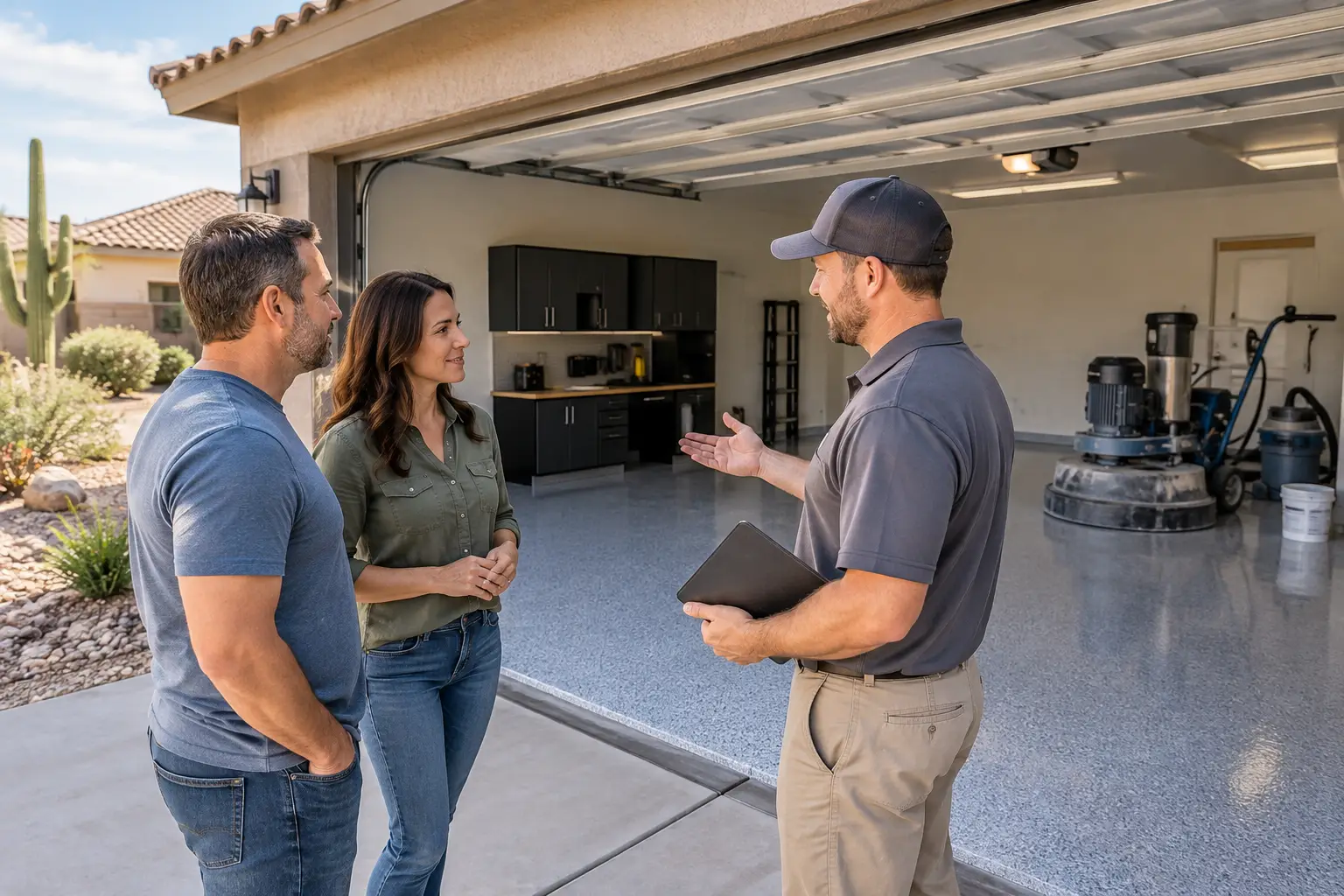
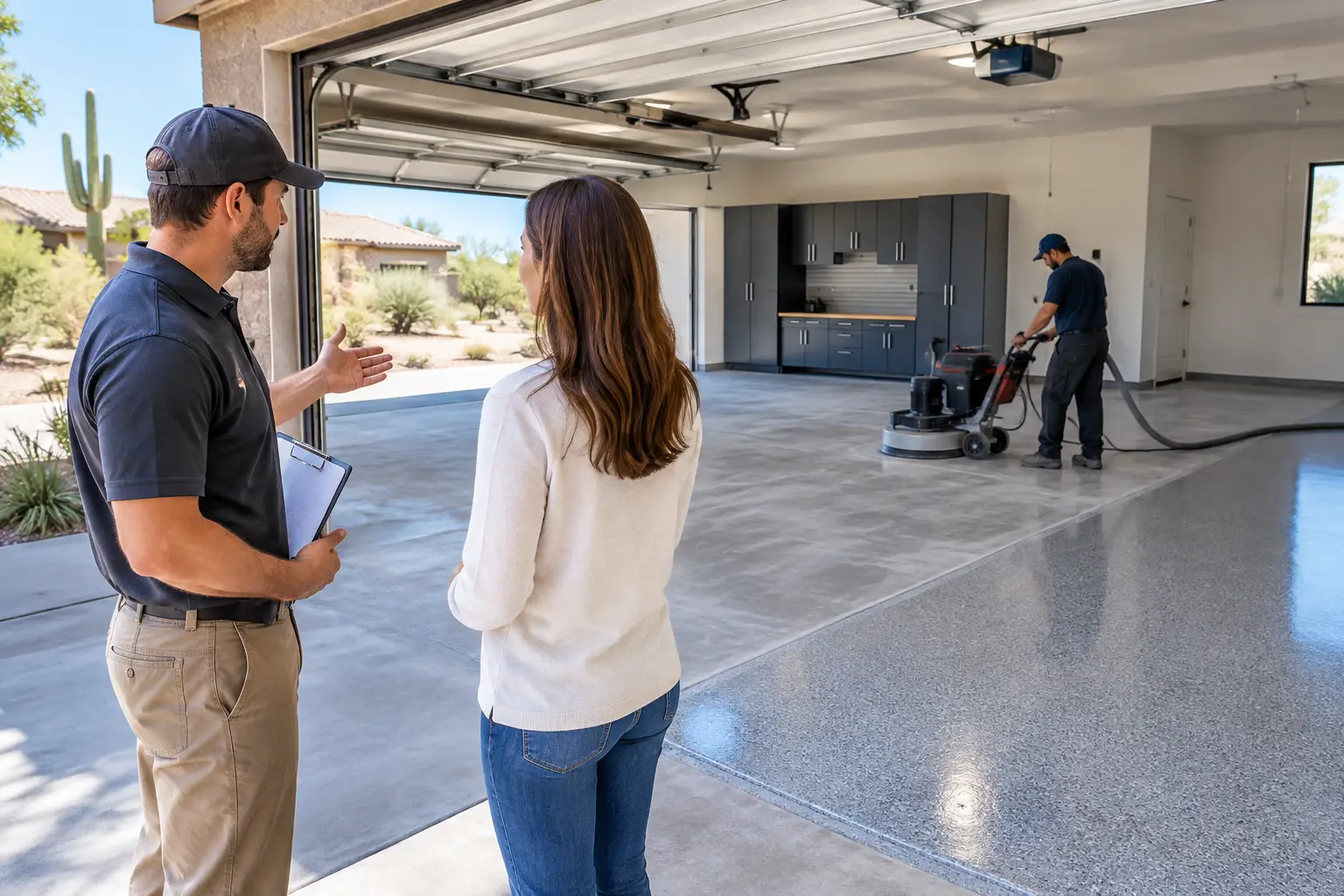
A patio gets used hard in the East Valley, from morning coffee to pool days to late-night dinners outside. Before covering yours with another temporary fix, have the slab evaluated by a contractor who will prepare it correctly, explain the options plainly, and stand behind the workmanship. TRM Garage Floors offers pressure-free on-site estimates so you can make that decision with a clear picture of what your patio needs.
TRM Garage Floors installs 100% polyaspartic coating systems for garages, patios, and commercial spaces across the East Valley. Free estimates, done in one day.