
A garage floor can look fine when it is empty, then show every weakness once Arizona heat, hot tires, lawn equipment, and weekend projects get involved. Homeowners searching for epoxy alternatives are often dealing with a coating that peeled, yellowed, stayed soft too long, or simply was not built for the conditions around Gilbert and the East Valley.
Epoxy has a place in certain controlled environments, but it is not the automatic best choice for every concrete surface. The right material depends on where the floor is located, how it is used, how much sun it receives, and how quickly it needs to return to service. For garages, patios, pool decks, shops, and commercial spaces, that difference matters.
Why Arizona concrete is hard on epoxy
Arizona does not offer gentle conditions for floor coatings. Garage slabs absorb heat all day. Vehicles bring hot tires onto the surface. Patio and pool-deck concrete sees direct sunlight, water, foot traffic, and temperature swings. Add oil drips, fertilizer, pet accidents, dropped tools, and windblown dust, and the coating has real work to do.
Basic epoxy systems can be slow to cure and may be more vulnerable to UV discoloration. An epoxy floor exposed to sunlight can amber or fade over time, especially outdoors or in garages that stay open during the day. Some products also have limited flexibility, which becomes a concern when concrete moves or develops small cracks.
The issue is not that every epoxy floor fails. It is that the product, preparation method, and installation conditions have to match the slab. A lower-grade DIY kit or a rushed installation may look good at first, then reveal weak adhesion after hot-tire pickup or moisture pressure takes hold. No shortcuts, no skipped steps - the concrete underneath determines whether any coating has a fighting chance.
The best epoxy alternatives for concrete floors
Several epoxy alternatives are available, but they do not all solve the same problem. Comparing them by cure time, UV stability, flexibility, and intended use gives homeowners and facility managers a clearer path forward.
Polyaspartic coatings
For many East Valley garage floors and commercial spaces, polyaspartic is the strongest all-around alternative to traditional epoxy. It is a type of polyurea coating engineered for fast curing, strong adhesion, chemical resistance, and better UV stability than standard epoxy.
A professionally installed 100% polyaspartic system can often be completed in one day, with vehicle traffic generally restored the following morning. That is a major practical advantage for households that cannot leave cars in the driveway for several days or businesses that need to limit downtime.
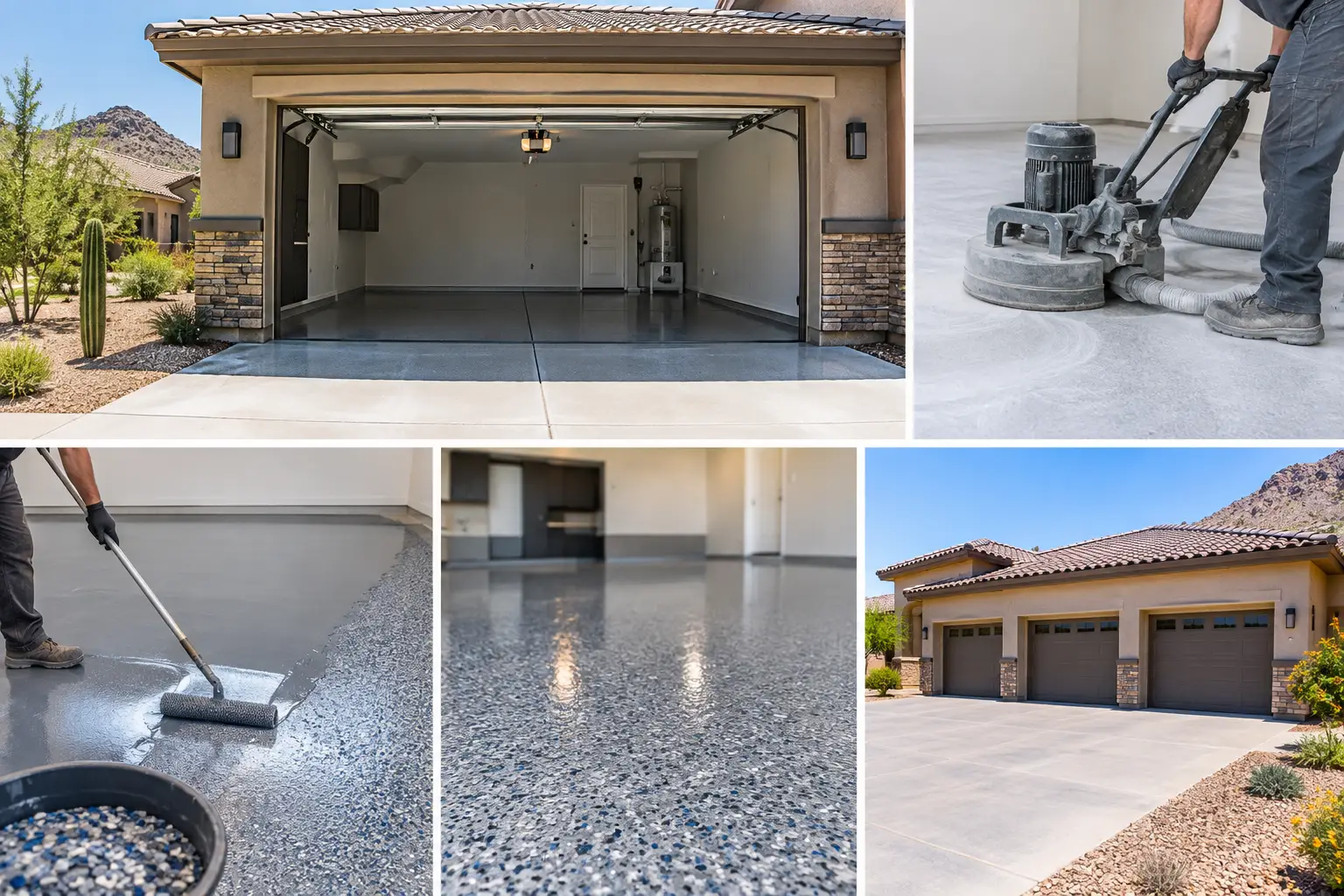
Polyaspartic also holds up well against the problems that make garage floors frustrating: tire marks, oil and automotive fluids, stains, concrete dust, abrasion, and daily cleaning. Decorative vinyl flakes can be broadcast into the system for color, texture, and a finished appearance, then sealed beneath a clear topcoat.
For exterior surfaces, UV resistance is a major benefit. Polyaspartic is better suited than basic epoxy for patios, covered outdoor areas, walkways, and other surfaces that receive regular sunlight. Exterior areas still need the right texture profile for safety, particularly near pools or entryways. A smooth, glossy finish may look sharp but can become slippery when wet.
There are trade-offs. Polyaspartic materials cure quickly, which means installation requires experience and planning. Once the coating process starts, there is little room for hesitation or correction. It is also not a surface-level cover-up for damaged concrete. Cracks, spalls, weak areas, and surface contamination must be properly addressed before coating begins.
Polyurea coatings
Polyurea is another fast-curing option often discussed alongside polyaspartic. It offers excellent durability and can perform well in high-traffic environments. Some polyurea systems cure extremely fast, which can be useful in industrial applications where downtime must be kept to a minimum.
That speed can also make polyurea less forgiving. It may require specialized equipment and a skilled crew to install evenly. Depending on the exact formulation, UV stability and workability can vary. For a residential garage or patio, the label alone is not enough. Ask what type of polyurea is being used, what topcoat is included, and whether the full system is intended for direct Arizona sun.
Urethane coatings
Urethane is valued for flexibility, abrasion resistance, and chemical resistance. It can work well as a protective topcoat in a multi-layer floor system. In commercial settings, urethane may be selected for areas exposed to repeated traffic, cleaning chemicals, or thermal movement.
As a standalone coating, urethane may not be the most practical answer for every residential slab. It can be more sensitive to moisture conditions and may require a compatible base layer. It is best evaluated as part of a complete specified system, not as a generic substitute for epoxy.
Concrete stains and sealers
If the goal is mainly a color change or a lower-cost cosmetic update, stains and sealers are alternatives worth considering. Concrete stain can produce a natural, variegated appearance that works well in some patios, covered spaces, and decorative interiors. Penetrating sealers can help reduce moisture absorption and make cleaning easier without creating a thick film on top of the slab.
These options do not offer the same level of protection as a full coating system. They will not hide major surface damage, stop active cracking, or provide the same resistance to dropped tools, hot tires, and heavy warehouse traffic. A sealer can be the right choice for concrete that is already attractive and only needs modest protection. It is not the right choice for a dusty, stained garage slab that needs a complete reset.
Surface preparation matters more than the label
A coating is only as dependable as the concrete beneath it. This is where many epoxy and epoxy-alternative projects go wrong. Rolling material over a dirty, smooth, moisture-affected slab may create a temporary visual improvement, but it does not create lasting adhesion.
Professional preparation begins with evaluating the concrete. The crew should identify existing coatings, oil contamination, cracks, weak top layers, moisture concerns, and areas that need repair. Mechanical grinding opens the concrete surface and removes contaminants so the coating can bond into the slab rather than sit on top of it.
Cracks and damaged areas should be repaired before the main coating is applied. Repairs may still show subtly in certain lighting or after future slab movement, because concrete naturally moves and cracks can be structural rather than cosmetic. A good contractor will explain that upfront rather than promise an unrealistic perfectly invisible repair.
For exterior concrete, drainage and slip resistance deserve the same attention as color. Pool decks and patios need a finish that is comfortable, cleanable, and appropriate for wet bare feet. The best-looking coating is not the best result if it creates a safety issue after a pool day or summer rain.
How to choose between epoxy alternatives
Start with the use of the space. A garage that stores daily drivers and tools needs chemical resistance, hot-tire performance, and easy cleanup. A patio needs UV stability and traction. A warehouse or shop needs a coating designed for the actual wheel loads, foot traffic, equipment, and operating schedule.
Then consider timing. If you need a floor back quickly, slow-cure epoxy may be a poor fit. Fast-curing polyaspartic systems can make sense when a one-day installation and next-morning vehicle return are priorities.
Finally, look beyond the product name. Ask how the concrete will be prepared, how cracks will be handled, what the complete coating system includes, and what conditions the installer is designing for. A clear answer is more valuable than a vague promise that a floor is "industrial grade."
TRM Garage Floors specializes in 100% polyaspartic coating systems because they are built to answer the concrete problems local property owners actually face: extreme heat, UV exposure, stains, dust, traffic, and limited time without access to the space.
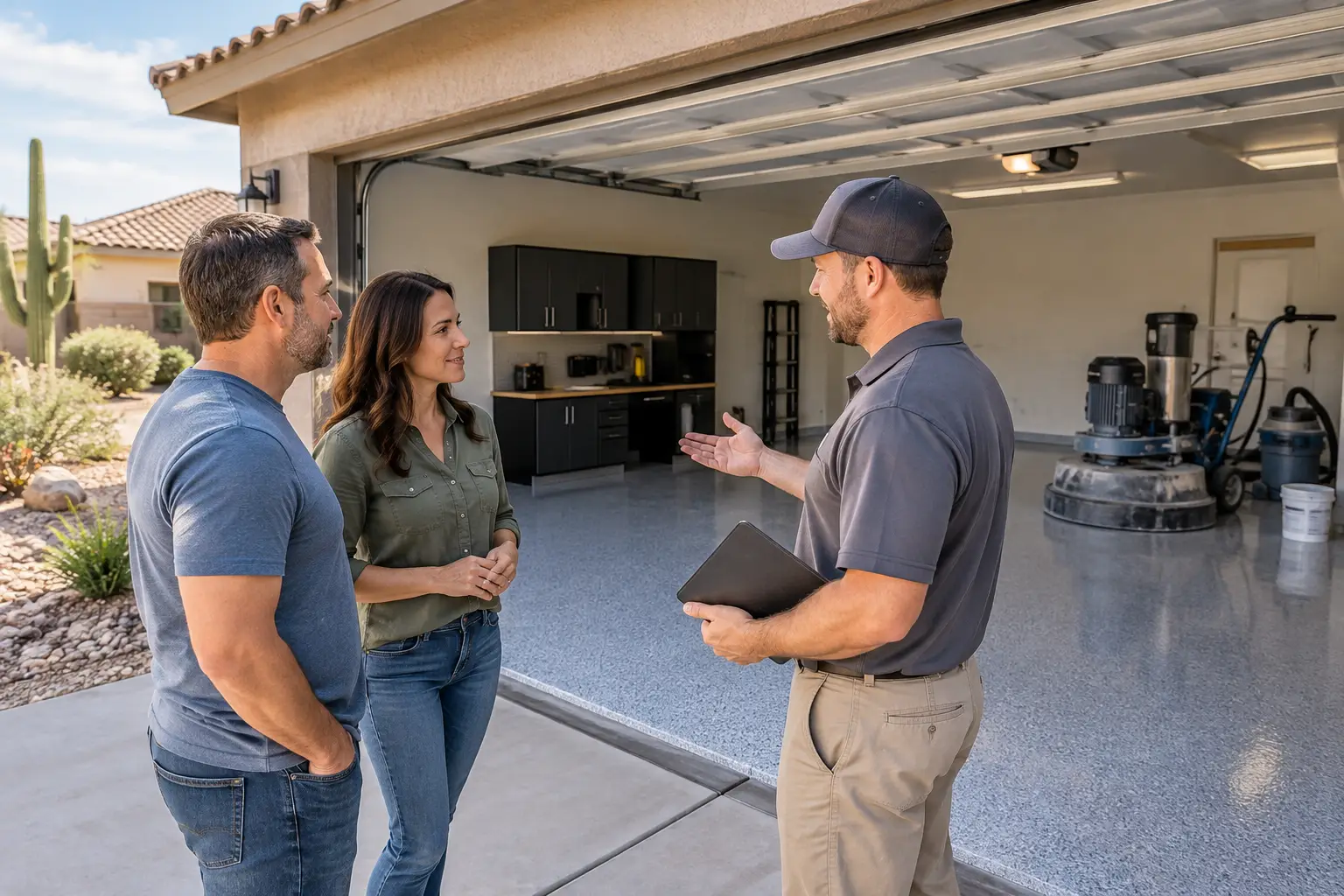
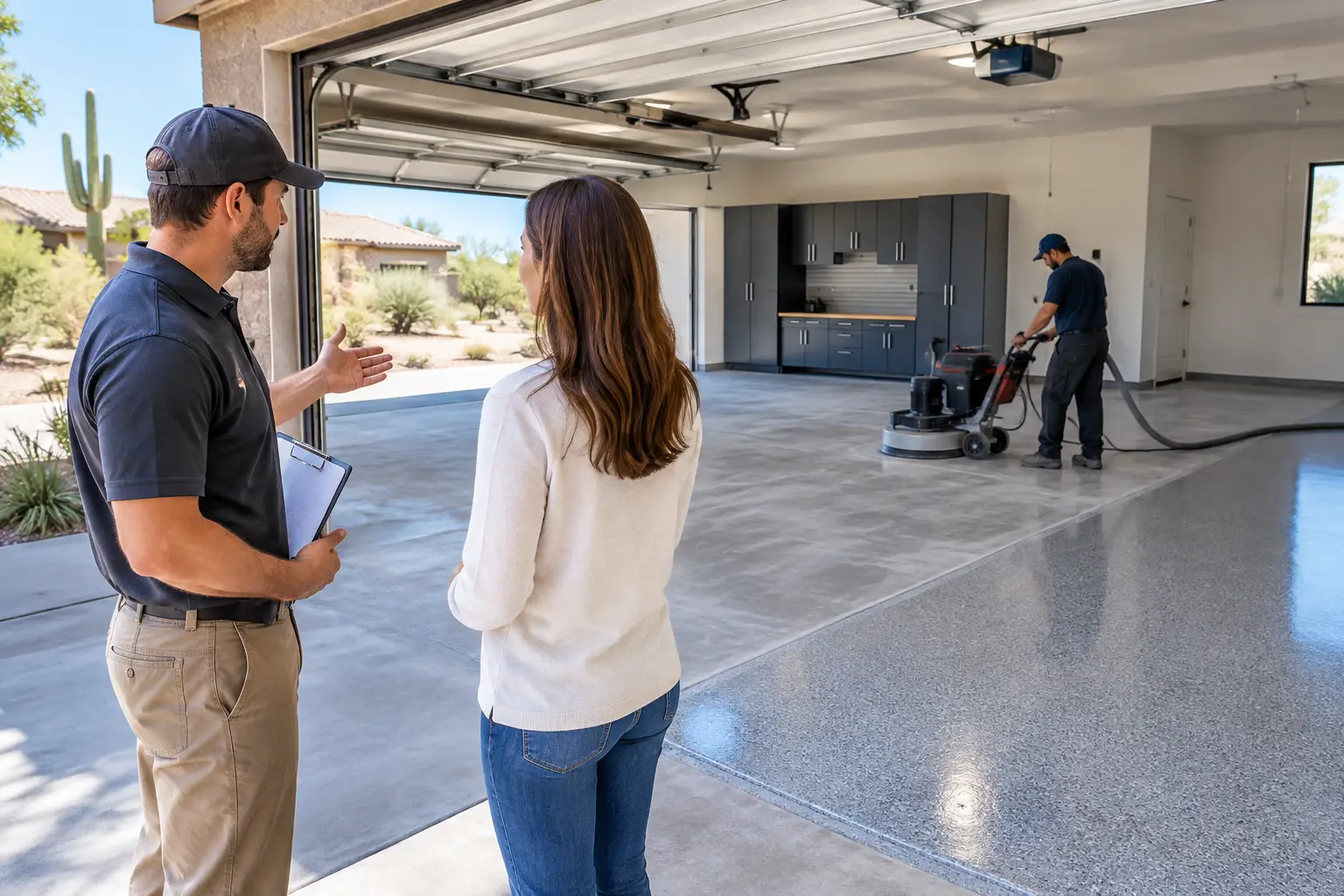
A floor coating should make life easier, not give you another surface to worry about. If your concrete is dusty, stained, faded, or showing the first signs of a failing epoxy job, a free on-site assessment can help identify the right system before the next hot-tire season puts the slab to the test.
TRM Garage Floors installs 100% polyaspartic coating systems for garages, patios, and commercial spaces across the East Valley. Free estimates, done in one day.