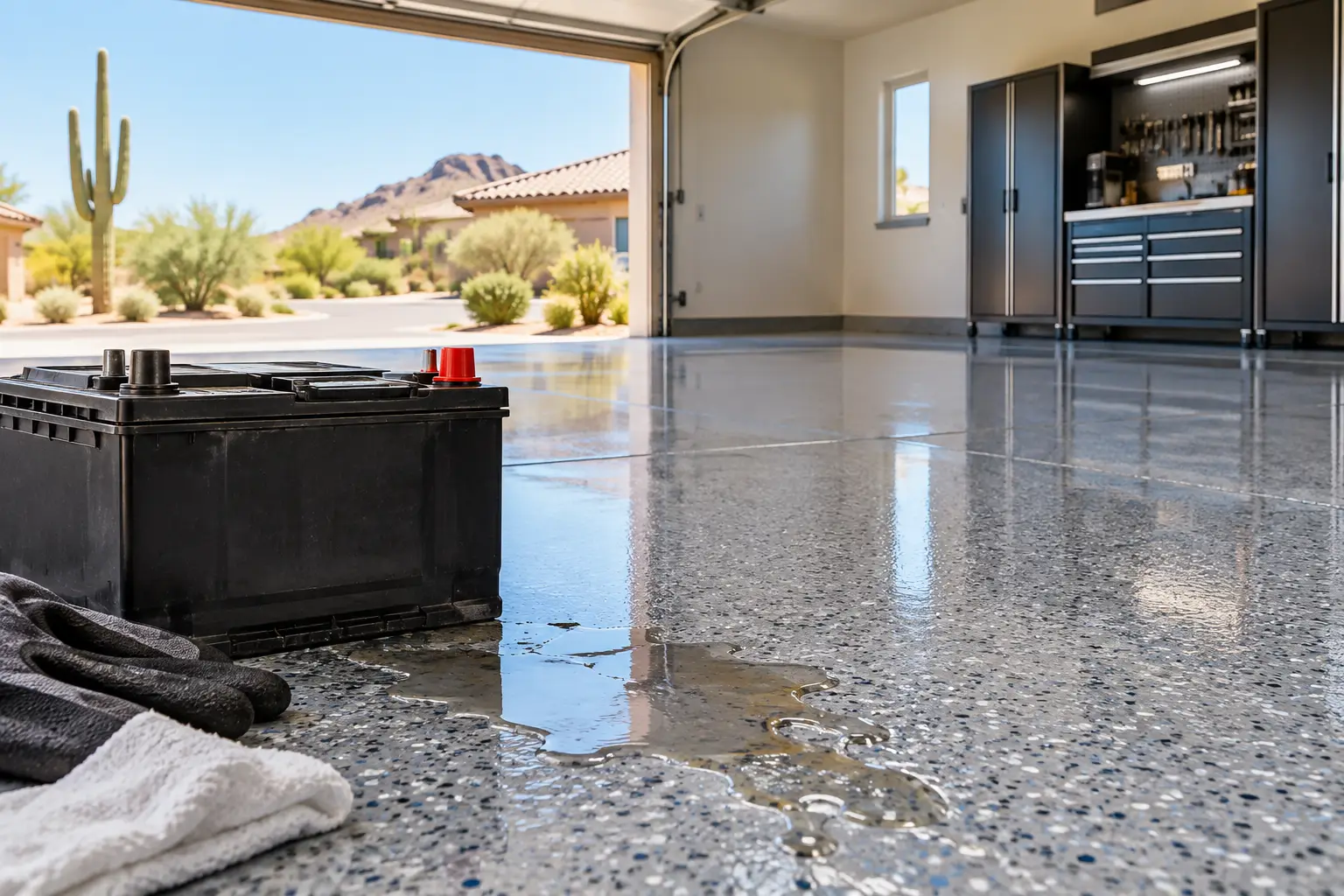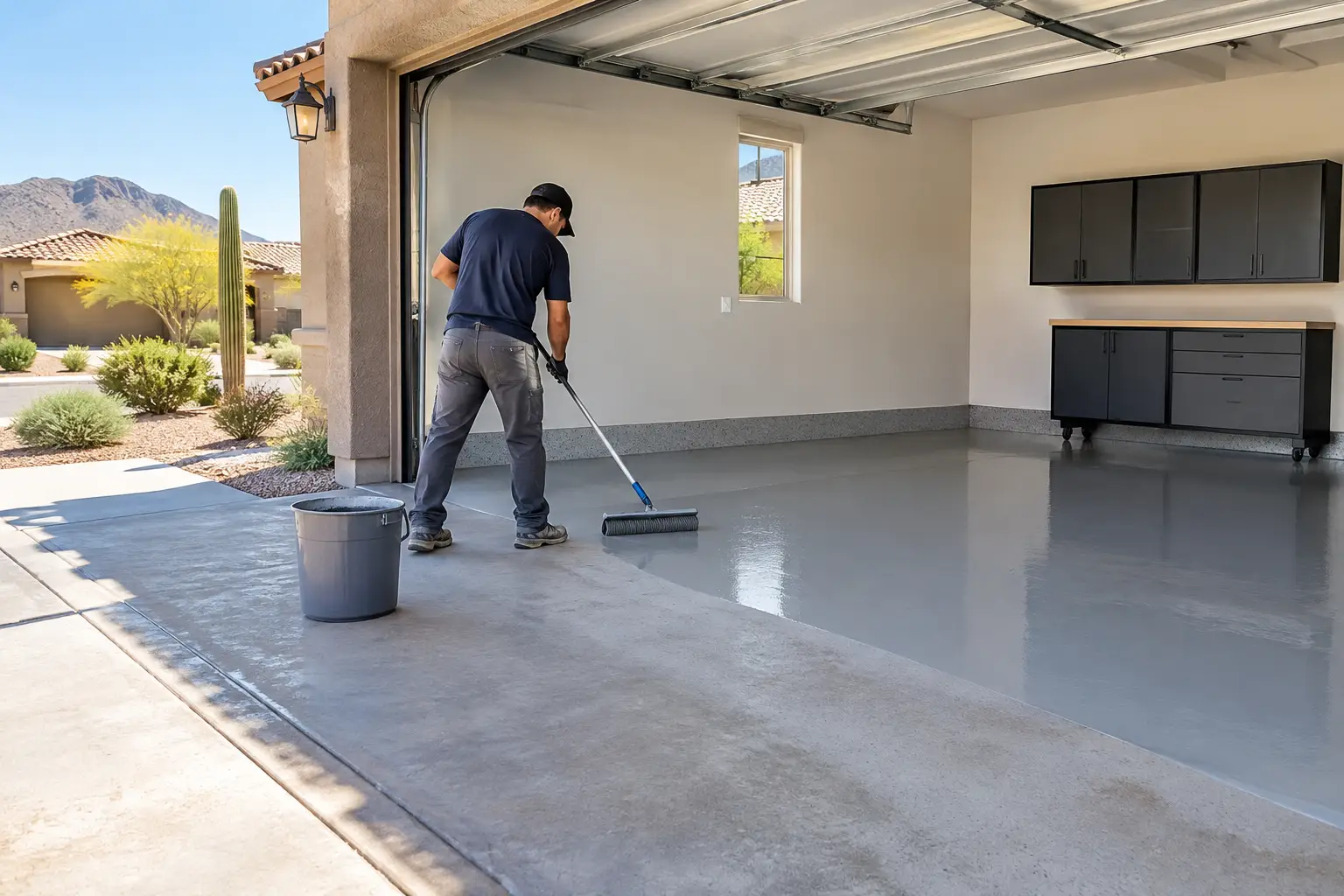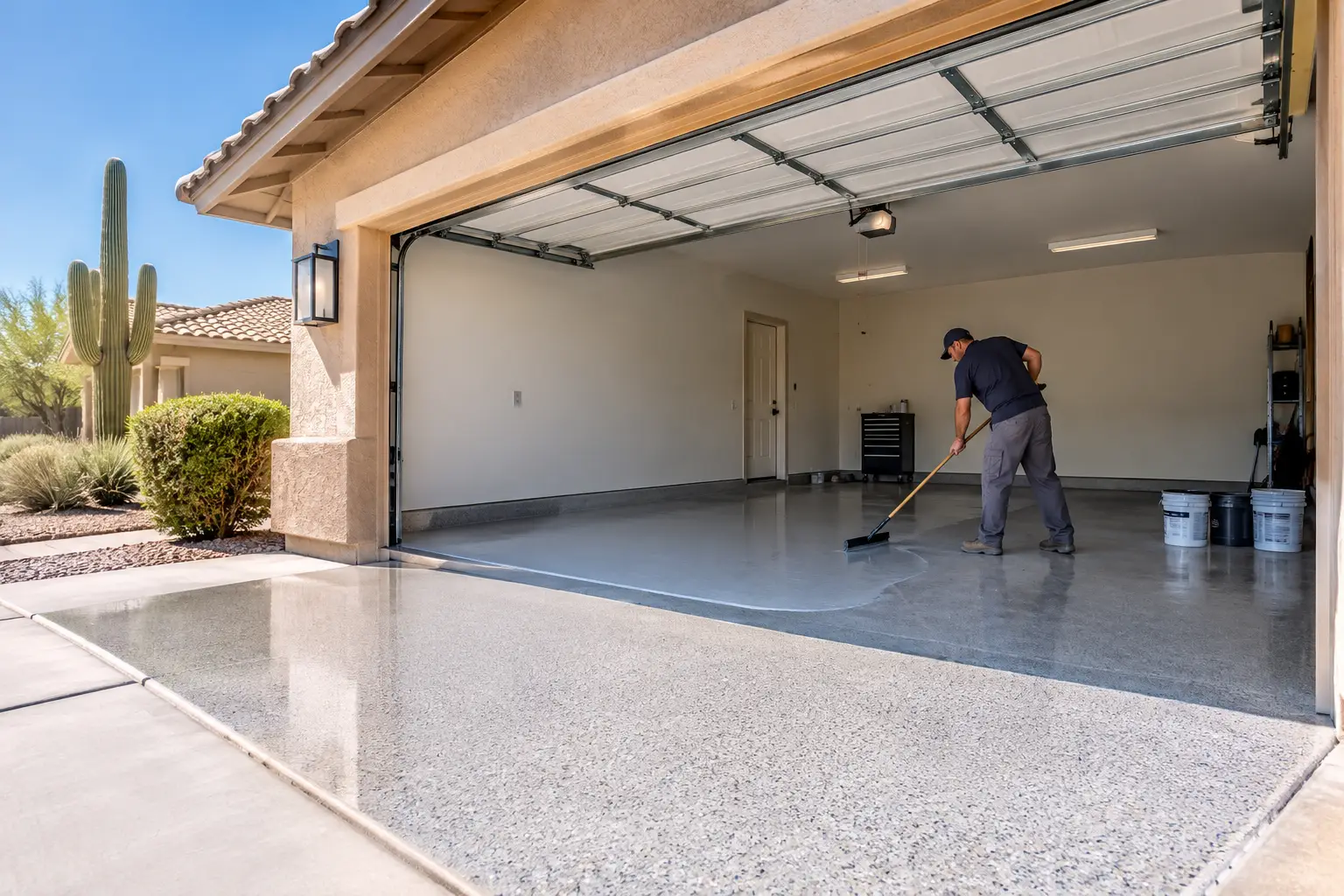
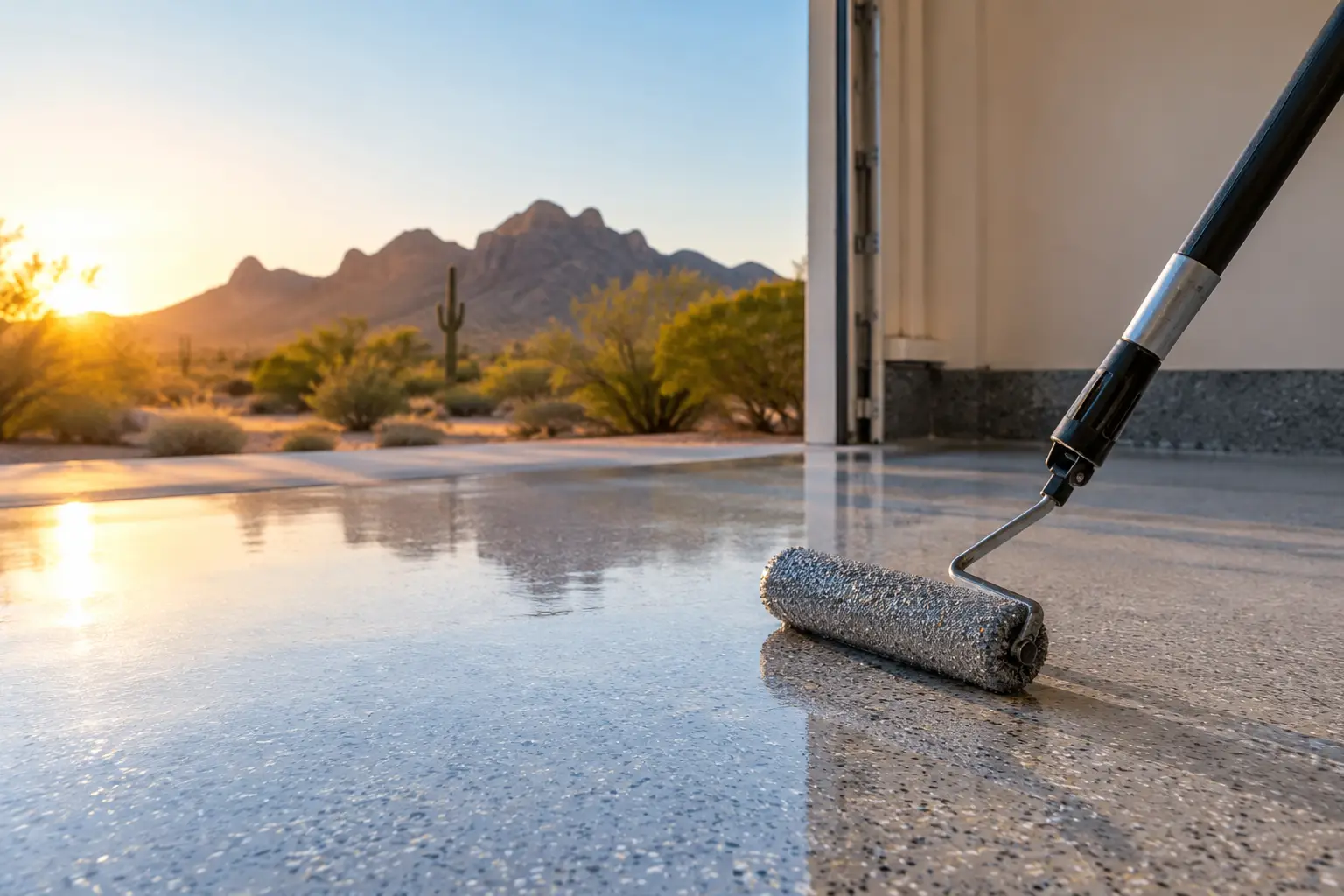
A garage floor can look fine at 8 a.m. and reveal every weakness by midafternoon in an Arizona summer. That is why a polyaspartic coating durability review needs to look beyond a fresh, glossy finish. The real question is whether the coating stays bonded, keeps its color, resists hot-tire pickup, and remains easy to clean after years of heat, vehicles, spills, and daily use.
For East Valley homeowners and commercial property owners, polyaspartic can be an excellent long-term concrete coating choice. But durability is not automatic. The coating chemistry matters, and so does the work underneath it. No shortcuts, no skipped steps.
What Polyaspartic Durability Actually Means
A durable floor is more than a surface that does not peel right away. It should remain tightly bonded to the concrete, resist common stains, tolerate temperature swings, and handle regular traffic without becoming a maintenance project.
Polyaspartic coatings are valued because they cure quickly and create a hard, protective surface. A professionally installed system can often be completed in one day, with vehicle traffic generally returning the following morning. That fast cure is useful for busy garages, warehouses, shops, and showrooms where closing the space for several days is not practical.
Durability also means the finish still performs after the initial excitement wears off. A good floor should make it easier to sweep out dust, wipe up oil drips, rinse away tracked-in dirt, and keep a garage or patio looking cared for. On exterior spaces, it should also stand up better to sunlight than coatings that yellow or fade quickly under UV exposure.
How Polyaspartic Holds Up in Arizona Conditions
Arizona concrete takes a beating. Summer heat raises slab temperatures well beyond the air temperature. Sunlight is intense, garages see hot tires, and outdoor concrete can go from dry and dusty to wet and slick after a storm or pool day.
Heat and hot tires
Hot-tire pickup is one of the most frustrating coating failures homeowners see. It happens when heated tires soften or pull at a poorly bonded coating, leaving marks or lifting material from the slab. Polyaspartic systems are designed for strong adhesion and heat resistance, but the preparation work is the deciding factor.
If the installer applies coating over a smooth, contaminated, or weak concrete surface, the floor may fail regardless of how impressive the product sounds. Mechanical grinding opens the concrete and creates the profile a coating needs to bond. Oil spots, old paint, previous epoxy, and surface contaminants must also be addressed before the first coat goes down.
A properly prepared polyaspartic floor is far less likely to have hot-tire problems than a thin, improperly applied DIY coating. That does not mean tires cannot leave temporary rubber marks. Those are usually a cleaning issue, not a bond failure, and they can often be removed with an appropriate cleaner.
UV exposure and color retention
For patios, pool decks, covered outdoor areas, and garage thresholds that receive direct sun, UV stability matters. Basic epoxy can amber or yellow when exposed to sunlight. Polyaspartic coatings are commonly selected for better UV resistance and longer-lasting color retention.
There is still a practical limit to every finish. Constant direct Arizona sun, windblown grit, and standing water place more demand on an outdoor surface than on an enclosed garage. Color choice, texture, drainage, and routine cleaning all affect how the finished area looks over time. A professional should assess whether the space needs an exterior-appropriate system and added traction rather than treating every slab the same.
Stains, dust, and everyday abuse
Bare concrete is porous. It absorbs oil, drinks spills, sheds dust, and develops a worn appearance that is hard to clean away. A polyaspartic system seals that porous surface, making many common garage spills easier to wipe up before they leave a lasting mark.
That is especially helpful for vehicles, lawn equipment, bicycles, storage bins, and workshop use. It also helps commercial spaces where foot traffic, carts, equipment, and vehicle movement create constant wear. Chemical resistance does not mean a spill should sit for days. Wipe up oil, fuel, paint, solvents, and other harsh materials promptly to protect the finish and keep the floor looking its best.
The Preparation Work Behind a Long-Lasting Floor
The biggest durability difference is usually not visible in the finished color flakes. It is in the concrete preparation and repair work completed beforehand.
A professional installation starts by evaluating the slab. Is the concrete sound? Are there cracks, spalling, moisture concerns, old coatings, or heavy contamination? A crack can often be repaired and blended into the system, but a coating is not a structural repair for active slab movement or major foundation issues. Those conditions need to be identified honestly before work begins.
Mechanical diamond grinding is then used to remove weak surface material and create the proper texture for adhesion. This is not the same as quickly acid etching a floor and hoping for the best. Grinding is cleaner, more controlled, and better suited to preparing Arizona garage concrete that may have years of dust, tire residue, and sealer on its surface.
After repairs and preparation, the installer applies the base coat, broadcasts decorative flakes when specified, removes excess material, and applies a protective topcoat. Each layer has a job. The base coat bonds to the concrete, the flakes build appearance and thickness, and the topcoat adds protection and cleanability. Skipping layers or rushing cure windows can compromise the system.
Polyaspartic vs. Epoxy: A Fair Durability Comparison
Epoxy is not automatically a bad floor coating. Quality epoxy systems can perform well in the right setting, particularly indoors with controlled conditions and proper preparation. The issue is that many homeowners compare a professional polyaspartic system with a low-cost, thin epoxy kit. Those are not equal installations.
For Arizona garages and outdoor-adjacent spaces, polyaspartic has practical advantages: faster cure time, better UV resistance, and strong performance against hot tires and day-to-day traffic. It is also a good fit when downtime matters. A homeowner does not want their vehicles sitting in the driveway for a week, and a business may not be able to pause operations for an extended cure.
The trade-off is that polyaspartic material cures quickly, which leaves less room for inexperienced application. That is one reason installer process matters so much. Fast-curing chemistry rewards disciplined crews and careful scheduling. It does not reward rushed prep.
What Can Shorten the Life of Any Coating
Even a well-installed floor needs reasonable care. Most premature problems trace back to one of four issues:
- Moisture pressure or concrete conditions that were not properly evaluated before installation.
- Inadequate surface preparation, including coating over dust, sealers, oil, or failing old material.
- Damage from heavy impacts, metal dragging, sharp equipment feet, or aggressive chemicals left on the floor.
- Using an interior-only approach on a sun-exposed or wet exterior surface without the right texture and system design.
Normal use is not the problem. Parking vehicles, moving storage, rolling toolboxes, hosting family gatherings, or operating a busy workspace is exactly what a durable coating should handle. The goal is not to create a floor that can never be scratched. The goal is to create a surface that stays bonded, cleans easily, and keeps doing its job without peeling or dusting apart.
How to Get the Most From a Polyaspartic Floor
Simple maintenance goes a long way. Sweep abrasive dirt and leaves so they are not ground into the finish. Use a soft broom, dust mop, or gentle rinse for routine cleaning. For deeper cleaning, use a coating-safe cleaner rather than highly acidic or abrasive products. Put protective pads under sharp metal shelving legs, and use a mat beneath equipment that may drip oil or chemicals.
For patios and pool areas, keep drainage paths clear and do not assume every textured coating has the same slip resistance. Texture can improve footing, but water, sunscreen, algae, and smooth footwear can still create slippery conditions. The right finish depends on how the space is used.
Is Polyaspartic Worth It for Your Concrete?
A polyaspartic coating is worth considering when you are tired of concrete dust, stubborn stains, peeling paint, or a garage floor that makes the whole space feel unfinished. It is also a practical choice when you need a fast turnaround without settling for a temporary cosmetic fix.
The best result comes from matching the system to the slab and the environment. At TRM Garage Floors, that means evaluating the concrete first, repairing what can be repaired, mechanically preparing the surface, and completing a final walkthrough before the job is considered done. A durable floor starts with an honest assessment, then earns its appearance through the work beneath it.
TRM Garage Floors installs 100% polyaspartic coating systems for garages, patios, and commercial spaces across the East Valley. Free estimates, done in one day.