A slow oil drip under a truck can turn bare concrete into a dark, dusty stain that never quite goes away. So, does polyaspartic resist oil spills? Yes, a properly installed polyaspartic floor system is highly resistant to common automotive oil, but it is not a reason to let a spill sit for days.
The difference matters. Polyaspartic creates a dense, nonporous protective layer over the concrete, keeping oil on the surface instead of allowing it to soak into the slab. That means routine leaks, oil changes, and accidental spills are far easier to clean than they are on unfinished concrete. For East Valley homeowners who use their garage as a workspace, storage area, or place to park daily drivers, that is a major practical upgrade.
Does Polyaspartic Resist Oil Spills Better Than Bare Concrete?
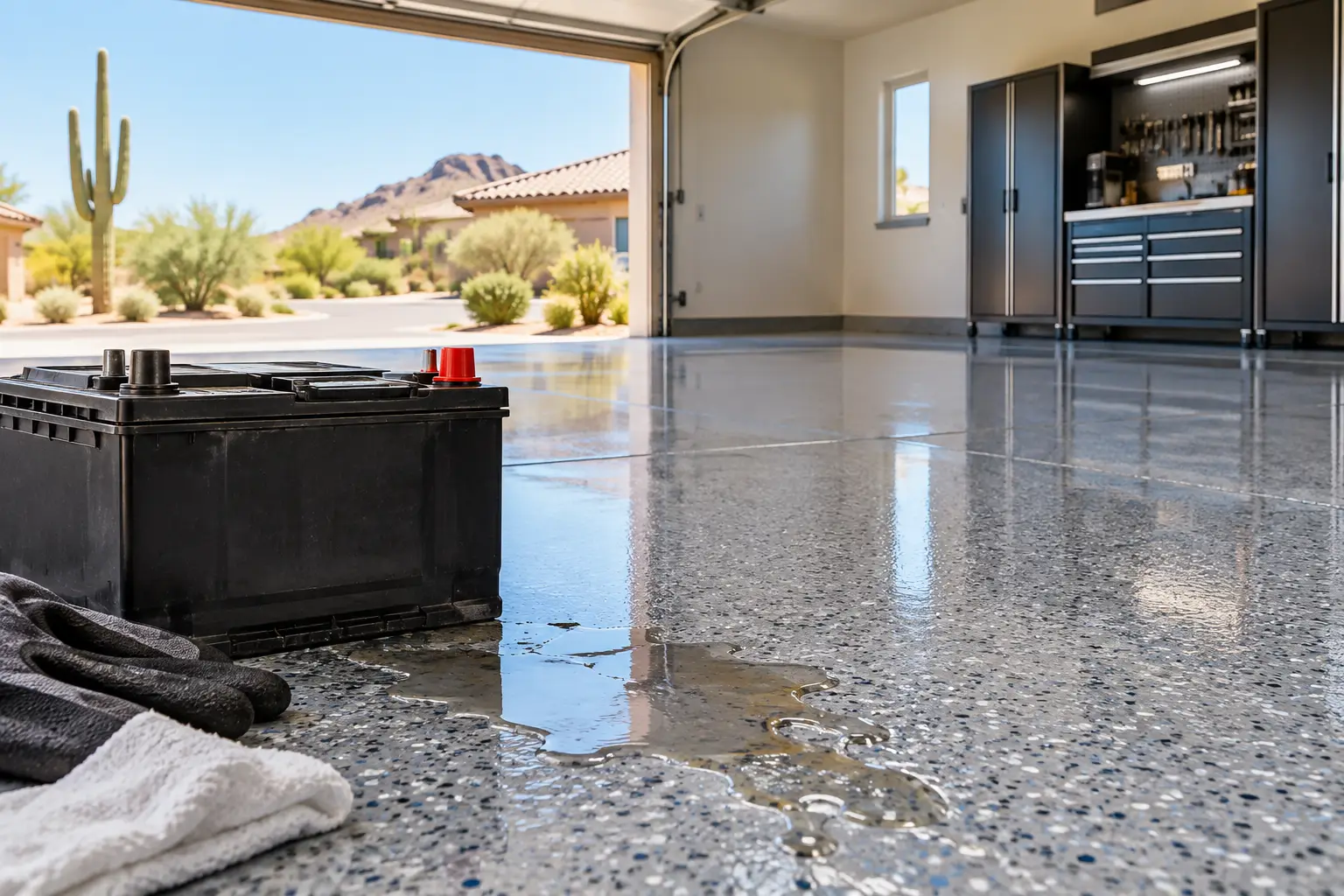
Bare concrete may look solid, but it is naturally porous. When motor oil lands on an uncoated garage slab, it can work its way below the surface. Dust sticks to it, the stain spreads, and repeated cleaning often only lightens the mark. In Arizona garages, heat can make that problem worse by thinning oils and helping them move into the concrete more quickly.
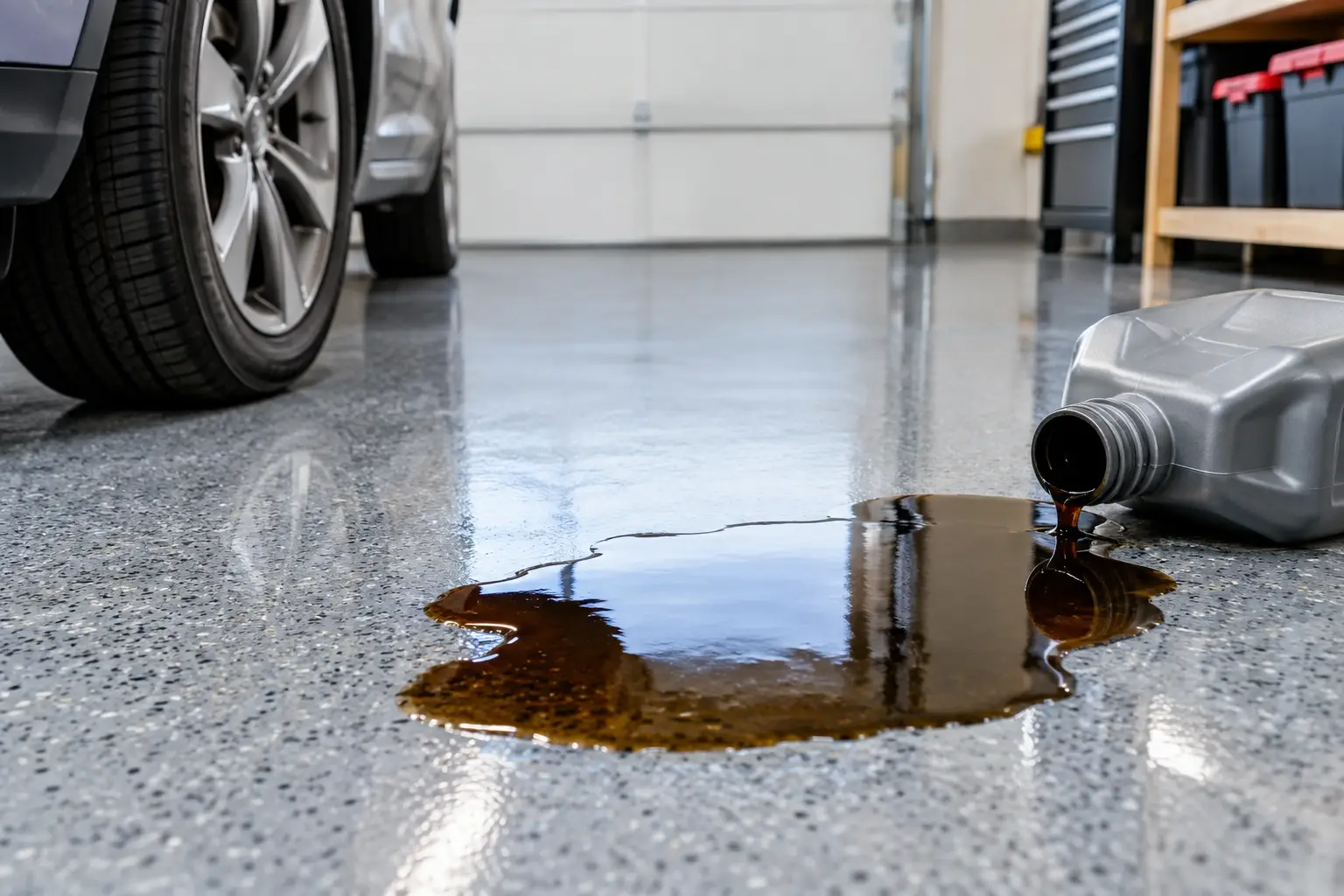
A professionally installed polyaspartic coating changes that equation. Rather than absorbing into the slab, oil generally remains on top of the coated surface. You can wipe it up, use an absorbent material for a larger spill, then clean the area with a mild degreaser or a garage-floor-safe cleaner.
That surface protection is one reason polyaspartic is a better fit than a bare slab for garages, auto shops, warehouses, and showrooms. It helps preserve the appearance of the floor while making normal maintenance much less frustrating.
Still, oil resistance is not the same as being maintenance-free. Any coating can stain or lose its finish if harsh chemicals, contaminated rags, or pooled fluids are ignored long enough. The right approach is simple: clean spills promptly and use cleaners that are appropriate for coated floors.
Why Polyaspartic Coatings Handle Oil Well
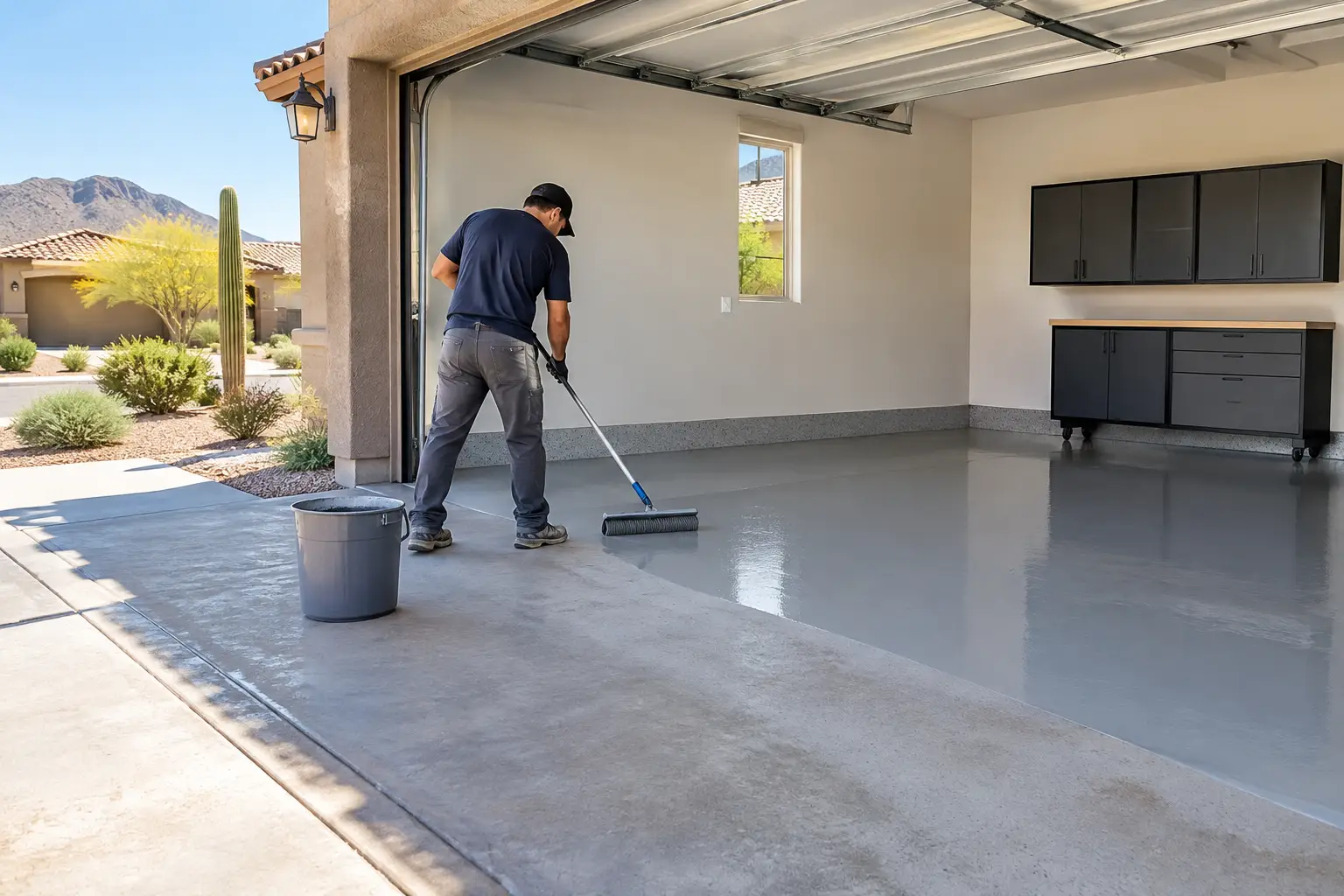
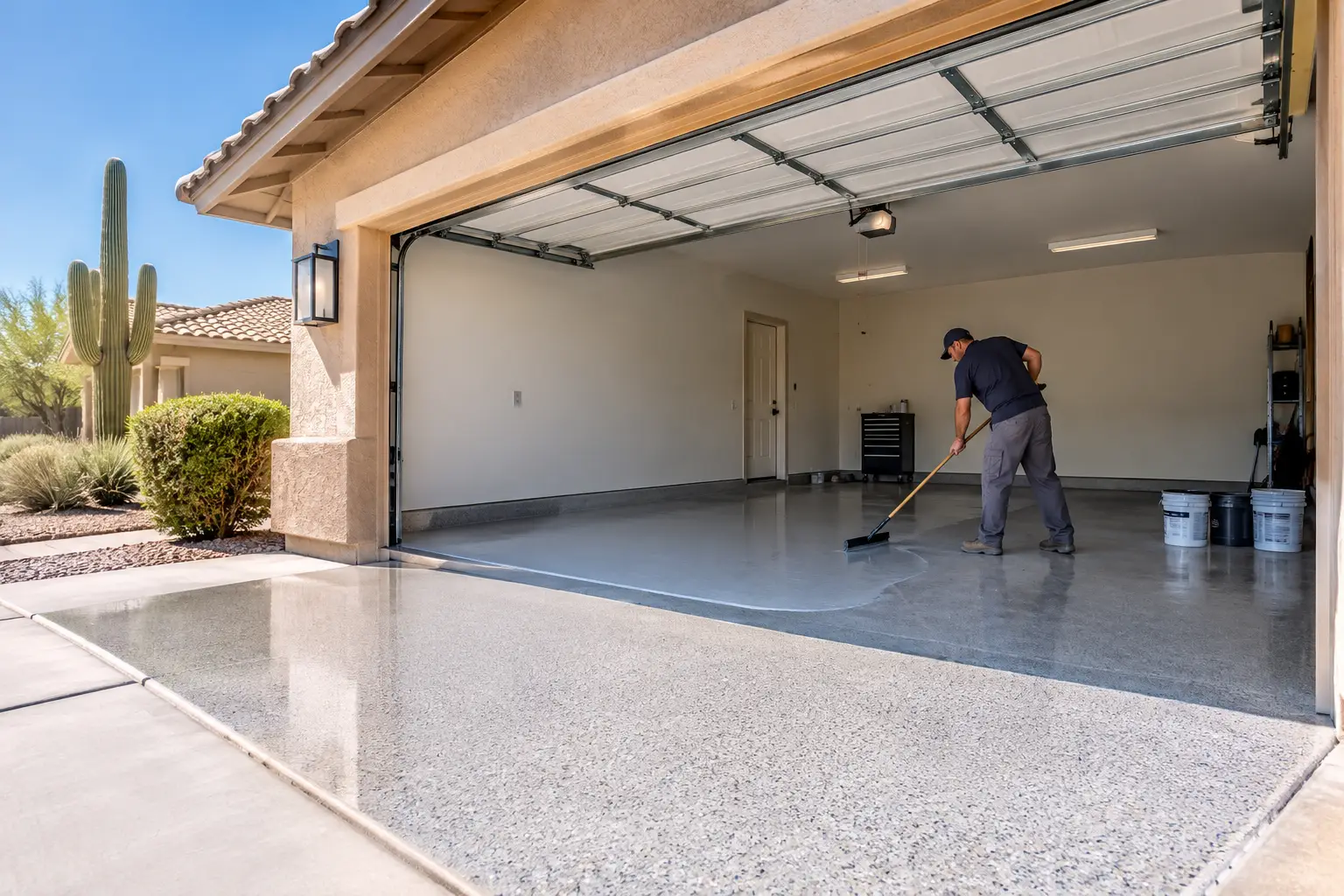
Polyaspartic is a high-performance coating chemistry designed to cure into a hard, tightly bonded surface. In a garage-floor system, the coating is applied after the concrete has been mechanically prepared and any cracks or damaged areas have been addressed. Decorative chips may be broadcast into the base coat, followed by a protective clear coat.
The finished system creates a barrier between oil and the concrete. That barrier is what stops the familiar bare-concrete problem of deep, permanent-looking oil shadows.
The coating must be bonded correctly
Oil resistance starts before the coating is ever applied. If concrete preparation is skipped, a coating may not bond as intended. Weak adhesion can lead to peeling, chipping, or moisture-related failure, giving oil and other contaminants a path back to the concrete.
No shortcuts matter here. Professional installers mechanically grind the slab to open the concrete surface and remove weak material. They also identify existing coatings, old adhesives, surface contamination, cracks, and problem areas that need repair before the new system goes down.
A coating is only as dependable as the surface beneath it. A quality polyaspartic product installed over poorly prepared concrete will not deliver the same results as a complete system installed with disciplined preparation.
The topcoat does real work
In a full-broadcast garage-floor system, the clear polyaspartic topcoat is more than a cosmetic finish. It helps seal the decorative chip layer and provides the surface that takes daily abuse from tires, foot traffic, boxes, tools, and spills.
This topcoat is also why the floor is easier to clean. Instead of scrubbing oil out of pores in the concrete, you are cleaning a finished surface. For most small spills, a shop towel or absorbent material followed by a light cleaning is enough.
How to Clean Oil From a Polyaspartic Garage Floor
The best time to clean an oil spill is when you first notice it. Start by placing absorbent material, such as shop towels, oil absorbent, or unscented clay-based cat litter, over the spill. Let it pull up the excess fluid, then sweep or collect the material without spreading the oil across the floor.
Next, wipe the area with a soft cloth or mop and a diluted, non-abrasive cleaner. If a light residue remains, use a coating-safe degreaser according to its directions, then rinse or wipe away the cleaner so it does not dry on the floor.
Avoid reaching for aggressive tools first. Wire brushes, highly abrasive powders, and strong solvent cleaners can dull a coating's finish or create unnecessary wear. A polyaspartic floor is tough, but tough does not mean it should be treated like raw industrial concrete.
For a larger spill, work from the outside toward the center. This keeps the oil from spreading into a larger area. If the spill came from a vehicle with an active leak, put a drip pan underneath until the repair is handled. The floor can resist the spill, but no one wants to clean the same spot every morning.
What Can Still Affect a Polyaspartic Floor?
Most household and automotive oil spills are well within what a professional polyaspartic system is built to handle. The more realistic concern is prolonged exposure, especially when a spill is mixed with solvents, brake fluid, fuel additives, battery acid, or other aggressive chemicals.
Gasoline deserves particular attention. A quick gasoline splash that is wiped up promptly is usually not a major issue. A puddle left sitting, especially in extreme Arizona heat, is a different situation. The same is true for strong solvent-based products. Chemical resistance depends on the exact material, concentration, temperature, and length of exposure.
Hot tires are another reason the coating system and installation quality matter. A garage floor in Gilbert, Mesa, Chandler, or Queen Creek can see serious summer temperatures, and tires carry heat, road grime, and vehicle fluids into the garage. Basic epoxy systems can be more vulnerable to hot-tire pickup or discoloration. Polyaspartic is selected for its strong adhesion, fast cure, and performance in demanding conditions, but the slab still needs correct preparation and a quality application.
Old oil stains need attention before coating
A common question is whether polyaspartic can simply cover an old oil-stained slab. Sometimes it can be part of the solution, but the stain cannot be ignored.
Before coating, contaminated concrete needs to be evaluated and properly prepared. Surface oils, old sealers, failed paint, adhesives, and residue can interfere with adhesion. Mechanical grinding removes the weak top layer of concrete, while targeted treatment may be needed in heavily contaminated areas. The goal is not to hide a problem. It is to create a sound surface the coating can bond to.
This is one of the biggest differences between a professional floor system and a quick weekend coating kit. A kit may promise an easy transformation, but it cannot compensate for poor preparation, moisture concerns, or deeply contaminated concrete.
Polyaspartic vs. Epoxy for Oil Resistance
Both epoxy and polyaspartic coatings can offer oil resistance when properly installed. The better choice depends on the full environment, not one feature on a product label.
For Arizona garages, polyaspartic has practical advantages beyond spill cleanup. It cures quickly, supports a one-day installation process in many projects, and can typically return vehicles to the garage the following morning. It also offers better UV stability than many standard epoxy products, making it useful where sunlight reaches the concrete through an open garage, windows, patio doors, or covered outdoor areas.
Epoxy may have a place in certain applications, particularly where a longer cure time is acceptable and UV exposure is limited. But homeowners who have seen peeling DIY epoxy, yellowing near garage doors, or hot-tire issues often want a system built for more demanding conditions.
The real comparison should include preparation, crack repair, coating thickness, topcoat quality, slip-resistance needs, and the installer's process. Oil resistance is valuable, but it is one part of a floor that needs to hold up year after year.
Keep the Floor Looking Like It Was Just Installed
A coated garage floor does not need complicated maintenance. Sweep away dirt and grit regularly, especially after windy days. Rinse or damp-mop as needed, and clean automotive spills before they have time to sit. For textured full-flake floors, a soft-bristle deck brush can help lift grime from the texture without damaging the finish.
If you work on vehicles, keep absorbent material and a coating-safe cleaner in the garage. That small amount of preparation prevents routine maintenance from becoming a bigger cleanup project.
At TRM Garage Floors, the goal is not just a garage that looks better on installation day. It is a surface that stands up to the real work of parking, projects, storage, and the occasional oil leak. If your slab is already stained, dusty, cracked, or covered with a failing coating, a free on-site estimate can help you understand what proper preparation and a polyaspartic system would take for your space.
TRM Garage Floors installs 100% polyaspartic coating systems for garages, patios, and commercial spaces across the East Valley. Free estimates, done in one day.